How Prompt Engineering Improves AI Output Quality
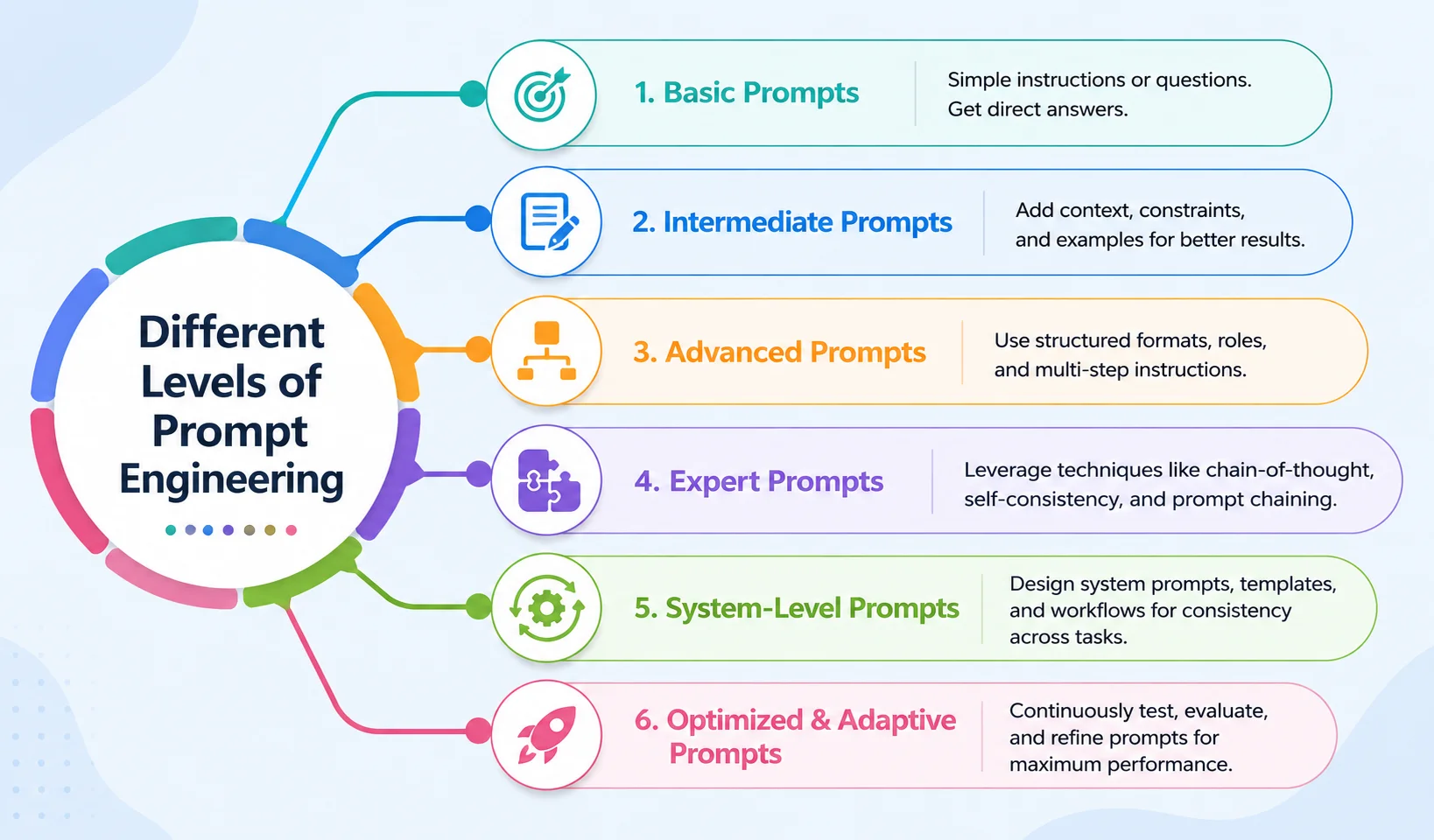
Artificial Intelligence has evolved from a futuristic concept into a practical tool that millions of people use every day. Whether I am generating content, analyzing data, writing code, creating marketing campaigns, or automating repetitive tasks, AI has become an essential part of modern workflows. However, one lesson became clear to me very early: AI is only as effective as the instructions it receives.
This is exactly where How Prompt Engineering Improves AI Output Quality becomes important.
Many people assume that advanced AI models automatically understand everything they want. In reality, even the most sophisticated Large Language Models (LLMs) such as GPT-based systems, Claude, Gemini, and other generative AI tools depend heavily on the quality of the prompts provided by users. A poorly written prompt often produces generic, incomplete, or inaccurate responses, while a carefully structured prompt can generate detailed, useful, and highly relevant results.
I remember struggling with vague prompts when I first started using AI tools. I would ask broad questions and receive equally broad answers. The outputs were technically correct but lacked depth, context, and practical value. Once I learned the fundamentals of prompt engineering, the quality of AI-generated content improved dramatically. The same AI model suddenly became more accurate, more creative, and far more useful.
That experience taught me why understanding How Prompt Engineering Improves AI Output is becoming one of the most valuable skills in the AI era.
What Is Prompt Engineering?
Prompt engineering is the process of designing, refining, and optimizing instructions given to an AI model to achieve better results.
Think of a prompt as a conversation starter between a human and an AI system. The prompt tells the AI what task to perform, what context to consider, what format to follow, and what outcome is expected.
Instead of writing:
“Write an article about AI.”
A prompt engineer might write:
“Act as an AI strategist and SEO expert. Write a 1,500-word beginner-friendly article explaining artificial intelligence, including real-world examples, practical benefits, common misconceptions, and future trends.”
The second prompt provides clarity, context, structure, and expectations. As a result, the AI can generate significantly higher-quality content.
Prompt engineering is not about manipulating AI. It is about communicating effectively with AI systems so they can understand user intent more accurately.
Suggested Read:
- Prompt Engineering: The Easiest Way to Get Better Results from AI
- What is Prompt Engineering? Beginner Guide with Examples
- Best Prompt Engineering Outsourcing Companies in India
- Prompt Engineering Basics: Learn Step-by-Step
- Stop Writing Prompts Manually: Programmatic Prompting with DSPy Optimization
Why AI Output Quality Depends on Prompt Quality
Large Language Models predict the most relevant response based on the information they receive. If the instructions are unclear, the model has to make assumptions.
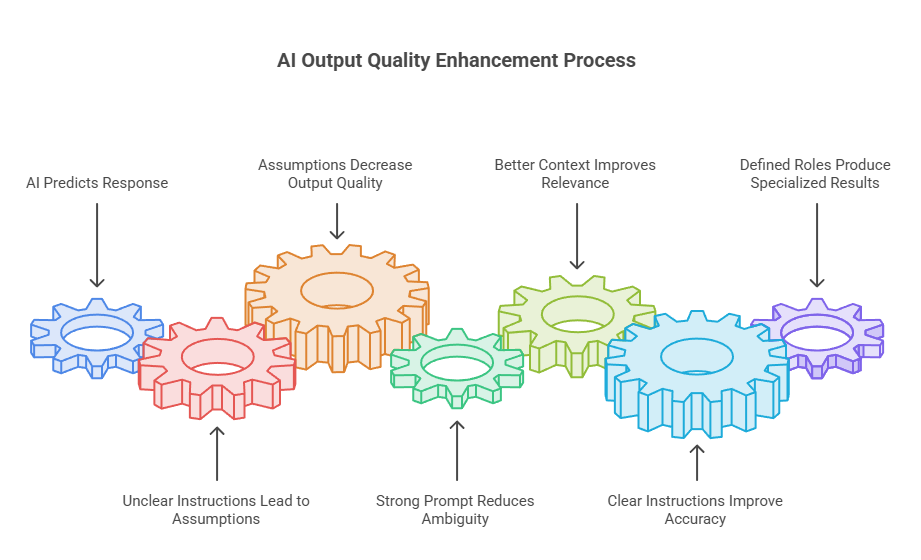
When assumptions increase, output quality often decreases.
A strong prompt reduces ambiguity and helps AI focus on the exact objective.
1. Better Context Leads to Better Responses
Context is one of the most powerful elements in prompt engineering.
When I provide background information, audience details, goals, and expectations, AI can generate responses that align more closely with my needs.
For example:
Poor Prompt:
“Write social media content.”
Improved Prompt:
“Create five LinkedIn posts for AI professionals discussing prompt engineering best practices using a professional and educational tone.”
The second prompt immediately narrows the scope and improves relevance.
2. Clear Instructions Improve Accuracy
AI performs better when tasks are specific.
Rather than asking:
“Explain machine learning.”
I can ask:
“Explain machine learning to complete beginners using simple language, real-world examples, and a conversational tone.”
This level of clarity helps the model deliver information in the desired format.
3. Defined Roles Produce Specialized Results
One technique I frequently use is role prompting.
By assigning an expert role, I help the AI adopt a specific perspective.
Examples include:
- Act as a software engineer.
- Act as a marketing strategist.
- Act as a prompt engineering expert.
- Act as a business consultant.
Role-based prompts often generate more focused and industry-relevant outputs.
Different Levels of Prompt Engineering
Not all prompts are created equal. As users gain experience, they typically progress through different levels of prompt sophistication.
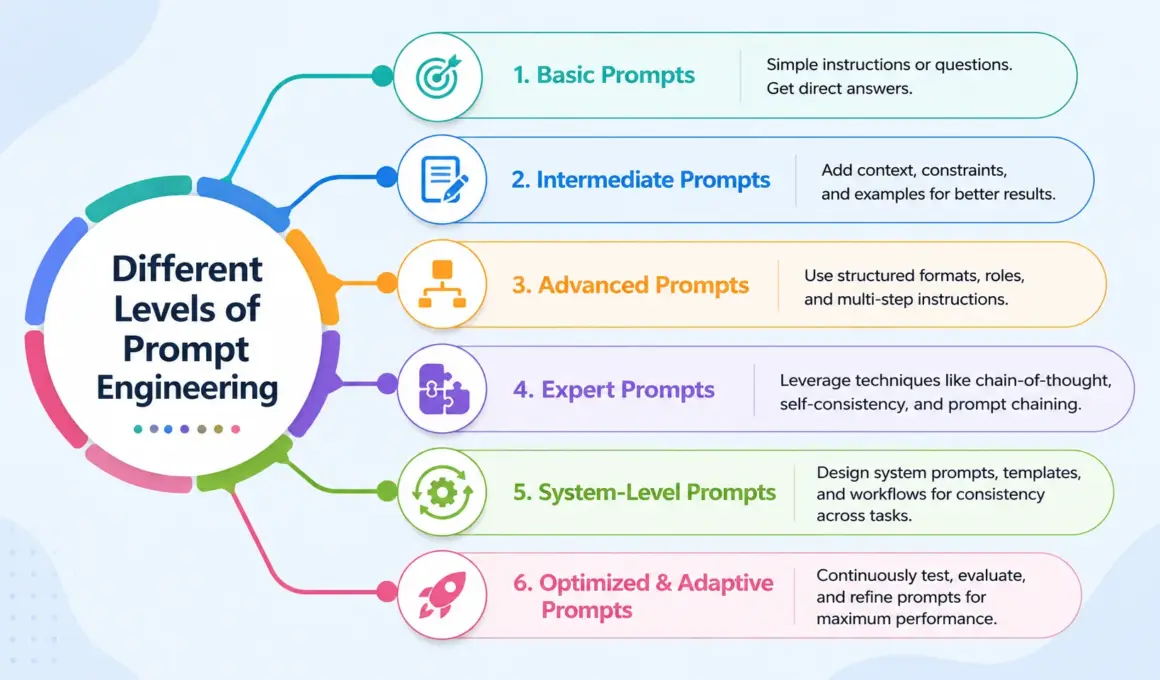
1. Basic Prompts
These are simple instructions without much context.
Example:
“Write an email.”
Basic prompts can work for simple tasks but often produce generic outputs.
2. Context-Rich Prompts
These include background information, goals, target audience, and desired outcomes.
Example:
“Write a professional follow-up email to a client after a product demonstration. Maintain a friendly but persuasive tone.”
This approach generally delivers much stronger results.
3. Structured Prompts
Structured prompts break tasks into specific components.
For example:
- Define the audience.
- Specify the objective.
- Set the tone.
- Choose the format.
- Include examples.
The more structure provided, the easier it becomes for AI to generate precise outputs.
4. System-Level Prompting
Advanced AI users often create system instructions that guide model behavior throughout an entire conversation.
These instructions can define:
- Writing style
- Expertise level
- Formatting rules
- Tone consistency
- Response limitations
This technique is widely used in AI applications, chatbots, and enterprise automation systems.
5. Workflow-Based Prompt Engineering
This represents one of the most advanced approaches.
Instead of using a single prompt, users create a sequence of prompts that work together.
For example:
- Research a topic.
- Generate an outline.
- Create content sections.
- Review accuracy.
- Optimize for SEO.
- Improve readability.
Breaking large tasks into multiple stages often produces significantly higher-quality results than relying on a single prompt.
Key Elements of a High-Quality Prompt
After working with AI systems extensively, I have found that effective prompts usually contain several important components.
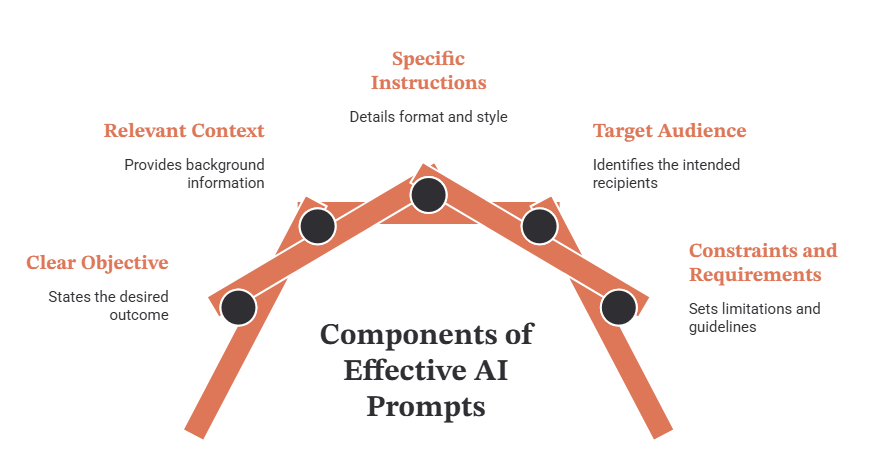
1. Clear Objective
State exactly what you want the AI to accomplish.
2. Relevant Context
Provide background information that helps the AI understand the situation.
3. Specific Instructions
Explain the desired format, structure, and output style.
4. Target Audience
Identify who the content is intended for.
5. Constraints and Requirements
Mention word count, tone, style guidelines, or limitations when necessary.
When these elements are combined properly, the difference in AI output quality can be remarkable.
Practical Steps to Improve AI Output Using Prompt Engineering
Understanding the theory behind prompt engineering is valuable, but the real benefits come from applying it consistently. Over time, I developed a simple framework that helps me create better prompts and achieve higher-quality AI outputs.
1. Start With a Specific Goal
Before writing a prompt, I always ask myself:
“What exact result do I want?”
Many AI users skip this step and immediately begin typing. As a result, the AI receives unclear instructions and produces mediocre responses.
Instead of saying:
“Help me with marketing.”
I define the goal more clearly:
“Create a content marketing strategy for an AI blog targeting beginners interested in prompt engineering.”
The clearer the objective, the better the outcome.
2. Provide Sufficient Context
Context helps AI understand the bigger picture.
For example, if I want AI to write a blog post, I include information such as:
- Target audience
- Industry
- Content goal
- Preferred tone
- Level of expertise
Without context, AI must guess. With context, AI can make informed decisions.
3. Define the Desired Format
Formatting instructions dramatically improve usability.
I often specify:
- Article format
- Bullet points
- Numbered lists
- Tables
- Executive summaries
- FAQs
- Case studies
For example:
“Write a blog post with an introduction, six main sections, a conclusion, and an FAQ section.”
The output becomes far more structured and easier to use.
4. Use Examples Whenever Possible
Examples act as reference points for AI.
If I want a certain writing style, I provide an example.
If I want a specific structure, I demonstrate it.
Examples reduce ambiguity and help the model align more closely with expectations.
5. Refine and Iterate
One of the biggest misconceptions about generative AI is that every prompt should work perfectly on the first attempt.
Professional prompt engineering rarely works that way.
I frequently refine prompts multiple times.
The process usually looks like this:
- Generate an initial response.
- Identify weaknesses.
- Add clarification.
- Improve instructions.
- Generate again.
Each iteration improves quality.
Common Prompt Engineering Mistakes to Avoid
Many users unknowingly reduce AI performance through avoidable mistakes.
1. Being Too Vague
Vague prompts create vague responses.
Example:
“Tell me about business.”
This instruction is too broad.
A stronger prompt would be:
“Explain how small businesses can use AI automation to improve productivity and reduce operational costs.”
2. Providing Too Many Unrelated Instructions
While context is important, excessive information can confuse the model.
Focus on relevant details only.
Clear and concise instructions often outperform long, disorganized prompts.
3. Ignoring Audience Requirements
The same explanation should not be given to a beginner and an experienced professional.
Always specify the intended audience.
For example:
- Explain for beginners.
- Explain for business leaders.
- Explain for software developers.
- Explain for marketing professionals.
Audience awareness significantly improves relevance.
4. Expecting AI to Read Your Mind
AI models are powerful, but they cannot infer hidden intentions.
The more explicit you are, the better the results tend to be.
Real-World Applications of Prompt Engineering
Prompt engineering is no longer limited to AI enthusiasts or researchers. It is being used across industries to improve efficiency, creativity, and decision-making.
1. Content Marketing and SEO
As someone who regularly creates AI-focused content, I see prompt engineering transforming the content creation process.
AI can assist with:
- Keyword research
- Content outlines
- Blog writing
- Meta descriptions
- Content optimization
- Social media content
However, quality depends heavily on prompt quality.
A detailed SEO prompt often produces significantly better results than a generic request.
2. Software Development
Developers increasingly use AI coding assistants to:
- Generate code
- Debug errors
- Explain algorithms
- Create documentation
- Review software architecture
Prompt engineering helps developers obtain more accurate and efficient coding assistance.
3. Education and Learning
Students and educators use AI to:
- Simplify complex concepts
- Create study guides
- Generate quizzes
- Develop lesson plans
- Practice language skills
Well-structured prompts improve educational value while reducing confusion.
4. Business Operations
Businesses are using AI for:
- Customer support
- Market research
- Internal documentation
- Workflow automation
- Strategic planning
Organizations that invest in prompt engineering often achieve more reliable AI-assisted outcomes.
5. Productivity and Personal Workflows
Many professionals now use AI as a personal productivity assistant.
Prompt engineering can help with:
- Meeting summaries
- Task planning
- Email drafting
- Research assistance
- Project management
The result is often faster execution and better organization.
The Role of Prompt Engineering in AI Automation
One of the most exciting developments in modern AI is automation.
Today’s AI systems are increasingly integrated into workflows involving:
- Large Language Models
- AI agents
- Business automation platforms
- Knowledge management systems
- Enterprise productivity tools
Prompt engineering acts as the bridge between human intent and automated execution.
For example, an automated content workflow might:
- Research a topic.
- Generate an outline.
- Create a draft.
- Optimize for SEO.
- Review readability.
- Publish content.
Each step relies on carefully engineered prompts.
Poor prompts can break the workflow.
Strong prompts improve consistency and reliability.
This is one reason prompt engineering remains a critical skill even as AI systems become more advanced.
The Future of Prompt Engineering
Some people believe prompt engineering will disappear as AI models become smarter.
Based on current industry trends, I believe the opposite.
AI systems are becoming more capable, but human guidance remains essential.
As organizations deploy AI at scale, they need professionals who understand how to:
- Communicate effectively with AI systems
- Design reliable AI workflows
- Optimize outputs for business goals
- Reduce errors and hallucinations
- Improve efficiency and consistency
Prompt engineering is evolving from a simple skill into a broader discipline that combines communication, critical thinking, domain expertise, and AI strategy.
The future may involve AI agents, multimodal systems, and autonomous workflows, but clear instructions will always remain important.
Conclusion
Understanding How Prompt Engineering Improves AI Output Quality can dramatically change the way you interact with artificial intelligence.
The difference between average and exceptional AI results often comes down to the quality of the instructions provided. By defining clear objectives, providing context, specifying formats, using examples, and continuously refining prompts, users can unlock significantly better outcomes from modern AI systems.


