ChatGPT Prompt Engineering Guide for Better Responses
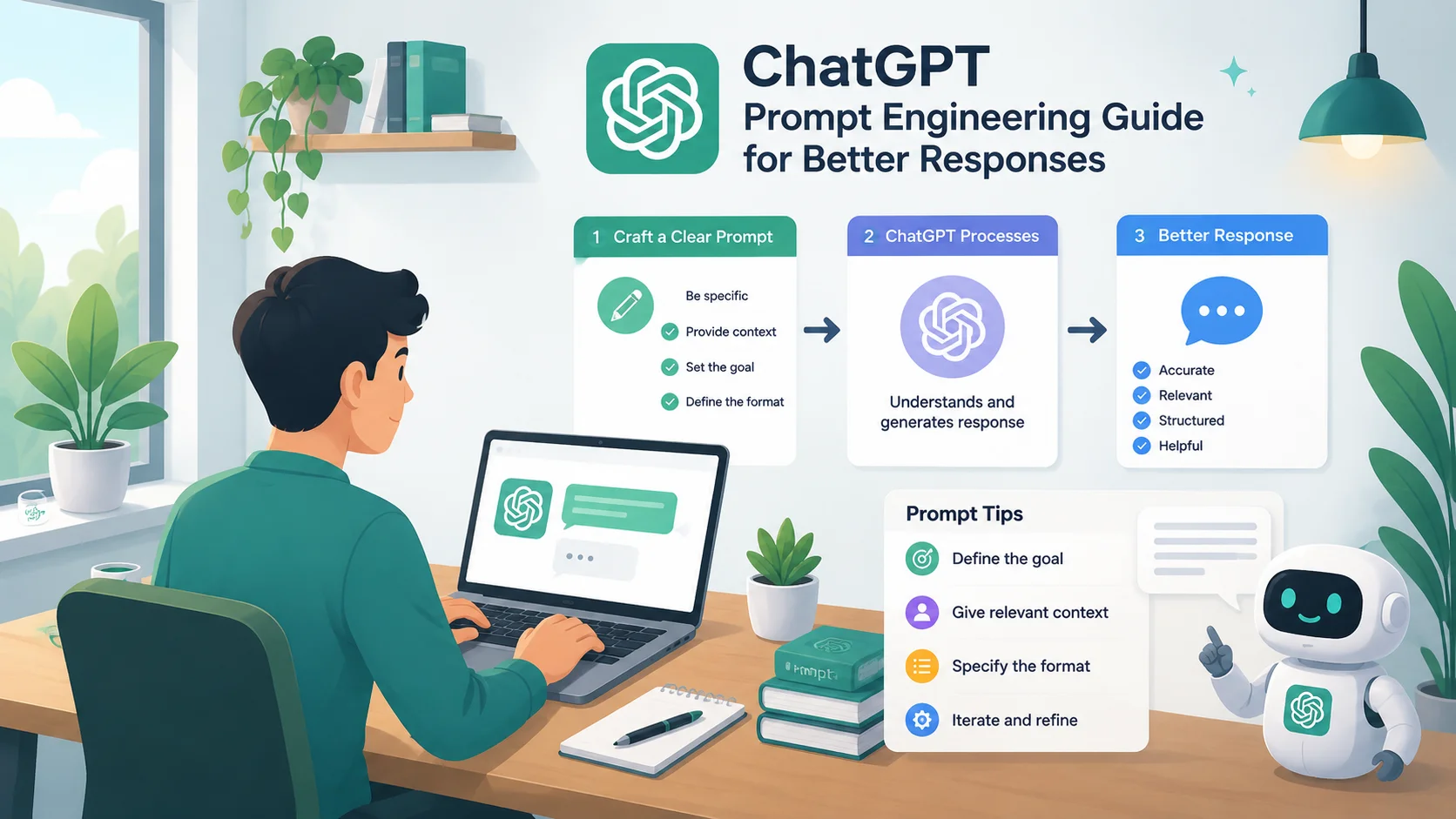
ChatGPT prompt engineering is the process of creating clear and effective instructions that help ChatGPT generate accurate, relevant, and useful responses.
In simple words, prompt engineering is the skill of asking AI the right way!
Just like a human expert gives better answers when you ask better questions, ChatGPT also performs better when it receives detailed and structured prompts.
For example:
❌ Weak Prompt:
“Write about marketing.”
✅ Better Prompt:
“Write a beginner-friendly 500-word article explaining digital marketing, including its benefits, examples, and common strategies.”
The second prompt provides context, direction, and expectations. As a result, ChatGPT produces a much better response.
Why is ChatGPT Prompt Engineering Important?
Many people think AI automatically understands everything perfectly. However, the quality of AI output depends heavily on the quality of the input.
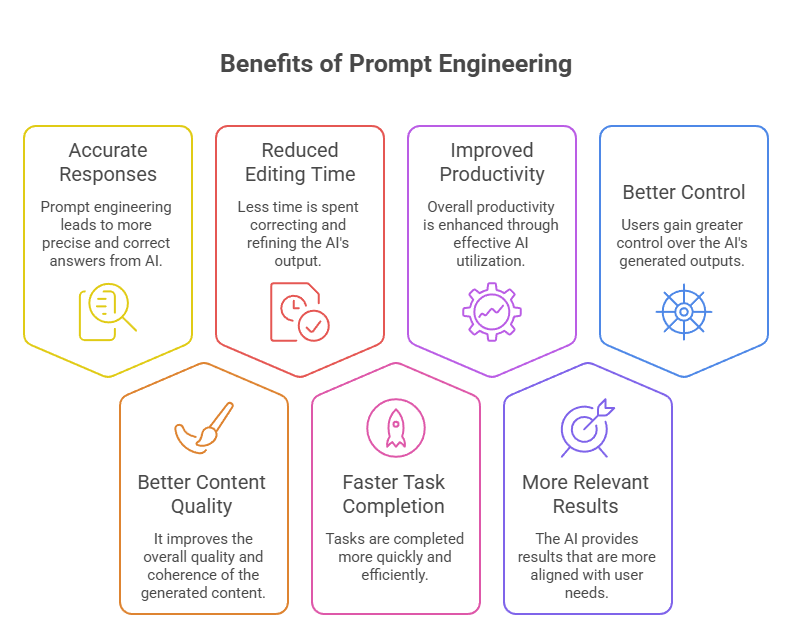
Benefits of prompt engineering include:
- More accurate responses
- Better content quality
- Reduced editing time
- Faster task completion
- Improved productivity
- More relevant results
- Better control over AI outputs
Whether you are a student, blogger, marketer, developer, business owner, or researcher, prompt engineering can significantly improve your results.
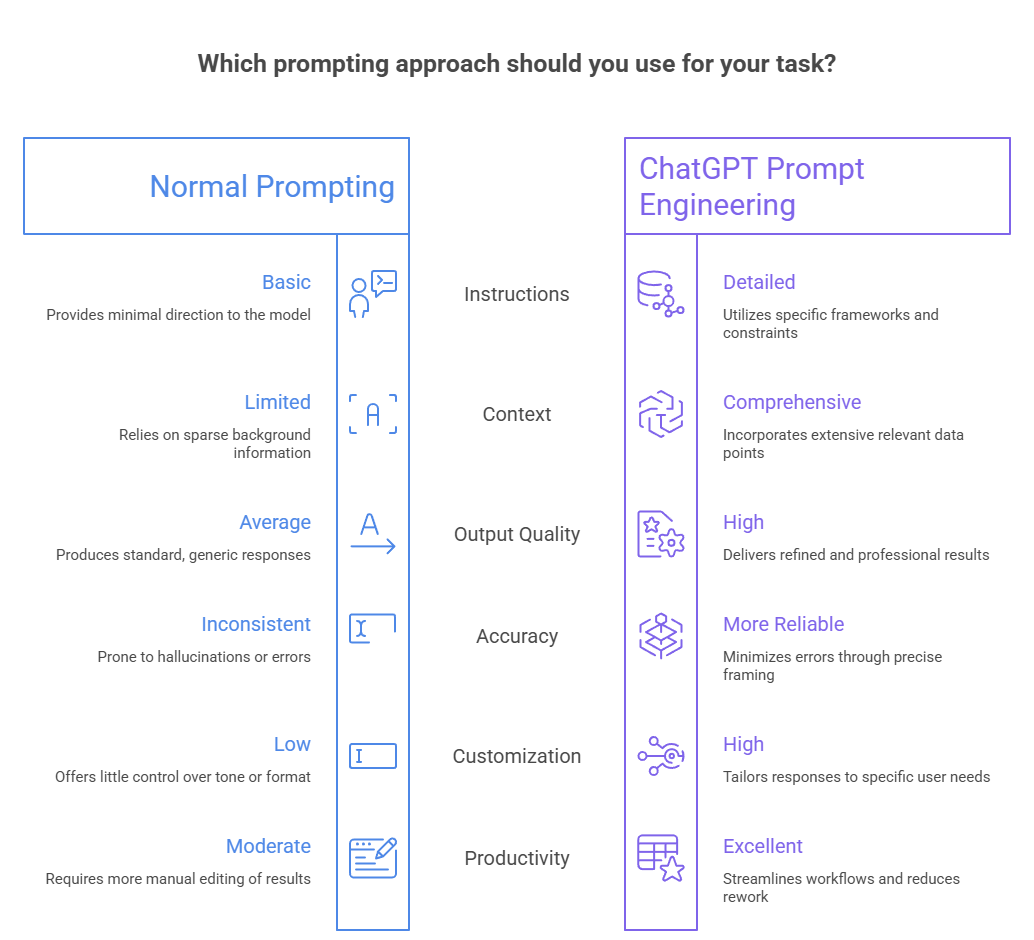
ChatGPT Prompt Engineering vs Normal Prompting
| Feature | Normal Prompting | ChatGPT Prompt Engineering |
|---|---|---|
| Instructions | Basic | Detailed |
| Context | Limited | Comprehensive |
| Output Quality | Average | High |
| Accuracy | Inconsistent | More Reliable |
| Customization | Low | High |
| Productivity | Moderate | Excellent |
Prompt engineering is not about making prompts longer. It is about making them smarter and more specific.
How ChatGPT Prompt Engineering Works
ChatGPT analyzes the information provided in your prompt and uses it to predict the most suitable response.
The process typically follows these steps:
- User enters a prompt.
- ChatGPT interprets the instructions.
- AI identifies context and goals.
- AI generates a response based on the prompt.
- User refines the prompt if necessary.
The more guidance you provide, the easier it becomes for ChatGPT to understand your expectations.
Think of prompt engineering as giving a GPS destination to AI instead of simply saying “drive somewhere.”
Suggested Links:
- 10+ Resources to Master Prompt Engineering
- 100 Best ChatGPT Prompts That Actually Work (With Examples)
- 13 Prompt Engineering Basics Every Creator Should Know
- 13 Prompt Engineering Tips to Get Better AI Results
- 27 Simple Prompt Engineering Tricks That Save Time
- 7 Advanced Prompt Engineering Techniques for Experts
- 7 Prompt Engineering Templates You Can Use Today
- Agentic AI Explained: Build Autonomous AI Agents with ReAct Framework (2026 Guide)
Key Elements of an Effective ChatGPT Prompt
A well-structured prompt usually contains several important elements.
1. Clear Objective
Tell ChatGPT exactly what you want.
Example:
“Explain machine learning to a beginner.”
2. Context
Provide background information.
Example:
“Explain machine learning to a beginner who has no technical knowledge.”
3. Desired Format
Specify how you want the output.
Example:
“Explain machine learning using bullet points.”
4. Tone of Voice
Mention the writing style.
Example:
“Use a friendly and conversational tone.”
5. Length Requirement
Define the expected output size.
Example:
“Write approximately 500 words.”
Combining all these elements creates a powerful prompt.
Best ChatGPT Prompt Engineering Techniques
Role-Based Prompting
One of the most effective techniques is assigning a role to ChatGPT.
Example:
“Act as an SEO expert and explain keyword research.”
This helps the AI respond from a specialized perspective.
Step-by-Step Prompting
Ask ChatGPT to break down complex topics.
Example:
“Explain how to start a blog in step-by-step format.”
This improves clarity and organization.
Contextual Prompting
Provide background details before asking a question.
Example:
“I own a small online store that sells handmade candles. Suggest marketing strategies.”
The additional context produces more personalized recommendations.
Constraint-Based Prompting
Set limitations for the response.
Example:
“Write a product description in less than 100 words.”
Constraints help generate focused outputs.
Example-Based Prompting
Show examples of what you want.
Example:
“Create social media captions similar to these examples.”
Examples often improve accuracy dramatically.
Common ChatGPT Prompt Engineering Mistakes
Many users unknowingly make mistakes that reduce response quality.
Being Too Vague
Bad Example:
“Tell me about business.”
Better Example:
“Explain how small businesses can use social media marketing to increase sales.”
Ignoring Context
Without context, ChatGPT must guess your requirements.
Not Specifying Format
You may receive paragraphs when you actually wanted bullet points.
Using Multiple Goals in One Prompt
Trying to accomplish too many tasks at once can confuse the AI.
Not Refining Prompts
Prompt engineering is often an iterative process. Small improvements can produce significantly better results.
Examples of Effective ChatGPT Prompts
Here are practical examples you can use immediately.
For Blog Writing
“Act as an SEO content writer. Write a 1,000-word article about email marketing for beginners. Use simple language, include practical examples, and optimize for readability.”
For Students
“Explain photosynthesis in simple language suitable for a 10th-grade student.”
For Business Owners
“Act as a marketing consultant and suggest five low-cost strategies for increasing local brand awareness.”
For Developers
“Act as a senior Python developer and explain how API authentication works with practical examples.”
For Social Media
“Create ten Instagram captions for a fitness brand using an engaging and motivational tone.”
Advanced ChatGPT Prompt Engineering Tips
Once you understand the basics, you can apply more advanced techniques.
Ask for Multiple Versions
Example:
“Generate three different versions of this headline.”
Request Self-Evaluation
Example:
“Review your response and suggest improvements.”
Use Chain Prompting
Break large tasks into smaller tasks.
Instead of:
“Create an entire marketing strategy.”
Try:
- Identify target audience.
- Create marketing goals.
- Suggest marketing channels.
- Develop campaign ideas.
This approach often delivers higher-quality results.
Refine Continuously
Professional users rarely stop after the first response. They improve prompts based on the results they receive.
Who Should Learn ChatGPT Prompt Engineering?
Prompt engineering is useful for almost everyone.
Students
- Faster learning
- Better research assistance
- Homework support
Content Creators
- Blog writing
- Social media content
- Video scripts
Marketers
- Ad copy creation
- Campaign planning
- SEO content generation
Developers
- Coding assistance
- Debugging help
- Documentation generation
Business Professionals
- Email drafting
- Report creation
- Productivity improvement
As AI adoption grows, prompt engineering is becoming an increasingly valuable skill.
Future of ChatGPT Prompt Engineering
AI tools are evolving rapidly, but effective communication with AI will remain essential.
People who understand prompt engineering can:
- Save time
- Improve productivity
- Generate higher-quality content
- Automate repetitive tasks
- Gain a competitive advantage
Rather than replacing human creativity, prompt engineering enhances it by helping users work more effectively with AI systems.
Conclusion
ChatGPT prompt engineering is the art of communicating effectively with AI to achieve better results. The clearer and more structured your prompts are, the more accurate and useful the responses become.
Whether you are a beginner exploring AI or a professional using ChatGPT daily, learning prompt engineering can dramatically improve your productivity and output quality.
Start with simple prompts, provide clear context, define your goals, and continuously refine your instructions. Over time, you’ll discover that small prompt improvements can lead to significantly better AI-generated responses.
Mastering ChatGPT prompt engineering is not just a technical skill—it’s a practical advantage in today’s AI-powered world.
Frequently Asked Questions (FAQs)
What is ChatGPT prompt engineering?
ChatGPT prompt engineering is the process of designing effective prompts that help AI generate more accurate and useful responses.
Why is prompt engineering important?
It improves response quality, accuracy, relevance, and overall productivity when using AI tools.
Can beginners learn prompt engineering?
Yes. Anyone can learn prompt engineering by practicing clear and structured communication with AI.
What makes a good ChatGPT prompt?
A good prompt includes a clear objective, context, desired format, tone, and specific instructions.
Does prompt engineering require coding knowledge?
No. Most prompt engineering techniques can be learned and used without any programming experience.


