Prompt Engineering Best Practices for AI Success
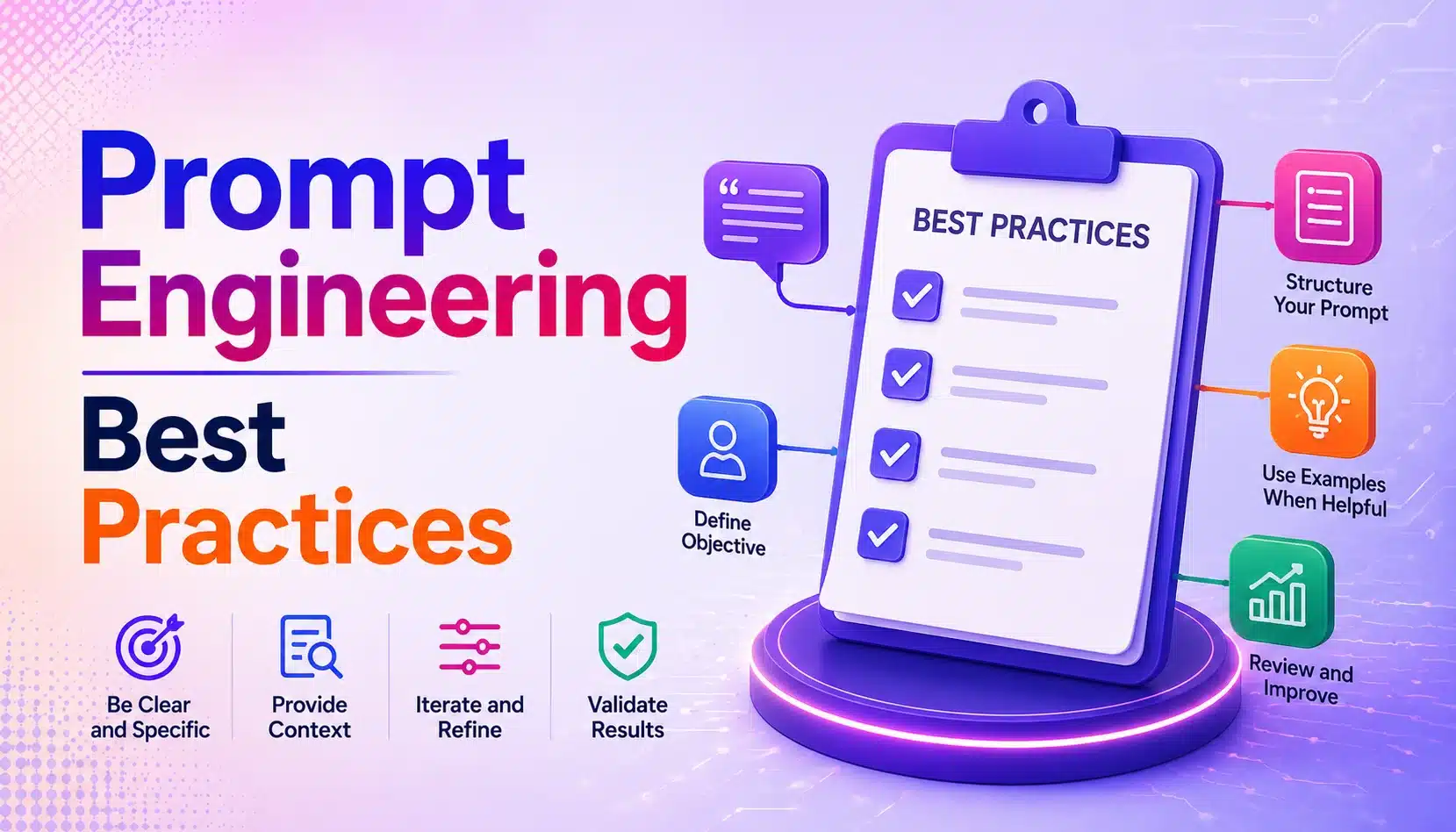
Imagine having a super-smart assistant who knows almost everything in the world but needs exact instructions to do a job right. That assistant is Artificial Intelligence! Millions of people use AI every single day, but many feel disappointed with the results they get. Why does this happen? The secret lies in how you talk to the AI. This skill is called prompt engineering, and mastering it will completely change your digital life!
If you want to stop getting generic answers and start getting highly accurate, brilliant results, you need to follow the right strategies. Let’s dive into the ultimate guide on prompt engineering best practices to unlock your true AI success!
What is Prompt Engineering and Why Does It Matter?
Before we look at the strategies, let us understand what a prompt actually is. A prompt is simply the text, question, or command you type into an AI tool. Prompt engineering is the art and science of structuring that text so the AI understands exactly what you want.
When you write a great prompt, magic happens! You get answers that are accurate, creative, and perfectly tailored to your needs. If you write a poor prompt, the AI will guess what you mean, which often leads to errors or boring replies. Learning prompt engineering best practices is like learning how to drive a luxury sports car instead of just pushing it down the street!
Be Clear and Specific with Your Instructions
The number one rule of talking to AI is clarity. High-quality output requires high-quality input. If you ask a vague question, you will get a vague answer.
Instead of writing a short, open-ended sentence, add details that explain your goal. Tell the AI exactly what topic to cover, what points to include, and what to leave out.
- Bad Prompt: Write an essay about fitness.
- Good Prompt: Write a short essay about the physical benefits of daily weightlifting for teenagers. Focus on muscle growth and mental focus.
See the massive difference? The second prompt gives the AI a clear roadmap, ensuring you get exactly what you need on the very first try!
Give the AI a Specific Role or Persona
Did you know that you can tell an AI who it should pretend to be? This is one of the most powerful prompt engineering best practices you can use! When you assign a persona, the AI changes its tone, vocabulary, and perspective to match that role.
You can ask the AI to act as a professional chef, a financial advisor, a high school teacher, or a code reviewer.
“Act as a veteran travel guide with twenty years of experience in Japan. Create a three-day budget itinerary for Tokyo.”
By doing this, the AI filters its vast knowledge base through the lens of a travel expert. The result is a much more realistic, practical, and exciting response!
Provide Context and Examples for Better Results
AI models learn incredibly well from examples. If you want the AI to generate content in a specific style, show it what that style looks like! This method is often called few-shot prompting.
If you want the AI to write product descriptions, give it two examples of descriptions you love. Then, ask it to write a third one for your new product.
Context is equally important. Tell the AI who the target audience is, why you are creating this piece of content, and where it will be published. If the AI knows the background story, it will craft a response that truly connects with your readers!
Set Boundaries and Specify the Output Format
If you do not want your AI assistant to ramble on forever, you must set clear boundaries! Tell the AI exactly how long the response should be. You can specify the length in words, paragraphs, or bullet points.
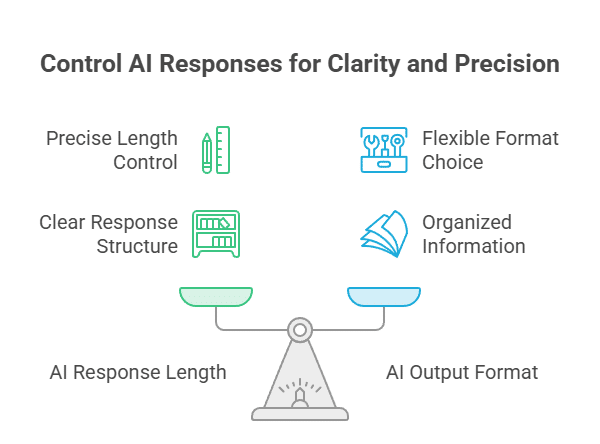
Furthermore, you can choose the exact format of the output. AI can organize information into tables, bulleted lists, code blocks, or even standard dialogue.
| Desired Output | How to Ask the AI |
| Quick Summary | “Summarize this article in exactly three bullet points.” |
| Data Comparison | “Create a table comparing the prices and features of iPhone 15 and Samsung S24.” |
| Step-by-Step Guide | “Provide a numbered, sequential list of instructions to bake a chocolate cake.” |
By managing the format, you save yourself from spending tedious minutes editing and rearranging text later!
Iterate and Refine Your Prompts Over Time
Do not expect perfection on your very first try! Prompt engineering is an ongoing conversation. If the AI gives you a response that is almost right but not quite perfect, talk to it like a human co-worker.
Read Also: Artificial Intelligence
You can give follow-up instructions to tweak the output. Say things like, “Make the tone more exciting,” or “Remove the third paragraph and expand on the second point.” This iterative process helps you discover what works best. Treat your AI interactions as a collaborative journey toward success!
Common Mistakes to Avoid in Prompt Engineering
To truly find success, you must also know what not to do. Many beginners fall into simple traps that ruin their AI experience.
- Using Overly Complex Language: You do not need to use giant vocabulary words to impress the AI. Simple, direct English works best!
- Sticking Everything in One Prompt: If you have a massive task, break it down into smaller steps. Ask the AI to outline first, then write section by section.
- Trusting Every Single Fact: AI can sometimes make things up confidently. Always double-check important dates, statistics, and legal facts before publishing your work!
Conclusion
Mastering prompt engineering best practices is the ultimate shortcut to thriving in our modern, AI-driven world! By being clear, assigning roles, giving context, and refining your answers, you turn AI into a flawless productivity machine. Start practicing these simple tips today, and you will watch your efficiency skyrocket to incredible new heights!
To help you put these principles into immediate action, use the interactive Prompt Builder below to craft perfect, structured prompts effortlessly!


