Prompt Engineering Strategies for Content Creators
Artificial intelligence has transformed content creation. From blog posts and social media captions to email campaigns and video scripts, AI tools can dramatically accelerate the creative process. Yet many content creators quickly discover a frustrating reality: the quality of AI-generated content depends heavily on the quality of the prompts provided.
This is where prompt engineering becomes essential.
Prompt engineering is the practice of designing instructions that guide AI models toward producing accurate, relevant, engaging, and high-quality outputs. For content creators, mastering prompt engineering can mean the difference between generic content and content that truly resonates with audiences.
In this guide, we’ll explore practical prompt engineering strategies that help writers, marketers, bloggers, educators, and digital creators unlock the full potential of AI.
Why Prompt Engineering Matters for Content Creators
Many creators assume AI content quality depends solely on the AI model. In reality, prompt quality often has a greater impact than model selection.
Effective prompt engineering helps content creators:
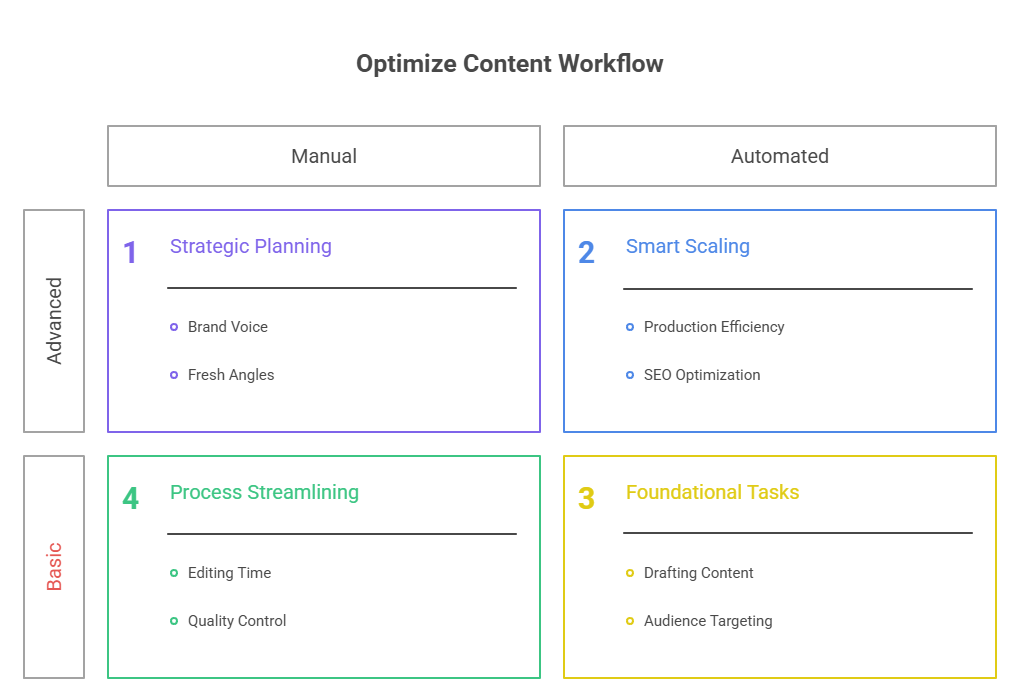
- Generate higher-quality drafts
- Reduce editing time
- Maintain brand voice consistency
- Improve SEO optimization
- Create audience-specific content
- Increase content production efficiency
- Generate fresh ideas and angles
As AI becomes more integrated into content workflows, prompt engineering is emerging as a critical digital skill.
Strategy 1: Define the Audience Clearly
One of the biggest mistakes creators make is failing to specify who the content is for.
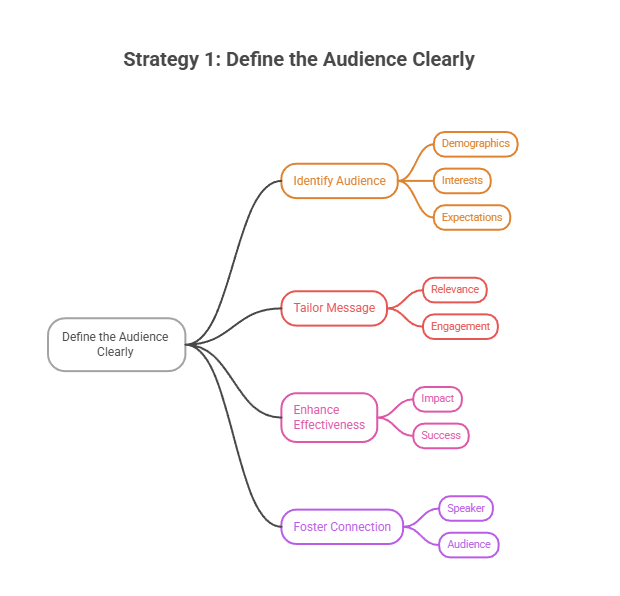
AI writes differently depending on the audience it is targeting.
Weak Prompt
“Write an article about email marketing.”
Strong Prompt
“Write an article about email marketing for beginner ecommerce store owners who have never run an email campaign before.”
The second prompt immediately changes:
- Language complexity
- Examples used
- Tone of voice
- Educational depth
- Practical recommendations
Always define:
- Audience type
- Experience level
- Industry
- Goals
- Pain points
Strategy 2: Assign a Role to the AI
Role prompting is one of the most effective prompt engineering techniques.
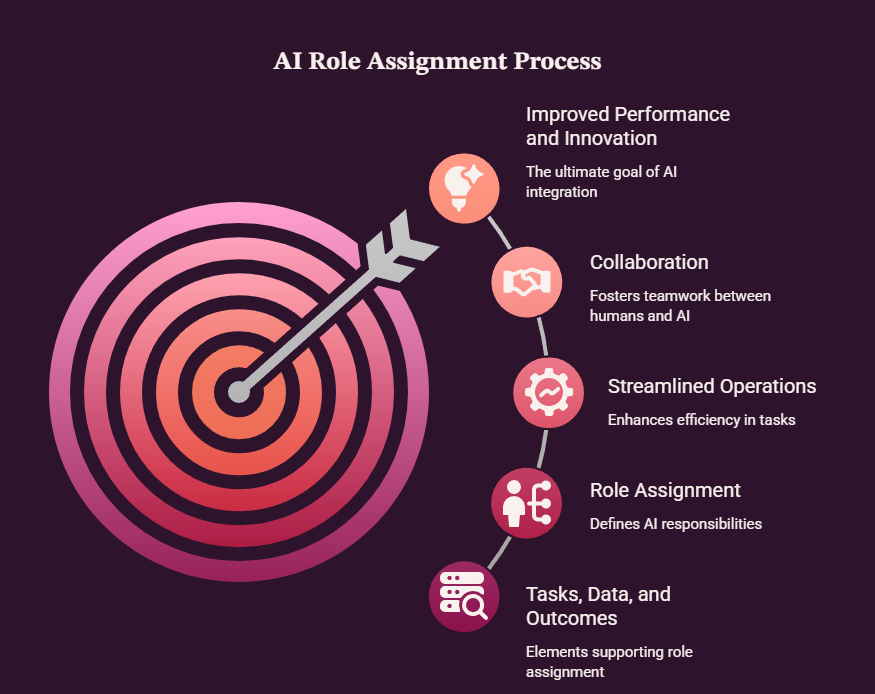
When you assign a role, the AI adopts a specific perspective and expertise level.
Example
“Act as an experienced content marketing strategist specializing in B2B SaaS companies.”
This immediately influences:
- Vocabulary
- Strategic recommendations
- Writing style
- Industry-specific knowledge
Common roles for content creators include:
- SEO consultant
- Content strategist
- Technical writer
- Copywriter
- Social media manager
- Brand storyteller
- Email marketing specialist
Strategy 3: Provide Context Before Instructions
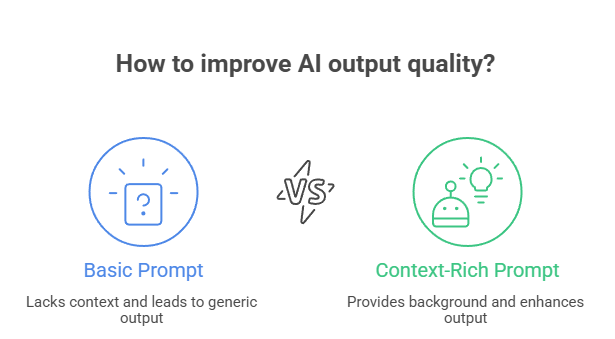
Context dramatically improves output quality.
Many creators jump directly to the task without explaining the situation.
Basic Prompt
“Write a landing page.”
Context-Rich Prompt
“Our company sells AI-powered customer support software for small businesses. The goal of the landing page is to increase demo bookings. The audience struggles with long response times and customer service costs.”
Adding context helps AI make better decisions throughout the content creation process.
Strategy 4: Specify Content Structure
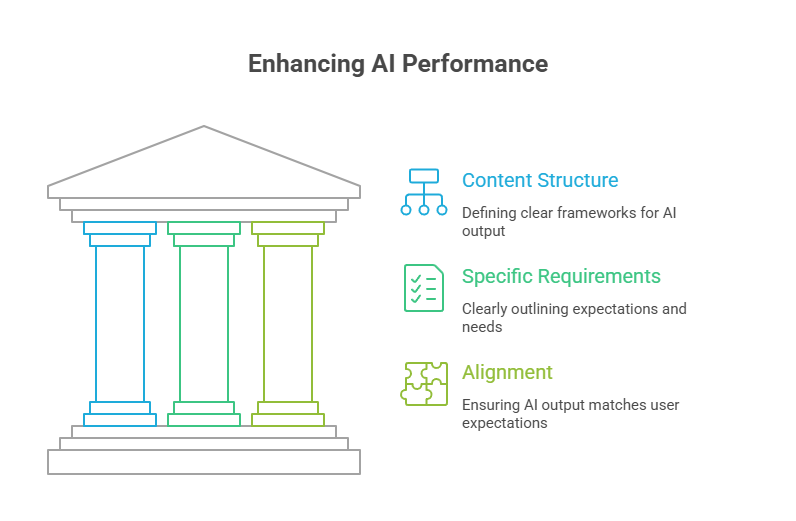
AI performs significantly better when given a clear framework.
Instead of requesting content generally, define the exact structure.
Example Prompt
“Write a blog post using the following structure:
- Introduction
- What Is Content Marketing?
- Benefits of Content Marketing
- Common Mistakes
- Best Practices
- Conclusion
- FAQ Section”
Structured prompts often produce:
- Better readability
- Stronger organization
- Improved SEO performance
- Easier editing
Strategy 5: Use Detailed Output Requirements
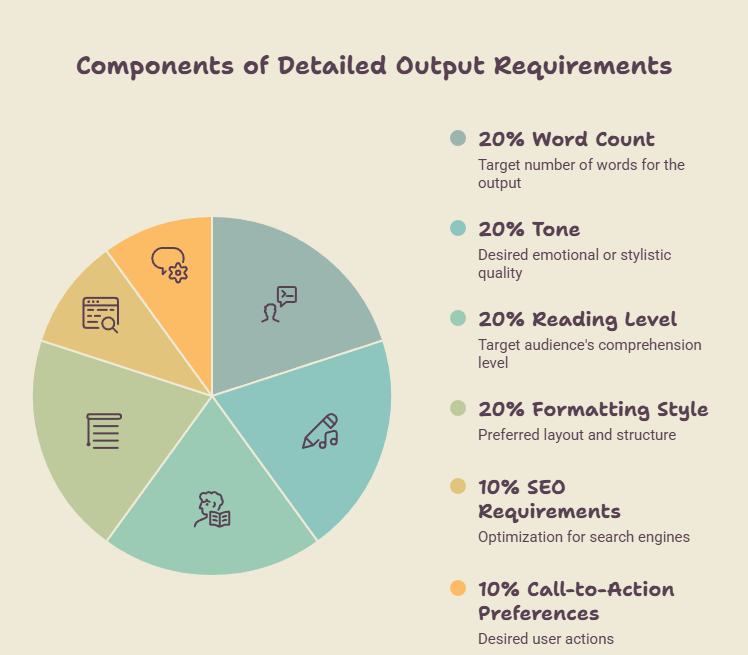
The more specific your requirements, the more aligned the output becomes.
Include instructions such as:
- Word count
- Tone
- Reading level
- Formatting style
- SEO requirements
- Call-to-action preferences
Example
“Write a 2,000-word article using a professional but conversational tone. Use short paragraphs, H2 and H3 headings, bullet points, and include practical examples throughout.”
This removes ambiguity and improves consistency.
Strategy 6: Leverage Chain-of-Thought Style Workflows
Complex content often benefits from breaking tasks into smaller stages.
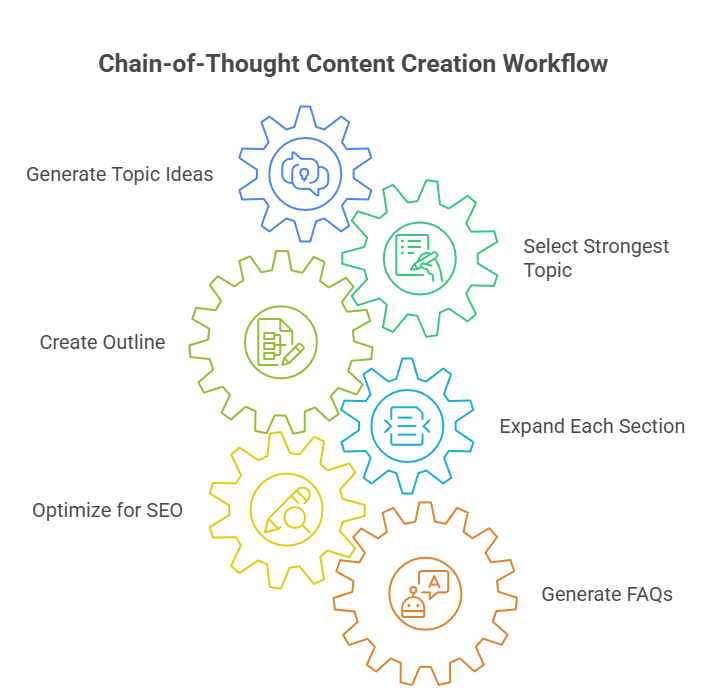
Instead of requesting everything at once, use a step-by-step workflow.
Example Workflow
Step 1: Generate topic ideas.
Step 2: Select the strongest topic.
Step 3: Create an outline.
Step 4: Expand each section.
Step 5: Optimize for SEO.
Step 6: Generate FAQs.
This approach often produces more thoughtful and comprehensive content.
Strategy 7: Use Examples to Guide Output
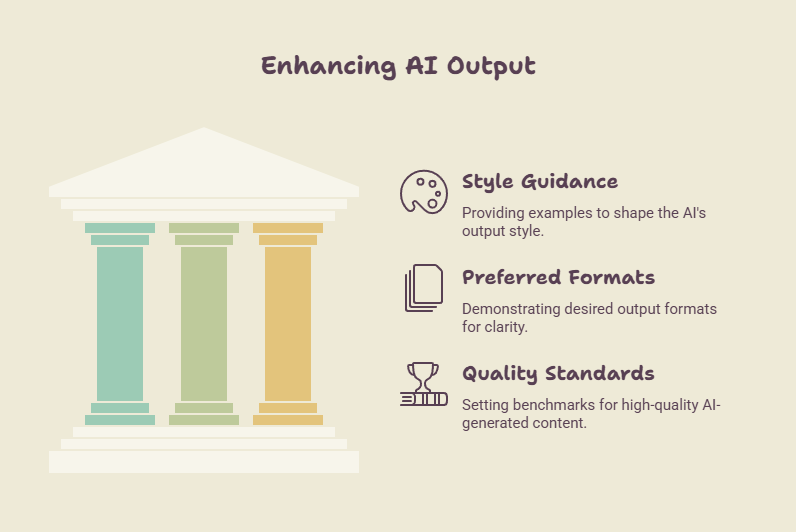
AI learns quickly from examples provided in prompts.
If you have a preferred style, show the model what good looks like.
Example
“Write in a style similar to this example:
‘SEO isn’t about tricking search engines. It’s about helping people find useful information faster.'”
Examples help establish:
- Tone
- Sentence structure
- Formatting
- Brand voice
- Content depth
This technique is often called few-shot prompting.
Strategy 8: Define SEO Requirements Explicitly
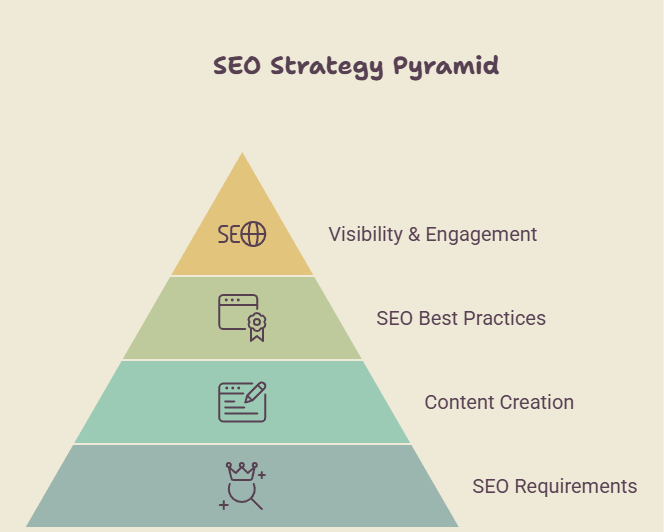
Content creators focused on organic traffic should include SEO instructions directly in prompts.
Example SEO Prompt
“Create an SEO-optimized article targeting the keyword ‘prompt engineering strategies.’ Include:
- Semantic keywords
- Search-intent-focused headings
- Featured snippet opportunities
- FAQ section
- Natural keyword placement
- EEAT principles”
This helps align content with modern search engine expectations.
Strategy 9: Request Multiple Variations
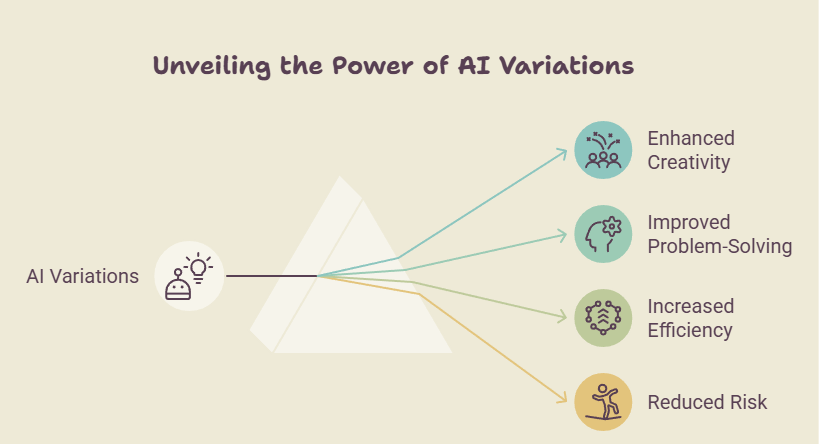
One of AI’s greatest strengths is generating alternatives quickly.
Instead of accepting the first version, ask for multiple options.
Examples
“Generate five headline variations.”
“Provide three introduction options.”
“Create ten alternative CTA statements.”
This expands creative possibilities and often uncovers stronger ideas.
Strategy 10: Iterate and Refine
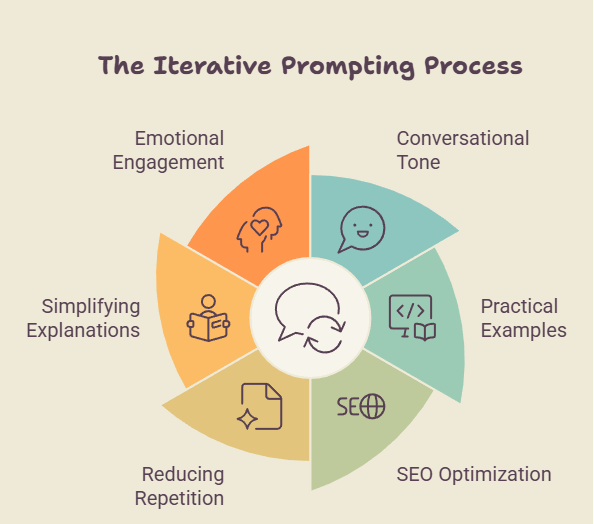
Prompt engineering is rarely a one-step process.
Professional creators treat prompting as a conversation rather than a command.
Common refinement prompts include:
- “Make this more conversational.”
- “Add more practical examples.”
- “Improve SEO optimization.”
- “Reduce repetition.”
- “Simplify technical explanations.”
- “Increase emotional engagement.”
Iterative prompting consistently produces higher-quality content.
Advanced Prompt Engineering Framework
Many successful content creators use a structured framework like:
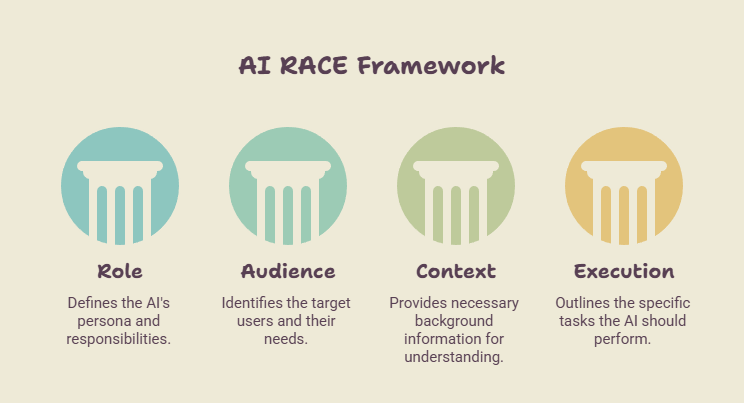
RACE Framework
R — Role
Who should the AI act as?
A — Audience
Who is the content for?
C — Context
What background information is needed?
E — Execution
What specific task should be completed?
Example
“Act as an SEO strategist (Role).
Write for beginner bloggers (Audience).
The goal is to help them understand keyword research (Context).
Create a 1,500-word guide with examples, headings, and FAQs (Execution).”
This framework dramatically improves prompt clarity.
Common Prompt Engineering Mistakes
Even experienced creators make mistakes that reduce output quality.
Being Too Vague
Vague prompts produce vague results.
Skipping Audience Details
Content becomes generic without audience targeting.
Ignoring Context
AI lacks important situational information.
Overloading One Prompt
Too many objectives can confuse the model.
Accepting First Drafts
Iterative refinement almost always improves quality.
Future of Prompt Engineering for Content Creation
Prompt engineering is evolving rapidly.
As AI systems become more capable, creators will increasingly focus on:
- Strategic prompting
- Workflow automation
- AI collaboration
- Content personalization
- Multi-format content generation
Rather than replacing creativity, prompt engineering amplifies it.
Creators who master prompting gain the ability to produce more content, experiment with more ideas, and focus more time on strategy and storytelling.
Conclusion
Prompt engineering has become one of the most valuable skills for modern content creators. While AI models continue to improve, the quality of generated content still depends heavily on the instructions they receive.
By defining audiences, providing context, assigning roles, specifying structures, and refining outputs iteratively, creators can transform AI from a simple writing assistant into a powerful content production partner.
What is prompt engineering in content creation?
Prompt engineering is the practice of designing clear and strategic instructions that help AI generate high-quality content tailored to specific goals and audiences.
Why is prompt engineering important for writers?
It improves content quality, reduces editing time, enhances creativity, and helps maintain consistency across different content formats.
What is the best prompt engineering strategy?
Providing clear context, audience information, role definitions, and structured instructions typically produces the most effective results.
Can prompt engineering improve SEO content?
Yes. Well-designed prompts can help generate content that aligns with search intent, includes semantic keywords, and follows SEO best practices.
Is prompt engineering a skill worth learning?
Absolutely. As AI becomes increasingly integrated into content marketing and digital publishing, prompt engineering is becoming an essential skill for content creators and marketers.


