How to Write Better Prompts for AI Tools

Welcome to the ultimate guide on getting the best results from Artificial Intelligence! If you have ever felt frustrated because ChatGPT, Claude, or Gemini did not give you the answer you wanted, you are not alone. The secret to unlocking the true power of Artificial Intelligence lies in one simple skill: you must learn how to write better prompts!
Before we dive into the step-by-step guide on how to write better prompts for AI tools, let’s cover some important basics. Understanding these core concepts will make the rest of the guide much easier to follow!
What Exactly is a Prompt?
Prompt: A prompt is simply the text, question, or set of instructions you type into an AI tool to get a response. Think of it as your side of the conversation!
Prompt Engineering: This is the professional term for crafting, testing, and improving your prompts to get the highest quality output from the AI.
Context Window: The amount of text (or memory) the AI can read and remember at one time during your chat.
Artificial Intelligence (AI) Tool: A software program trained on massive amounts of data to generate text, images, or code based on your instructions.
How It Works: The Magic Behind the Screen!
Have you ever wondered what happens after you hit the “Send” button?
When you type a prompt, the AI tool does not “think” exactly like a human does. Instead, it works like an incredibly advanced prediction engine! It breaks down your sentence into smaller pieces called “tokens.” Then, it analyzes the relationships between these words based on the billions of pages it read during its training.
If you give it a short, confusing instruction, the AI has to guess what you mean. But if you give it clear instructions, context, and boundaries, it uses that data to predict the perfect, most accurate response. That is exactly why you need to write better prompts!
Comparisons to Help You Understand
1. Traditional Google Search vs. AI Prompting
- Traditional Search: You use short keywords (e.g., “best chocolate cake recipe”). The search engine gives you links to websites, and you have to click around to find the answer yourself.
- AI Prompting: You use full, conversational sentences (e.g., “Act as a master baker and give me a step-by-step, beginner-friendly chocolate cake recipe”). The AI creates a custom, easy-to-read answer just for you!
2. A Bad Prompt vs. A Good Prompt
- Bad Prompt: “Write an email to my boss about my sick leave.” (This is too short! The AI does not know your boss’s name, your tone, or how many days you need off).
- Good Prompt: “Act as a professional employee. Write a polite and formal email to my boss, Mr. Smith, letting him know I have a fever and need to take two days of sick leave. Ask him to let me know if he needs anything urgent before I log off.”
Do you see the difference? The good prompt leaves no room for guessing!
Why You Need to Write Better Prompts
As AI becomes a bigger part of our daily lives, knowing how to write better prompts for AI tools is no longer just a cool trick—it is a required skill! Whether you are a beginner trying to write a school essay, or a professional creating marketing plans, your results will only be as good as your instructions.
Here is why you need to master this skill right now:
- Saves You Time: When you give clear instructions the first time, you do not have to waste time asking the AI to rewrite its answer over and over again!
- Improves Accuracy: Clear prompts prevent the AI from making up fake facts or misunderstanding your goal.
- Boosts Creativity: By giving the AI a specific role or scenario, you can unlock highly creative and unique ideas that you might not have thought of yourself!
Now, let’s explore the ultimate, easy-to-follow guide on how to write better prompts for AI tools.
Step-by-Step Guide: How to Write Better Prompts for AI Tools
If you want to get amazing, human-like, and highly accurate results, you need a solid strategy. Here are the top steps you need to follow every single time you chat with an AI!
1. Be Specific and Direct!
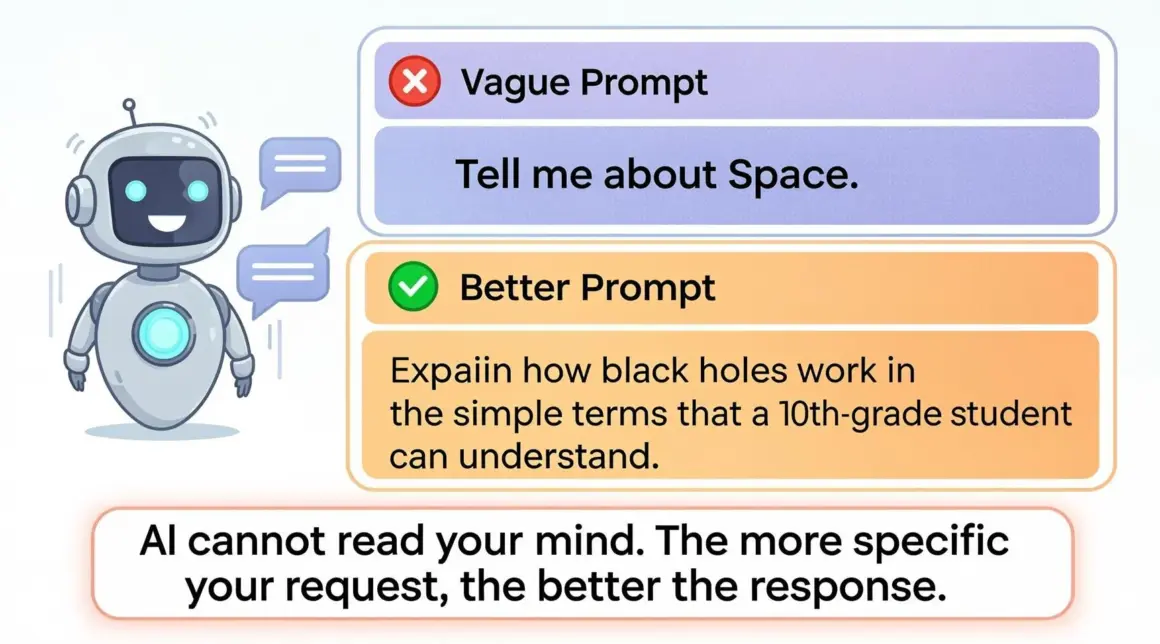
The most common mistake people make is being too vague. AI tools are incredibly smart, but they cannot read your mind! If you want a specific outcome, you must state it clearly.
- Instead of saying: “Tell me about space.”
- Say this: “Explain how black holes work in simple terms that a 10th-grade student can understand.”
By adding just a few extra words, you give the AI a clear target. Always ask yourself: Did I include enough details for a stranger to understand my request?
2. Assign a Role or Persona
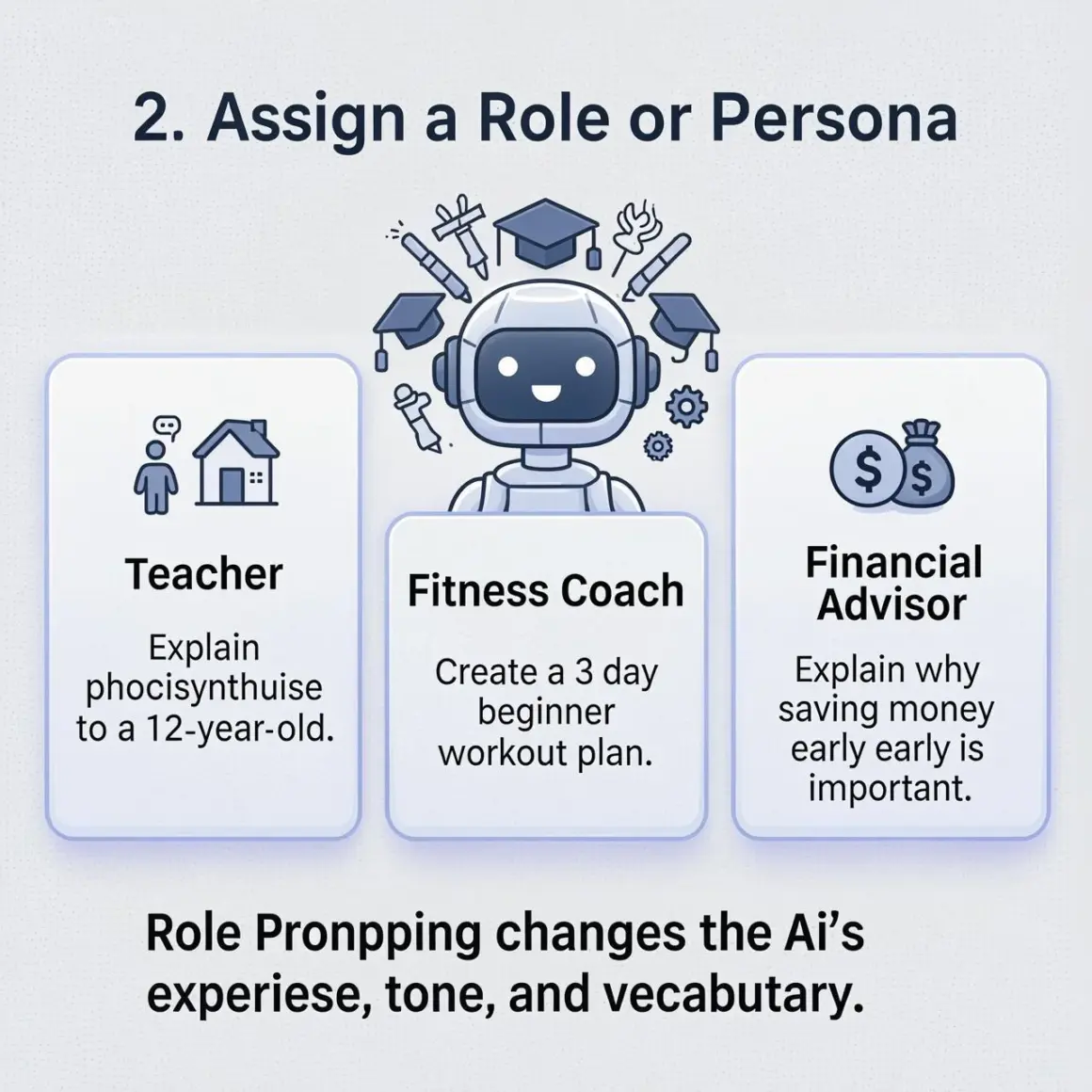
One of the easiest ways to write better prompts is to tell the AI who it should be. This is called “Role Prompting.” When you assign a persona, the AI automatically adjusts its vocabulary, tone, and knowledge level to match that role.
- Example 1: “Act as a professional fitness coach with 10 years of experience. Create a 3-day workout plan for a beginner.”
- Example 2: “You are an expert financial advisor. Explain the benefits of saving money early in life.”
This small trick instantly upgrades the quality of your output!
3. Provide Clear Context
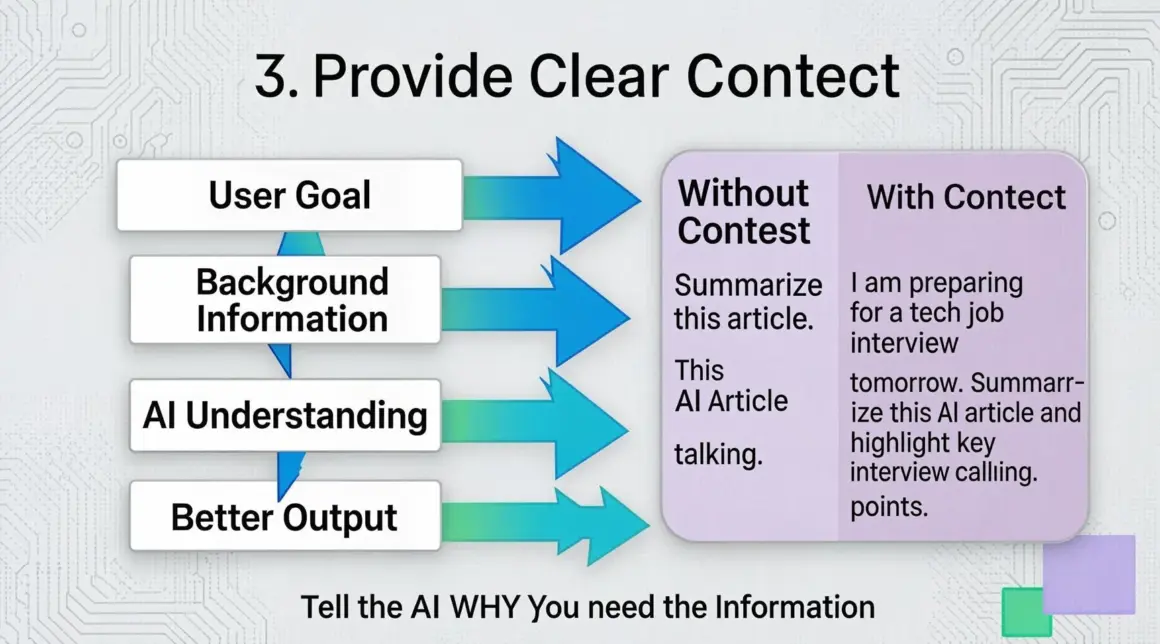
Context is the background information the AI needs to understand the full picture. If you ask an AI to “summarize this article,” it will do its best. But if you tell it why you need the summary, the result will be much more useful!
- Add the “Why”: “I am preparing for a job interview in the tech industry tomorrow. Please summarize this article about Artificial Intelligence trends so I can mention the key points during my interview.”
When you share your goals, the AI can tailor its answer to help you achieve them perfectly!
4. Define the Format and Tone
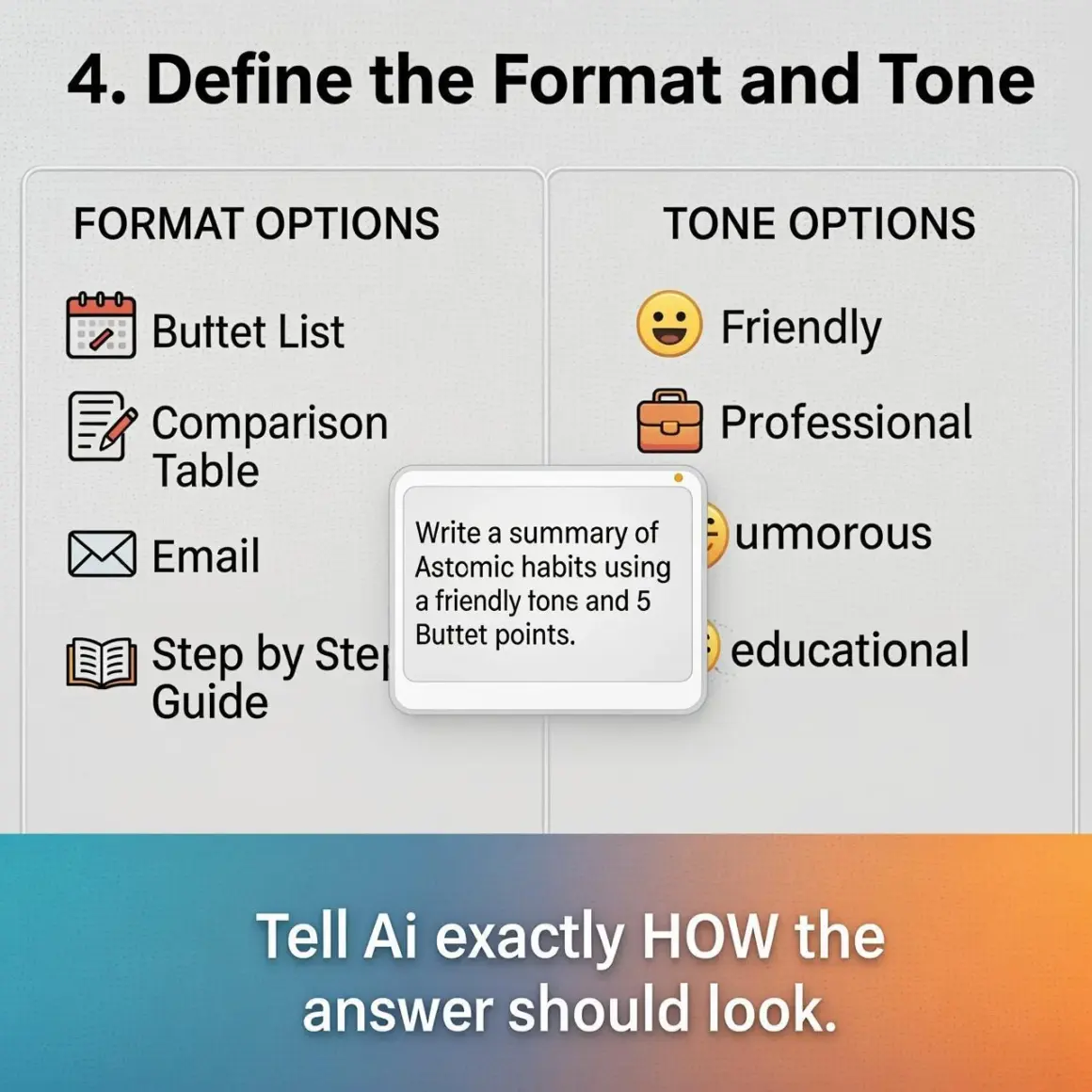
Did you know you can tell the AI exactly how you want the final answer to look? You do not have to settle for long, boring paragraphs!
Format Ideas:
- A bulleted list
- A comparison table
- A formal email structure
- A step-by-step guide
Tone Ideas:
- Friendly and conversational!
- Professional and serious.
- Humorous and witty.
- Example: “Write a short summary of the book ‘Atomic Habits.’ Use a friendly and encouraging tone, and format the answer as a bulleted list of 5 key takeaways.”
5. Give Examples (Few-Shot Prompting)
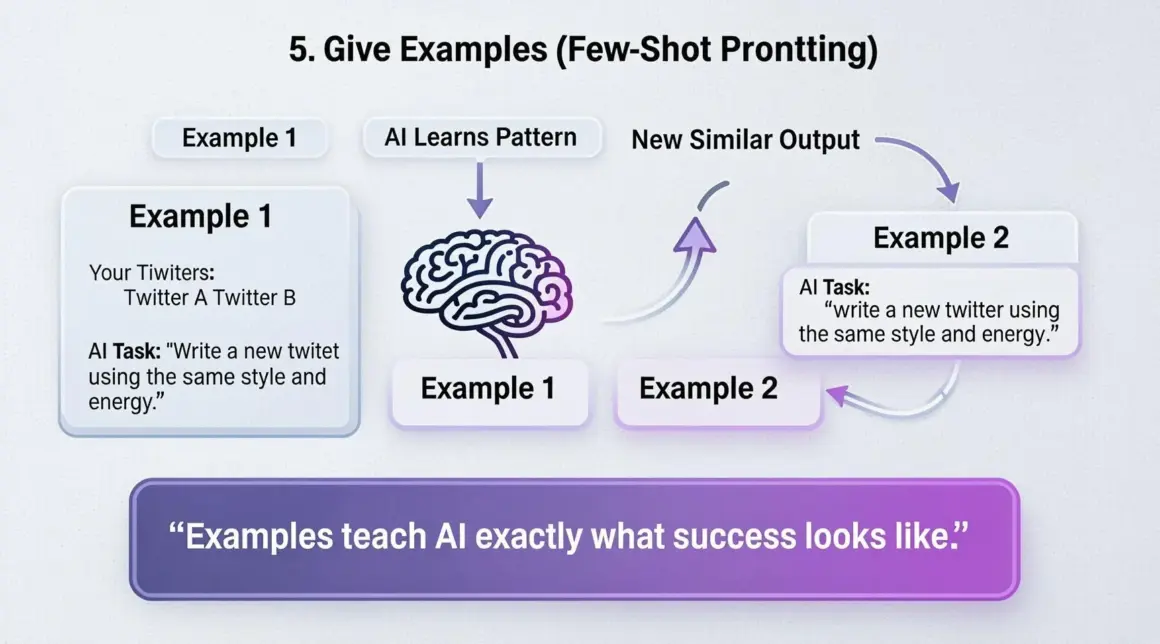
Sometimes, the best way to show the AI what you want is to give it an example. In the AI world, this is known as “Few-Shot Prompting.”
If you want the AI to write social media captions in your unique style, paste one or two of your previous captions into the prompt.
- Example: “Here are two examples of tweets I wrote recently: [Insert Tweet 1] and [Insert Tweet 2]. Now, write a new tweet about time management using this exact same style and energy!”
6. Set Constraints and Boundaries
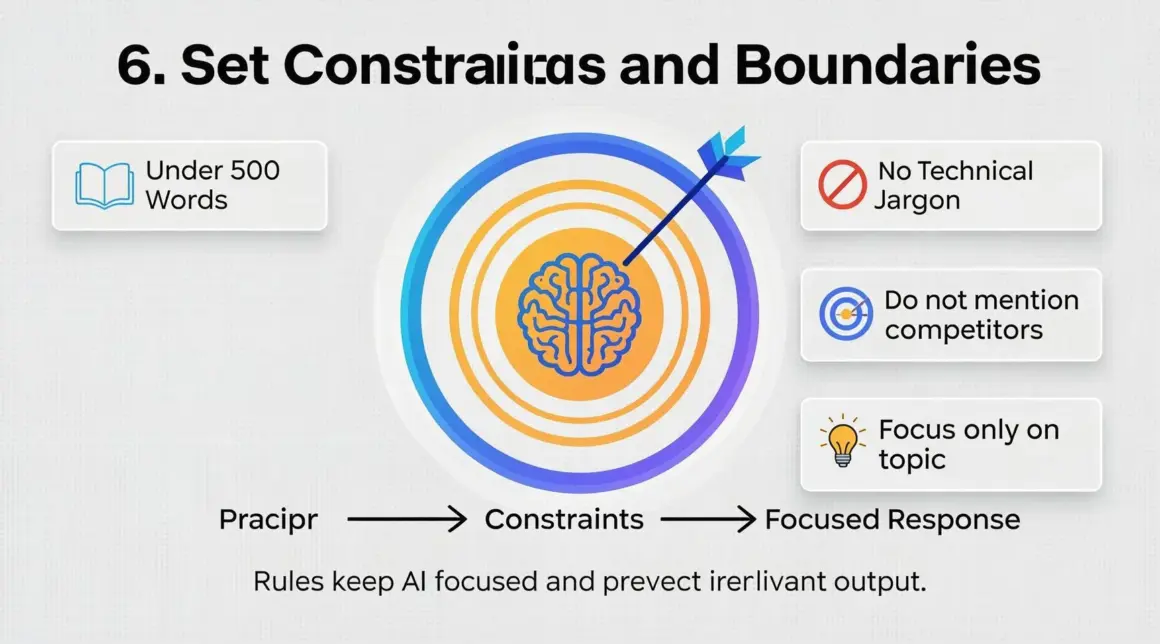
Just as important as telling the AI what to do, is telling it what not to do! Setting boundaries prevents the AI from giving you useless information.
- Constraint Examples: “Do not use complicated jargon,” “Keep the response under 500 words,” or “Do not mention any competitors.”
By setting rules, you force the AI to stay focused on exactly what you need!
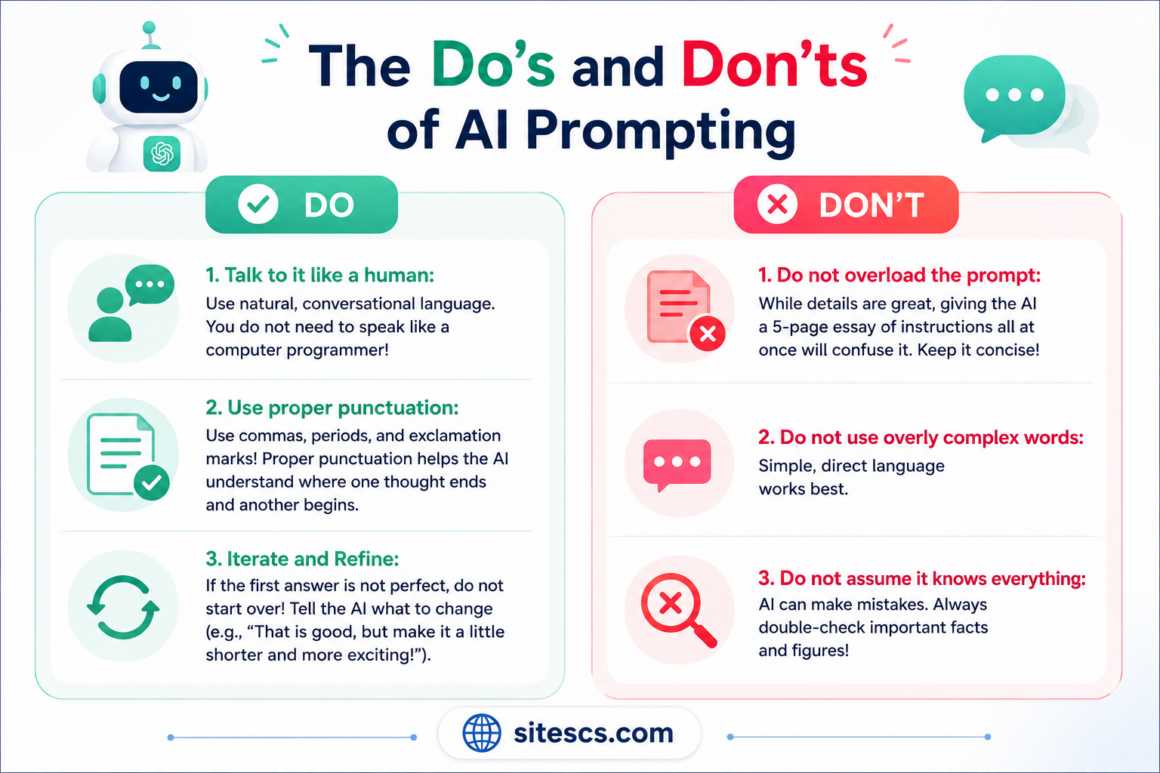
The Do’s and Don’ts of AI Prompting
DO:
- Talk to it like a human: Use natural, conversational language. You do not need to speak like a computer programmer!
- Use proper punctuation: Use commas, periods, and exclamation marks! Proper punctuation helps the AI understand where one thought ends and another begins.
- Iterate and Refine: If the first answer is not perfect, do not start over! Tell the AI what to change (e.g., “That is good, but make it a little shorter and more exciting!”).
DON’T:
- Do not overload the prompt: While details are great, giving the AI a 5-page essay of instructions all at once will confuse it. Keep it concise!
- Do not use overly complex words: Simple, direct language works best.
- Do not assume it knows everything: AI can make mistakes. Always double-check important facts and figures!
Master the Art of Prompting!
Congratulations! You now know the secrets to getting the absolute best results from Artificial Intelligence. Learning how to write better prompts is like learning how to drive a powerful sports car. Once you understand how to steer, the possibilities are endless!
Remember, the perfect prompt consists of a clear task, a specific role, helpful context, and a defined format. Start experimenting with these techniques today, and watch your AI results transform from average to extraordinary!
Whether you are a beginner looking to speed up your daily tasks or a professional aiming to scale your work, taking the time to write better prompts for AI tools is the best investment you can make.
Happy prompting, and have fun exploring the incredible world of AI!
References
Brown, T. B., Mann, B., Ryder, N., Subbiah, M., Kaplan, J., Dhariwal, P., Neelakantan, A., Shyam, P., Sastry, G., Askell, A., Agarwal, S., Herbert-Voss, A., Krueger, G., Henighan, T., Child, R., Ramesh, A., Ziegler, D. M., Wu, J., Winter, C., … Chess, B. (2020). Language Models are Few-Shot Learners. arXiv. https://doi.org/10.48550/arxiv.2005.14165
Cited by: 73826


