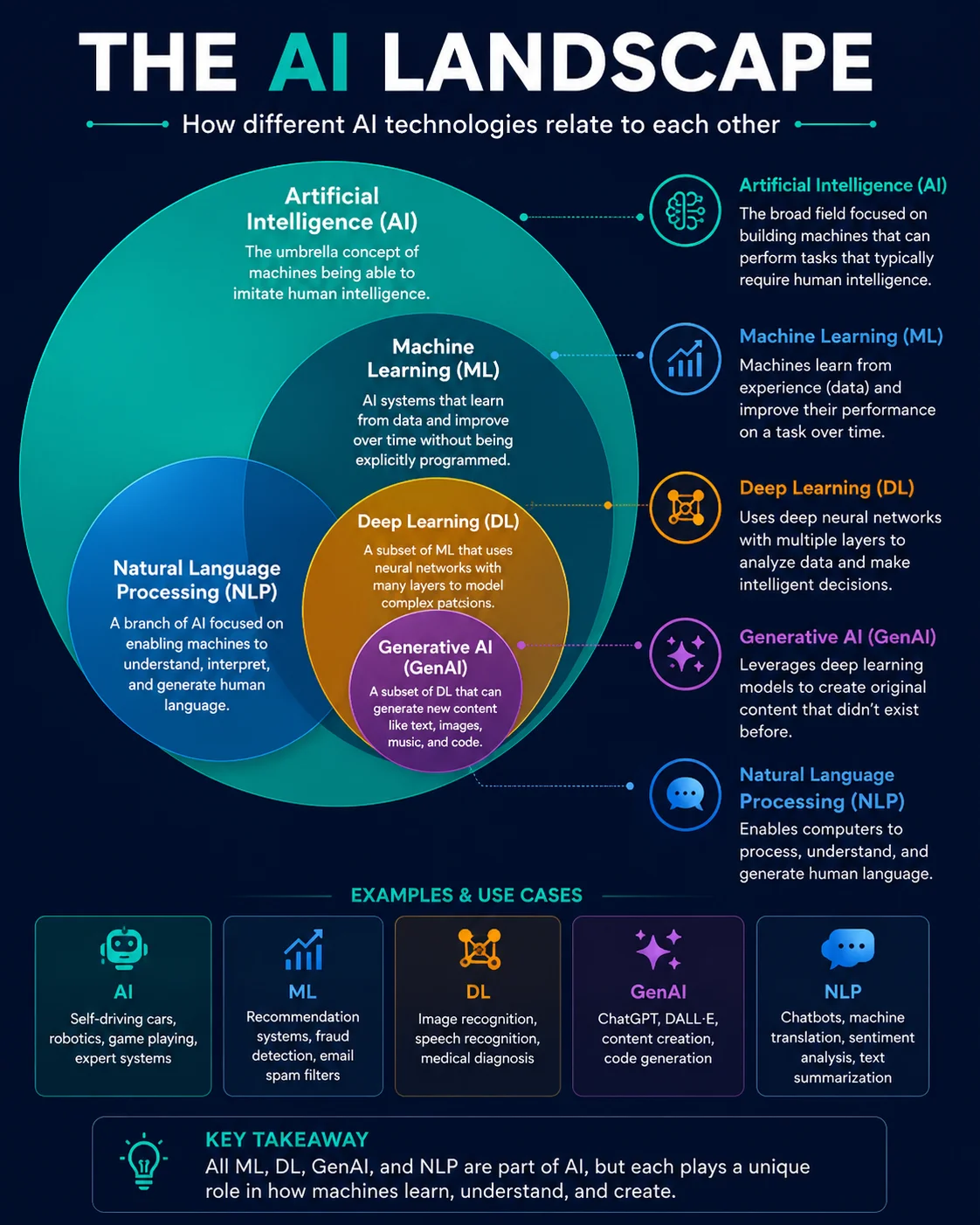
What is Generative Ai? Explained
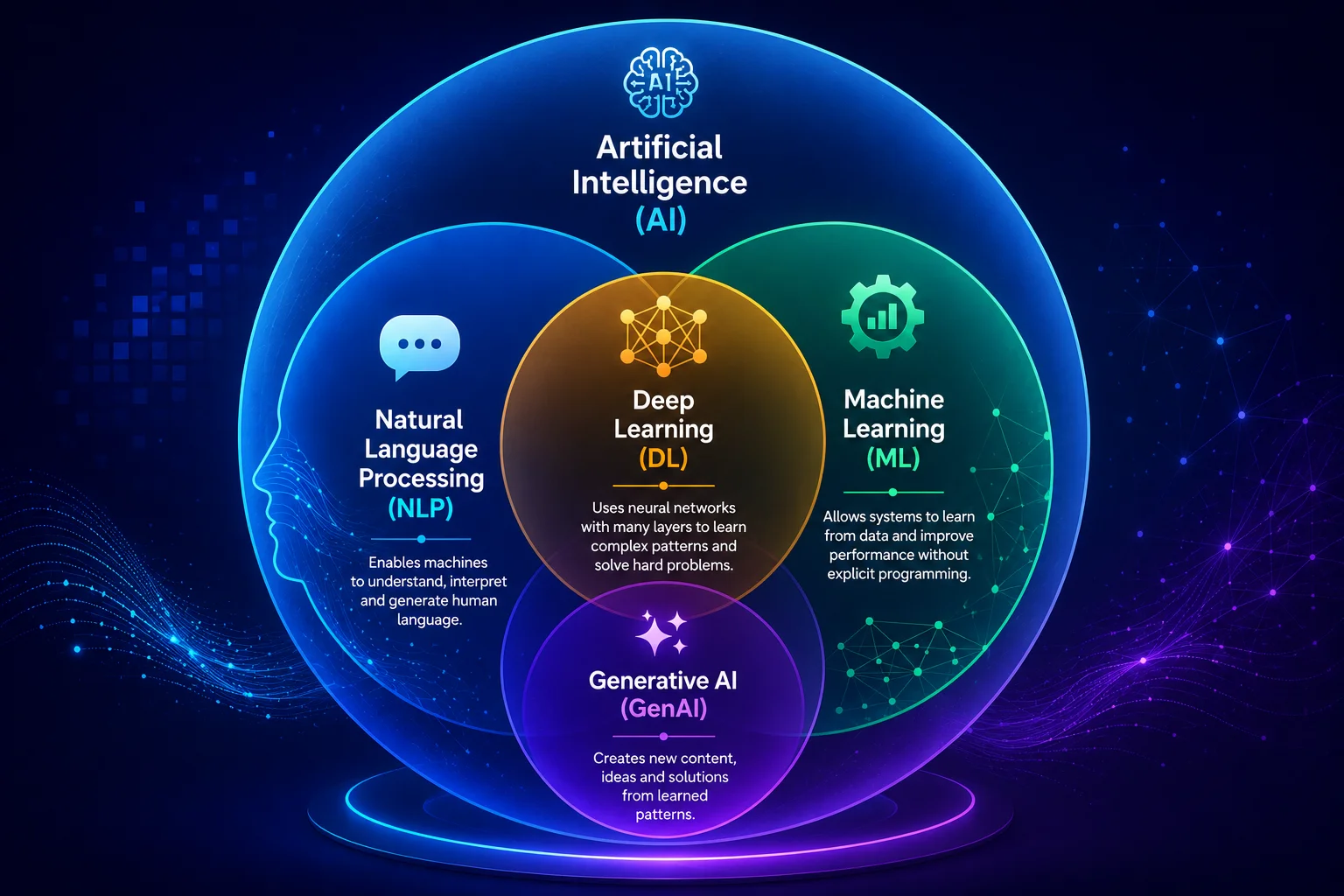
Generative AI (Artificial Intelligence) is a type of AI technology that can create new content such as text, images, videos, music, code, and more based on the information it has learned from large amounts of data.
Unlike traditional software that follows fixed rules, Generative AI can produce original outputs that look similar to content created by humans.
Generative AI is an AI system that learns patterns from existing data and uses those patterns to generate new content.
For example:
- ChatGPT generates text and answers questions.
- AI image generators create unique pictures from text prompts.
- AI coding assistants generate programming code.
- AI music tools create original songs and melodies.
In simple words, Generative AI acts like a creative assistant that can produce new content in seconds.
Why is Generative AI Important?
Generative AI is changing the way people work and create content.
Before AI tools became popular, creating articles, images, videos, or software required significant time and effort. Today, AI can help generate ideas, drafts, designs, and solutions much faster.
Some reasons why Generative AI is important include:
- Saves time and effort
- Improves productivity
- Supports creativity
- Helps automate repetitive tasks
- Makes advanced technology accessible to everyone
- Assists businesses in scaling content creation
Because of these benefits, Generative AI is being adopted across many industries worldwide.
How Does Generative AI Work?
Generative AI works by learning patterns from massive datasets.
The process can be explained in four simple steps:
1. Data Collection
The AI is trained using large amounts of information such as:
- Books
- Articles
- Websites
- Images
- Videos
- Code repositories
- Research papers
This data helps the AI understand patterns, relationships, language structures, and visual elements.
2. Training the Model
The AI system analyzes the data and learns how different pieces of information connect together.
For example:
- It learns grammar and sentence structures.
- It recognizes image patterns.
- It understands context and relationships between words.
This training process may require powerful computers and huge amounts of computing resources.
3. Understanding Prompts
When a user enters a prompt, the AI interprets the request and predicts the most appropriate response.
Example prompt:
“Write a blog about healthy eating habits.”
The AI analyzes the request and determines what information is relevant.
4. Generating New Content
Based on its training and understanding of the prompt, the AI creates new content.
The output may be:
- A written article
- An image
- A piece of code
- A video script
- A marketing email
- A social media caption
The content is generated in real time within seconds.
Generative AI vs Traditional AI
Many people confuse Generative AI with traditional AI. While both belong to Artificial Intelligence, they serve different purposes.
| Feature | Generative AI | Traditional AI |
|---|---|---|
| Purpose | Creates new content | Analyzes existing data |
| Output | Text, images, videos, code | Predictions and decisions |
| Creativity | High | Limited |
| Examples | ChatGPT, Gemini, Midjourney | Spam filters, recommendation systems |
| User Interaction | Conversational | Rule-based or analytical |
Simple Comparison
Traditional AI answers questions like:
“Is this email spam?”
Generative AI answers requests like:
“Write a professional email for a job application.”
This ability to create new content makes Generative AI unique and powerful.
Common Types of Generative AI
Generative AI can create many different forms of content.
Text Generation AI
Creates written content such as:
- Blog posts
- Articles
- Emails
- Reports
- Product descriptions
- Stories
Example: ChatGPT
Image Generation AI
Creates images from text descriptions.
Example request:
“Generate a futuristic city at sunset.”
The AI produces a completely new image based on that description.
Video Generation AI
Creates videos using text prompts or images.
Applications include:
- Marketing videos
- Educational content
- Social media clips
Audio and Music Generation AI
Generates:
- Voiceovers
- Music tracks
- Sound effects
- Podcasts
Code Generation AI
Helps programmers write and improve code faster.
Applications include:
- Software development
- Bug fixing
- Automation scripts
Real-World Examples of Generative AI
Generative AI is already being used in everyday life.
Education
Students use AI to:
- Learn concepts
- Summarize notes
- Generate practice questions
- Improve writing skills
Content Creation
Bloggers and marketers use AI for:
- Article writing
- SEO content creation
- Social media posts
- Marketing campaigns
Business Operations
Companies use AI to:
- Generate reports
- Create presentations
- Draft emails
- Improve customer support
Software Development
Developers use AI for:
- Writing code
- Debugging programs
- Documentation generation
Design and Creativity
Artists and designers use AI to create:
- Digital artwork
- Logos
- Illustrations
- Marketing visuals