Have you ever wondered how your phone recognizes your face, how Netflix knows exactly what movie you want to watch next, or how a computer can write a story in seconds? These aren’t magic tricks; they are the result of Artificial Intelligence, a transformative technology that is reshaping our daily lives.
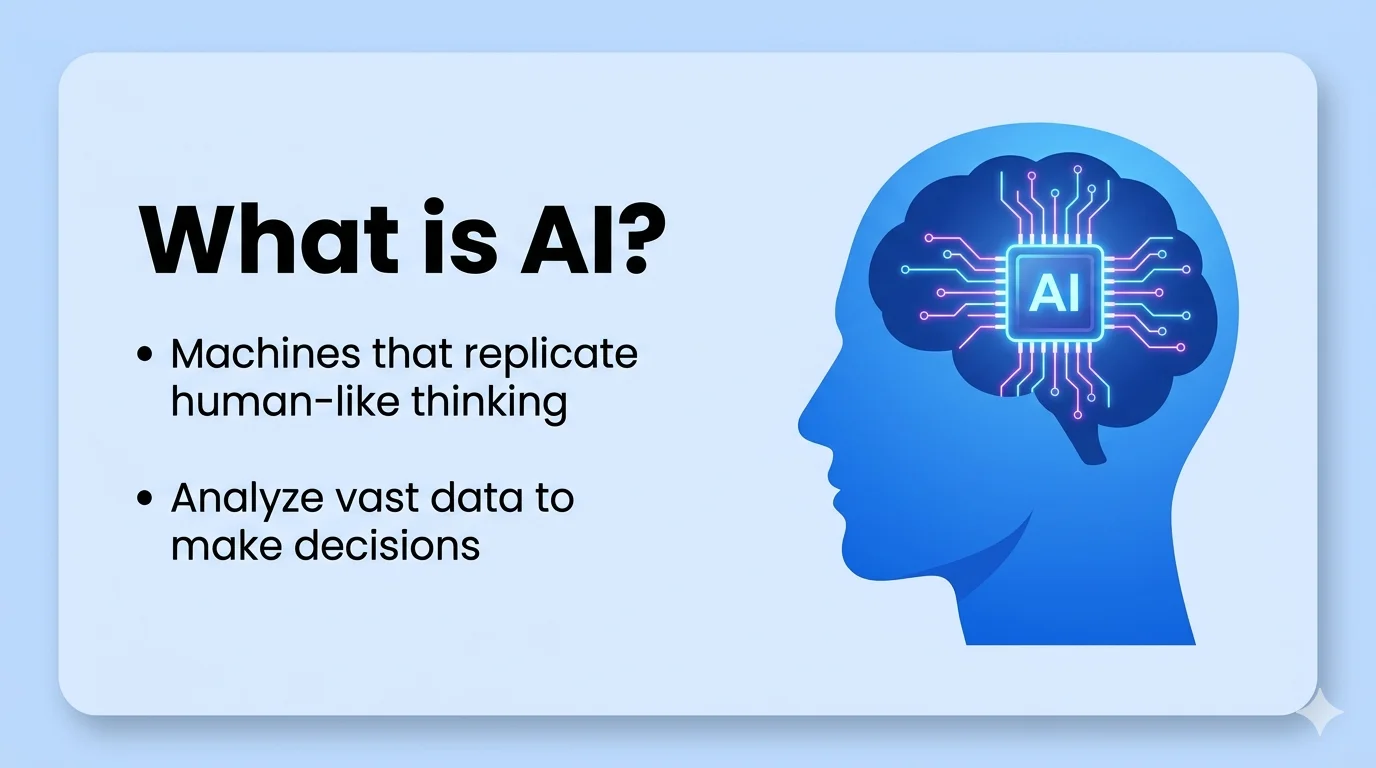
At its simplest, Artificial Intelligence is the science of making machines smart. It allows computers to learn from experience and perform tasks that once required human brains, like recognizing patterns or making complex decisions.
Artificial Intelligence Definition
Artificial Intelligence (AI) is a field of computer science that develops systems capable of performing tasks typically associated with human intelligence, such as learning, reasoning, problem-solving, and decision-making.
Introduction
Artificial Intelligence is often described as a force multiplier for technological progress. This is because intelligence is at the heart of everything we create, from culture and music to medicine and engineering. By building systems that can process information faster than humans, we can solve some of the world’s most difficult problems.
It is important to understand that AI is not just a single invention like a lightbulb. Instead, it is a collection of different technologies—like machine learning and neural networks—working together to achieve a specific goal. While it often feels “human,” AI does not have feelings, consciousness, or true awareness; it is a highly advanced tool driven by math and data.
What is Artificial Intelligence?
The term AI meaning refers to the capability of a machine to imitate human cognitive functions. Unlike traditional computer programs that follow a rigid set of “if-then” instructions, modern AI systems can adapt to new information.
For example, if you want a traditional program to recognize a cat, you would have to write thousands of rules about ears, whiskers, and fur. In contrast, an AI system is shown thousands of pictures of cats and eventually “learns” to identify the patterns of a cat on its own.
Key Features of AI:
- Learning: The ability to improve performance as more data becomes available.
- Reasoning: Using logic to solve problems and reach conclusions.
- Perception: Using sensors (like cameras or microphones) to understand the physical world.
- Autonomy: The ability to perform tasks independently with minimal human oversight.
History of Artificial Intelligence
The dream of “thinking machines” dates back to ancient times, but the modern scientific field began in the mid-20th century.
Timeline of AI Milestones
- 1950: Alan Turing publishes “Computing Machinery and Intelligence,” introducing the Turing Test to see if a machine can act like a human.
- 1951: Christopher Strachey develops the first successful AI program (a checkers-playing program).
- 1956: The term “Artificial Intelligence” is officially coined at a workshop at Dartmouth College.
- 1960s-1970s: Early success in programs that can solve math problems and speak basic English.
- 1974-1980: The first “AI Winter” occurs, where funding drops because early AI couldn’t live up to the massive hype.
- 1997: IBM’s Deep Blue makes history by defeating world chess champion Garry Kasparov.
- 2011: IBM Watson wins the quiz show Jeopardy!, proving AI can understand complex human language.
- 2012: The Deep Learning revolution begins as researchers use powerful chips (GPUs) to make AI much more accurate at recognizing images.
- 2017: Google researchers introduce the Transformer architecture, which eventually powers tools like ChatGPT.
- 2022: ChatGPT is released, bringing “Generative AI” into the public consciousness by gaining 100 million users in two months.
- 2024-2025: The rise of Agentic AI—systems that can not only talk but also take actions to complete entire multi-step projects.
Types of Artificial Intelligence
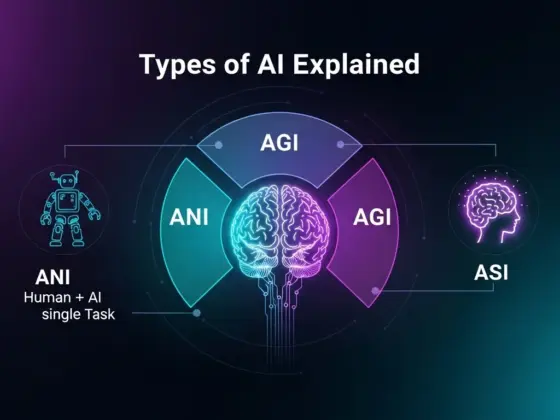
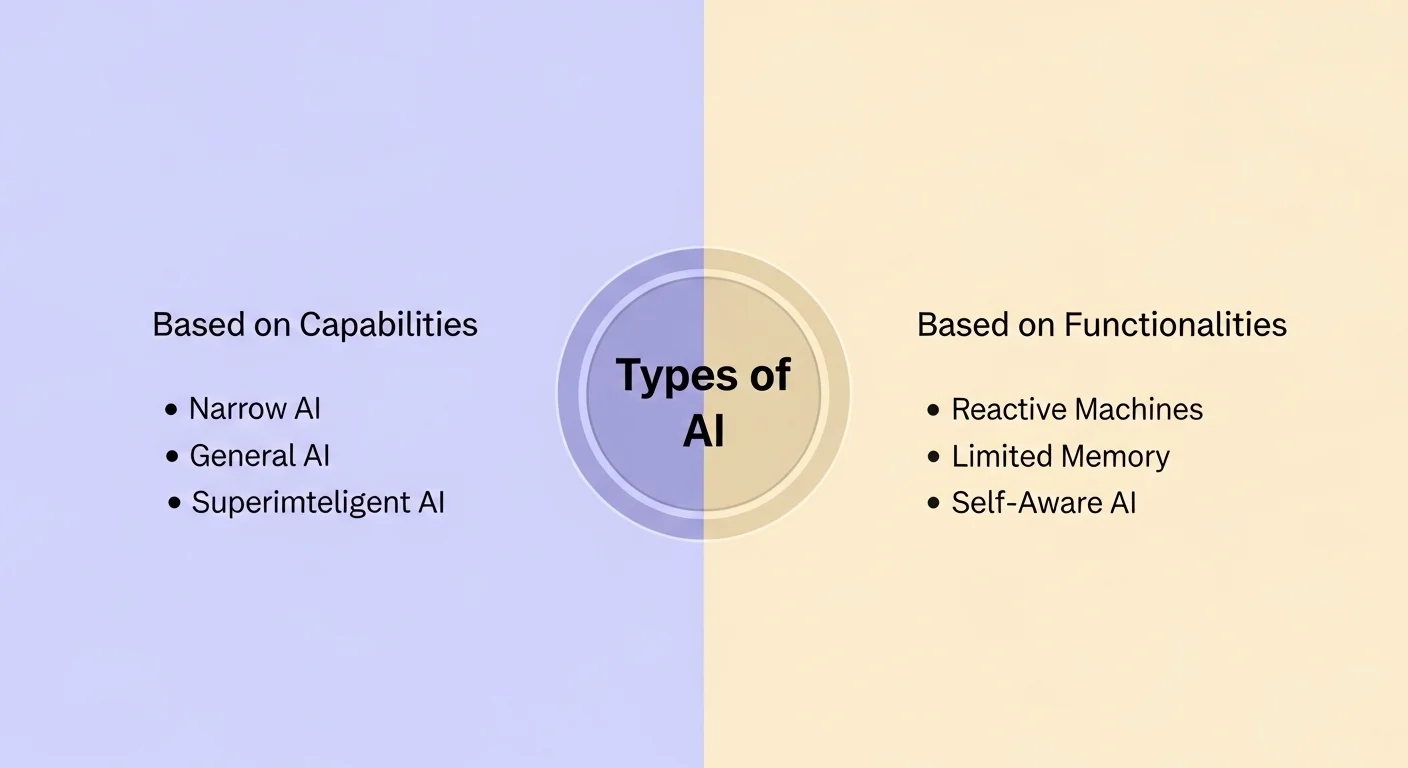
We can classify AI in two main ways: by its capability (how smart it is) and by its functionality (how it works).
Based on Capabilities
This classification looks at how well the AI compares to human intelligence.
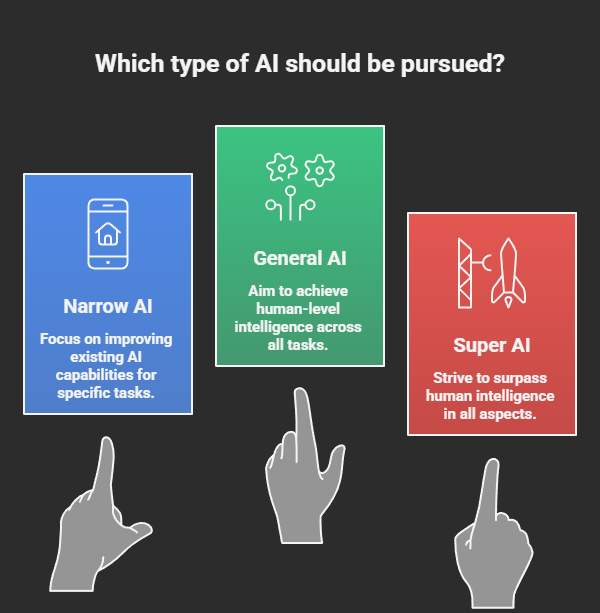
- Narrow AI (Weak AI): This AI is designed to do one specific task very well. Examples include Siri, facial recognition, or the algorithm that suggests videos on YouTube. All AI currently in existence is Narrow AI.
- General AI (Strong AI / AGI): This is a theoretical type of AI that would be as smart as a human across every possible task. It could learn to play a piano, write a legal brief, and perform surgery just by observing and learning. We have not reached this level yet.
- Super AI (ASI): This refers to AI that surpasses human intelligence in every way. It would be able to solve problems that are currently impossible for humans to even understand.
Based on Functionality
This looks at the internal logic of the system.
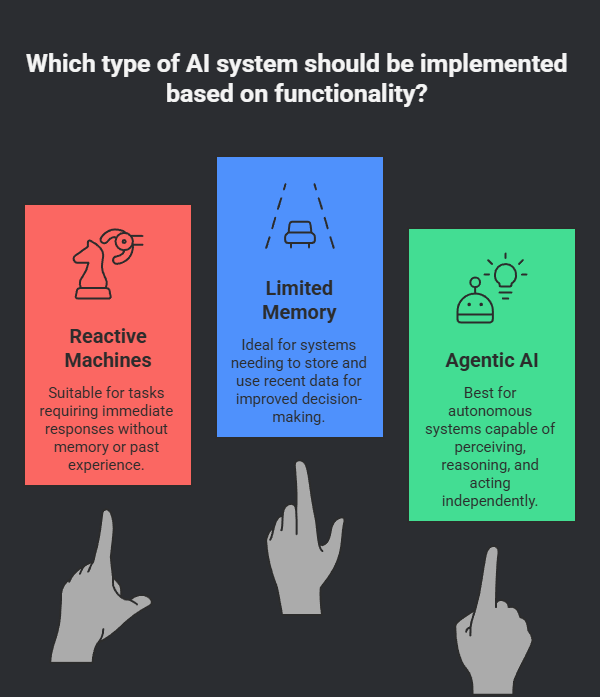
- Reactive Machines: These systems don’t have memories or use past experiences to make decisions. Deep Blue, the chess computer, is a reactive machine.
- Limited Memory: These systems can store some past data to make better decisions. Self-driving cars use this to keep track of the speed and direction of other cars around them.
- Agentic AI: A newer category of systems that are semi- or fully autonomous. They can “perceive, reason, and act” on their own to achieve a goal, like booking an entire vacation for you.
How Artificial Intelligence Works
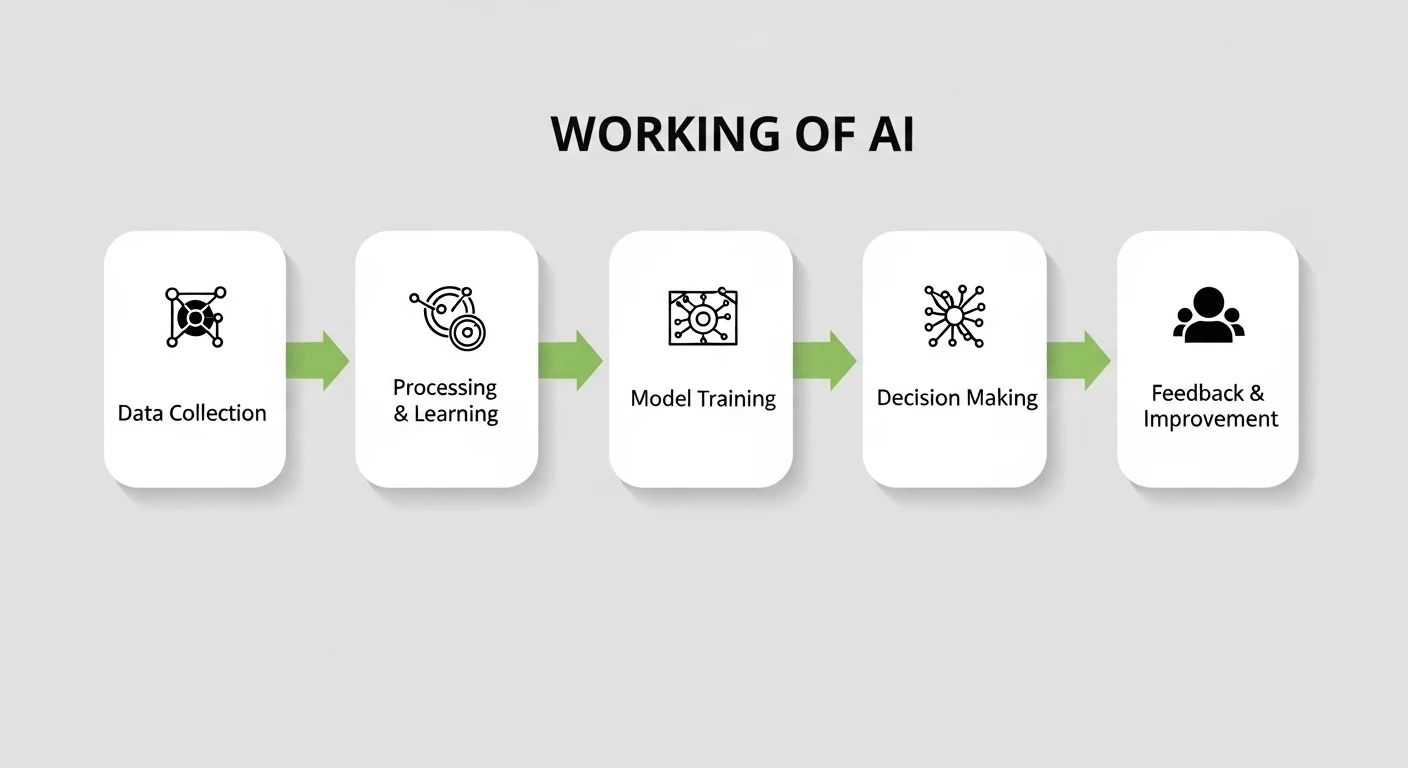
AI works by processing massive amounts of data through algorithms. An algorithm is simply a step-by-step set of instructions.
Think of AI like a student. To teach an AI how to identify a “fraudulent credit card transaction,” you give it a dataset of millions of past transactions. Some are labeled “safe” and some are labeled “fraud.”
The AI looks at this data and finds patterns that a human would never see—maybe fraud usually happens at 3 AM from a specific city. Once it learns these patterns, it can look at a new transaction and predict whether it is fraud with high accuracy.
The more data the AI “studies,” the smarter and more accurate it becomes.
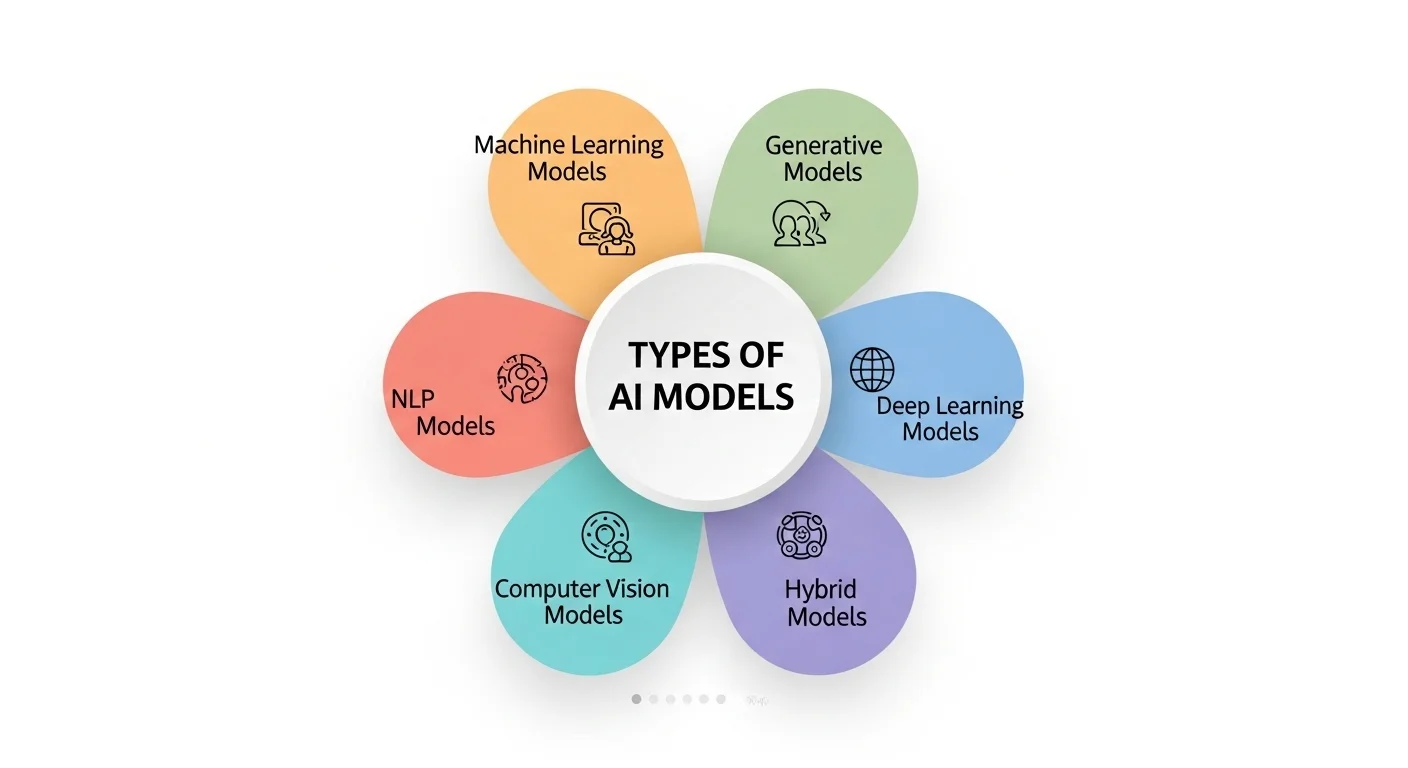
Key Components of AI
To understand the “engine” behind AI, we need to look at its core parts:
1. Machine Learning (ML)
Machine Learning is a subfield of AI that focuses on giving computers the ability to learn without being explicitly programmed. It uses math to find patterns in data and make predictions.
2. Deep Learning (DL)
Deep Learning is a more advanced version of machine learning. It uses “Artificial Neural Networks,” which are layers of math inspired by the human brain. These systems are what allow AI to understand complex things like human speech or the objects in a photograph.
3. Natural Language Processing (NLP)
NLP is the technology that helps machines read, understand, and generate human language. It is the “brain” inside chatbots like ChatGPT or virtual assistants like Alexa.
4. Computer Vision
This allows AI to “see” and interpret the world through visual data. It is used in self-driving cars to spot pedestrians and in hospitals to help doctors find tumors in X-rays.
Applications of Artificial Intelligence
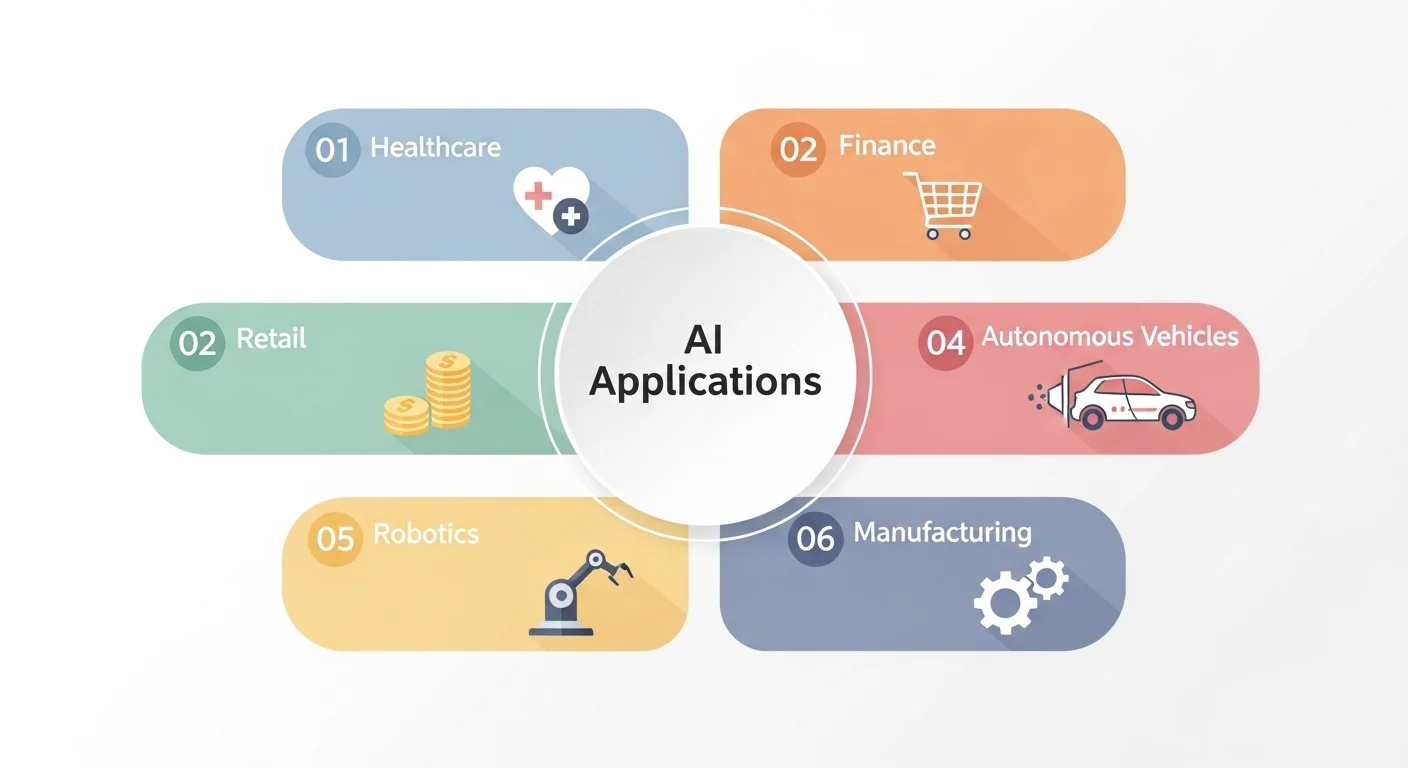
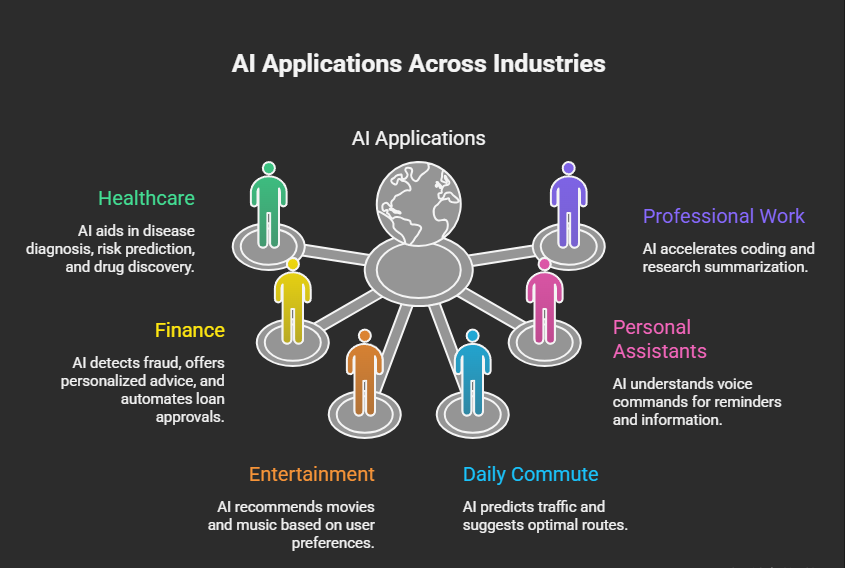
AI is no longer just in science fiction movies; it is being used across almost every industry today.
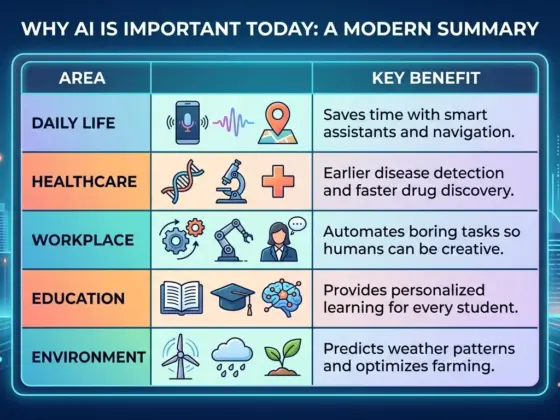
- Healthcare: AI is used for AI applications like diagnosing diseases from medical images, predicting patient risks, and even discovering new drugs and antibiotics.
- Finance: Banks use AI to detect fraud, provide personalized financial advice, and automate the approval of loans.
- Entertainment: Streaming services like Netflix and Spotify use AI to recommend movies and music based on what you’ve liked in the past.
- Daily Commute: Navigation apps like Google Maps use AI to predict traffic jams and suggest the fastest routes.
- Personal Assistants: Siri, Alexa, and Google Assistant use AI to understand your voice commands and help you set reminders or check the weather.
- Professional Work: AI is now helping software developers write code faster and helping researchers summarize thousands of scientific papers.
Advantages of Artificial Intelligence
Why are companies and governments spending billions of dollars on AI? Because of its massive benefits:
- Reduction in Human Error: Machines don’t get tired or distracted. In high-stakes fields like surgery or finance, AI can provide consistent precision.
- 24/7 Availability: AI systems never sleep. They can answer customer questions or monitor a warehouse for safety at any time of day or night.
- Faster Decisions: AI can process millions of data points in seconds, allowing for instant decision-making that would take humans months.
- Automation of Boring Tasks: AI can handle repetitive work, like data entry or sorting emails, freeing up humans to do more creative and meaningful work.
- Personalization: AI can tailor experiences to you specifically, making everything from shopping to learning more efficient.
Disadvantages of Artificial Intelligence
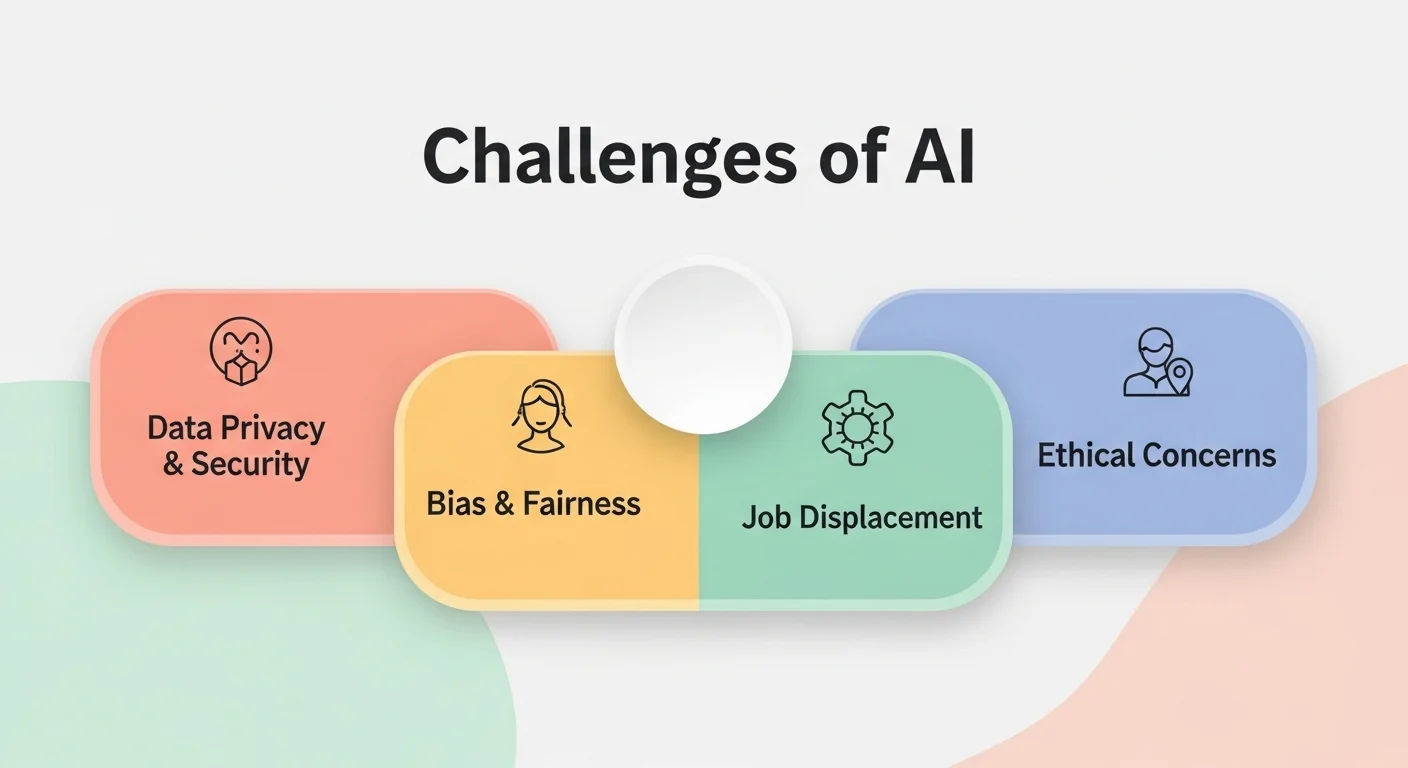
Despite the benefits, AI also comes with significant challenges:
- High Cost: Building and running advanced AI systems requires incredibly expensive hardware and massive amounts of electricity.
- Potential for Bias: If an AI is trained on biased data (for example, data that favors one race over another), the AI will make biased and unfair decisions.
- Lack of “Black Box” Transparency: Some AI systems are so complex that even their creators don’t fully understand how they reached a certain decision.
- Data Privacy: AI requires huge amounts of data to learn, which raises concerns about how our personal information is being collected and used.
- Job Displacement: As AI becomes better at tasks like writing, coding, and customer service, there are fears that many people could lose their jobs.
AI vs. Machine Learning vs. Deep Learning
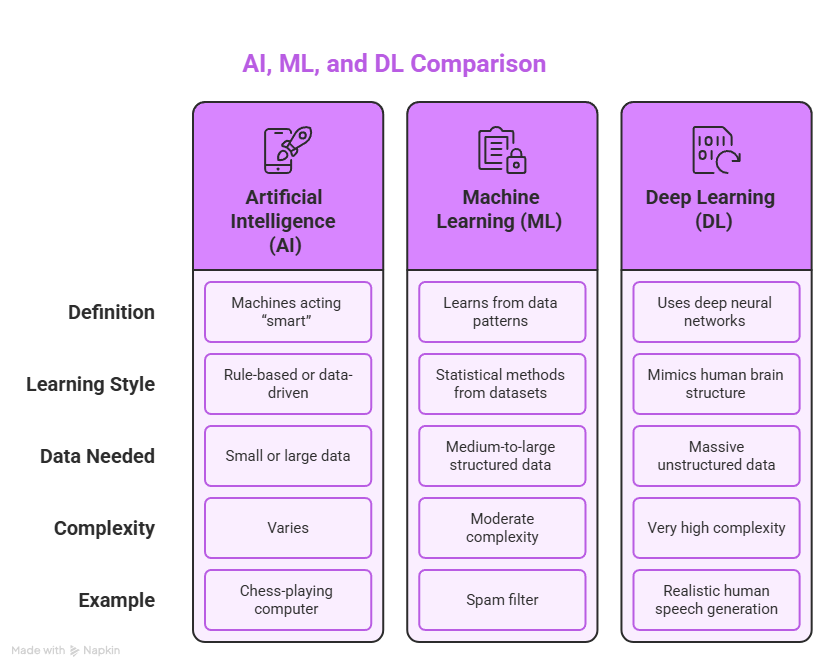
These three terms are often used interchangeably, but they actually represent a nested hierarchy.
| Feature | Artificial Intelligence (AI) | Machine Learning (ML) | Deep Learning (DL) |
|---|---|---|---|
| Definition | The broad concept of machines acting “smart.” | A subset of AI that learns from data patterns. | A subset of ML using deep neural networks. |
| Learning Style | Can be rule-based or data-driven. | Uses statistical methods to learn from datasets. | Mimics the human brain’s structure to learn. |
| Data Needed | Can work with small or large data. | Requires medium-to-large structured data. | Requires massive amounts of unstructured data. |
| Complexity | Varies (from simple to very high). | Moderate complexity. | Very high complexity. |
| Example | A chess-playing computer. | A spam filter for your email. | A system that generates realistic human speech. |
Real-life Examples of AI
You likely interact with AI many times a day without even realizing it:
- Waymo Self-Driving Cars: These cars use a combination of cameras, sensors, and AI to navigate busy city streets without a human driver.
- Netflix Recommendations: Every time you see a “Top Picks for You” row, an AI has analyzed your entire viewing history to predict your next favorite show.
- FaceID on iPhone: Your phone uses computer vision to create a 3D map of your face to unlock your device securely.
- Generative Art: Tools like Midjourney or DALL-E can create stunning, original artwork simply by being given a text description.
- Smart Replika Bots: Some people use AI companions to have conversations, practice social skills, or even find emotional support.
Future of Artificial Intelligence
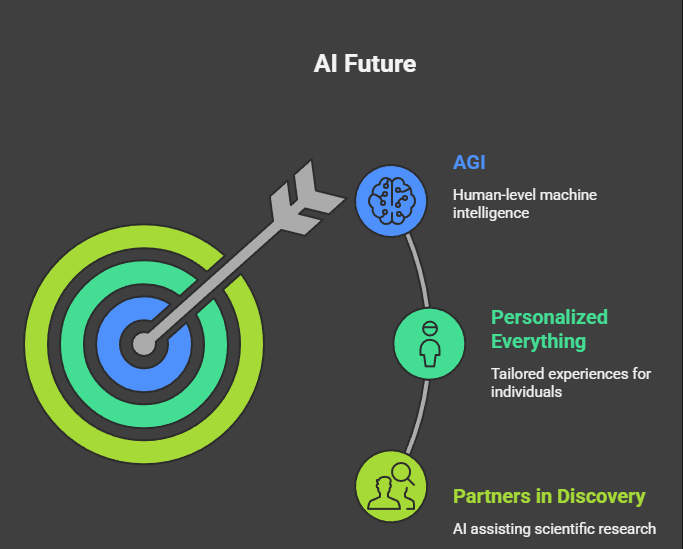
The AI future is moving at an incredible pace. We are moving away from simple chatbots toward AI Agents that can work alongside us as partners.
- Partners in Discovery: Scientists are using AI to solve the mysteries of the universe, find new ways to fight climate change, and even discover new materials for solar cells.
- Personalized Everything: From “AI teachers” that adapt to a student’s learning speed to “AI doctors” that monitor your health 24/7 through your smartwatch.
- The Quest for AGI: Major tech companies are racing to create Artificial General Intelligence, which would mark a turning point in human history by creating a machine with human-level versatility.
Ethical Concerns in AI
Because AI is becoming so powerful, we must ensure it is used responsibly. This is known as AI Governance.
- Accountability: If a self-driving car gets into an accident, who is responsible? The owner? The programmer? The car itself?
- Deepfakes and Misinformation: AI can now create realistic videos of people saying things they never said, which could be used to spread lies or influence elections.
- Weaponized AI: There are serious debates about “lethal autonomous weapons”—robots that could decide to attack targets without a human giving the order.
- Algorithmic Fairness: We must ensure that AI doesn’t perpetuate existing societal prejudices and treats every individual fairly.
How to Learn Artificial Intelligence (Step-by-Step)
If you are a beginner interested in entering this exciting field, here is a roadmap to get you started:
- Learn the Basics of Math: Focus on statistics and probability. AI is built on the idea of predicting the most likely outcome.
- Pick a Programming Language: Python is the most popular language for AI because it is easy to read and has many powerful AI libraries.
- Understand Data: Learn how to collect, clean, and analyze data. Data is the “fuel” that makes AI work.
- Take Online Courses: Platforms like Coursera, edX, or IBM’s AI Academy offer excellent beginner-friendly certificates.
- Build Simple Projects: Start by building a simple spam filter or a movie recommendation tool to see your knowledge in action.
FAQ Section
What is Artificial Intelligence in simple words?
AI is technology that allows a computer to learn from data and perform tasks that usually require human-like smarts, such as understanding language or making choices.
Where is AI used?
AI is used almost everywhere—in your smartphone, in hospitals for diagnosis, in banks to stop fraud, and in your favorite apps to recommend content.
Is AI dangerous?
While AI itself is just a tool, it can be misused for things like deepfakes or mass surveillance. The goal of “AI Safety” is to make sure these systems are always beneficial to humans.
Can AI replace humans?
AI is excellent at automating repetitive and data-heavy tasks, but it still struggles with things like human empathy, common sense, and handling unexpected situations.
How can I start learning AI?
Start by learning Python programming and the basics of data science. There are many free resources and courses online to help you build your first AI model.
Conclusion
Artificial Intelligence is one of the most exciting and significant inventions in human history. It is much more than just a “chatting robot”; it is a powerful tool that is helping us cure diseases, explore space, and make our daily lives more efficient.
While AI brings challenges like bias and privacy concerns, the potential benefits for humanity are enormous. Whether you are a student, a professional, or just a curious reader, understanding AI is the first step toward navigating our increasingly digital future. Now is the perfect time to start exploring, learning, and perhaps even building the next generation of intelligent machines!
Sources:
Agentic AI, explained: This article by Beth Stackpole was published on February 18, 2026, by MIT Sloan. It can be accessed at: https://mitsloan.mit.edu/ideas-made-to-matter/agentic-ai-explained
Artificial Intelligence Risk Management Framework (AI RMF 1.0): This NIST publication (NIST AI 100-1) from January 2023 is available via DOI. Link: https://doi.org/10.6028/NIST.AI.100-1
NIST AI RMF Playbook: Additional resources and tactical actions for the framework are located at the NIST website. Link: https://www.nist.gov/itl/ai-risk-management-framework
Artificial Intelligence (Wikipedia): The specific version of the Wikipedia entry provided is from April 5, 2026. Link: https://en.wikipedia.org/w/index.php?title=Artificial_intelligence&oldid=1347260223
Artificial Intelligence in Healthcare (Narrative Review): This peer-reviewed article by Mohajer-Bastami et al. was published in Frontiers in Digital Health on November 6, 2025. Link: https://doi.org/10.3389/fdgth.2025.1644041
How Do We Ensure Lawfulness in AI? (ICO): Guidance from the Information Commissioner’s Office regarding UK GDPR and AI. Link: https://ico.org.uk/for-organisations/uk-gdpr-guidance-and-resources/artificial-intelligence/guidance-on-ai-and-data-protection/how-do-we-ensure-lawfulness-in-ai/