How To Become a Prompt Engineer: Step By Step Guide
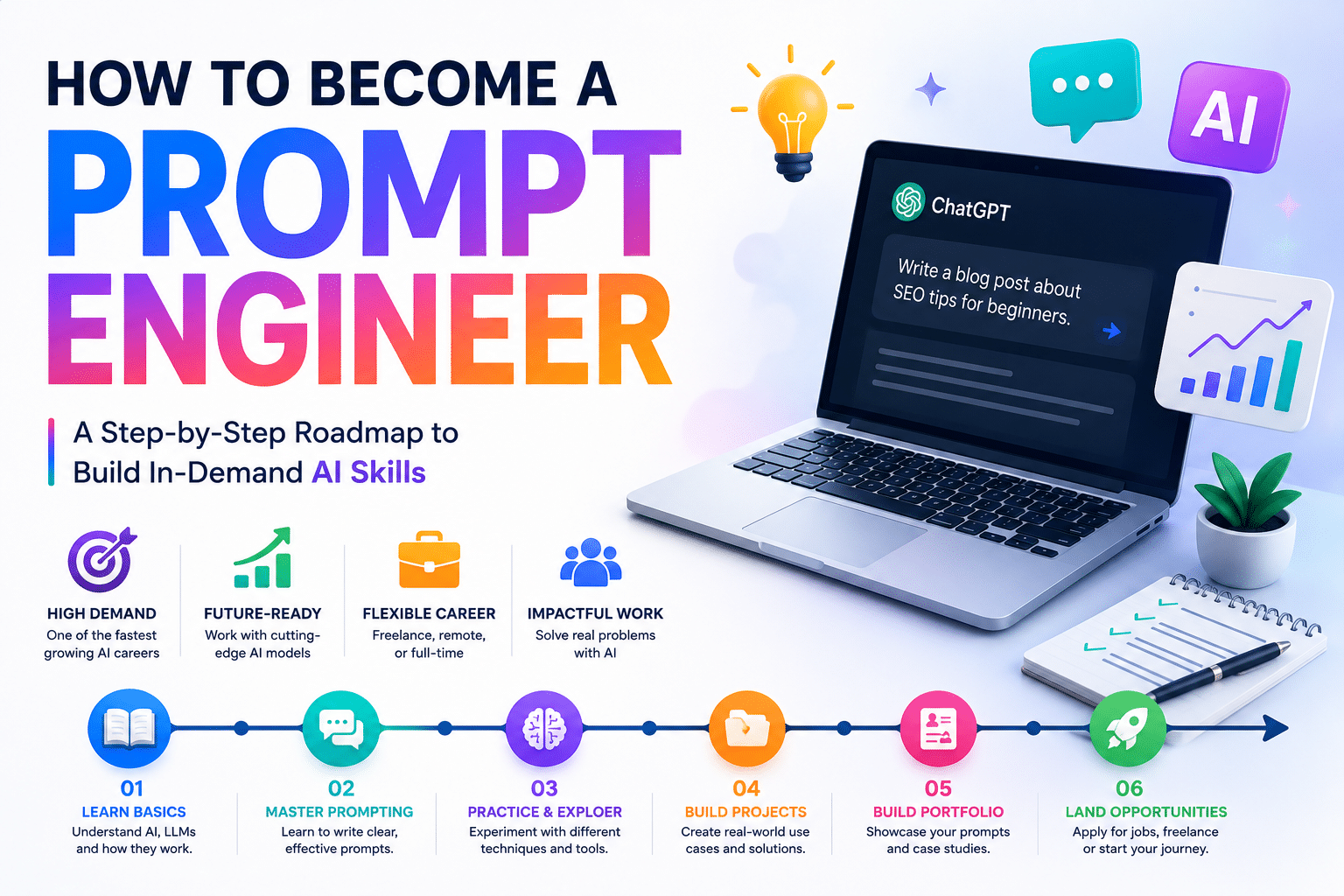
Artificial Intelligence is growing faster than ever before! Today, tools like ChatGPT, Google Gemini, and Claude AI are changing how people work, learn, write, code, design, and even run businesses. Because of this rapid growth, a new and exciting career has appeared in the AI industry — Prompt Engineering.
Prompt engineering is one of the most in-demand AI skills in today’s digital world. Companies now need skilled people who can communicate effectively with AI systems and generate accurate, useful, and high-quality results. These professionals are called Prompt Engineers.
From content creation and AI automation to software development and customer support, prompt engineers are helping businesses save time and improve productivity. Even beginners with no technical background can start learning this skill step by step!
In this complete guide, you will learn:
- What prompt engineering really means
- What prompt engineers actually do
- Skills required to become a prompt engineer
- Best AI tools and prompting techniques
- Career opportunities, salary, and future demand
If you want to build a career in AI in 2026 and beyond, this guide will help you get started the right way!
What Is Prompt Engineering?
Prompt engineering is the process of writing clear and smart instructions for AI tools to get the best possible output. These instructions are called prompts. A prompt can be a question, command, paragraph, or detailed request given to an AI model.
In simple words, prompt engineering means talking to AI in the right way so it understands exactly what you want.
For example:
- A weak prompt may generate poor or confusing answers
- A well-written prompt can create professional content, images, code, business ideas, or even marketing strategies instantly
This is why prompts are extremely important in modern AI systems.
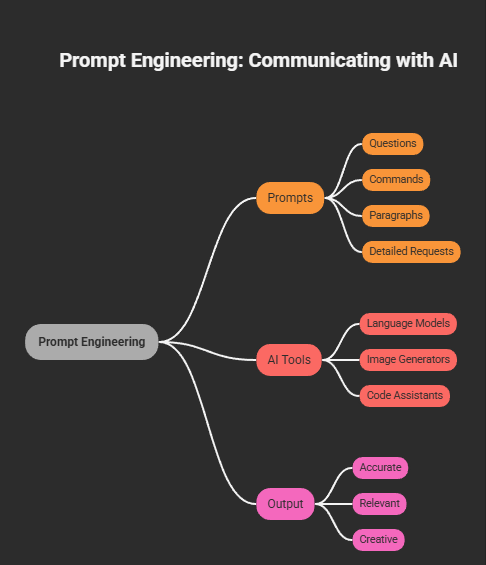
AI tools like OpenAI ChatGPT, Google Gemini, and Anthropic Claude work based on user instructions. The better the instruction, the better the output becomes.
A Prompt Engineer understands:
- How AI models think
- How prompts influence responses
- How to improve AI accuracy
- How to reduce mistakes in AI-generated content
Today, many industries use prompt engineering, including:
- Digital marketing
- Education
- Software development
- Healthcare
- E-commerce
- Customer support
- Graphic design
- Video production
Prompt engineering has become an important skill because businesses want faster, smarter, and more reliable AI results. Companies are now hiring AI prompt specialists to improve workflows and automate tasks efficiently.
The best part is that prompt engineering is beginner-friendly. Anyone with good communication and problem-solving skills can start learning it today!
What Does a Prompt Engineer Actually Do?
A prompt engineer works with AI systems to create prompts that generate accurate, useful, and high-quality responses. Their main job is to improve how AI tools perform in real-world tasks.
One of the biggest responsibilities of a prompt engineer is writing and testing prompts. They continuously experiment with different instructions to see which prompts produce the best results.
For example, they may:
- Create prompts for blog writing
- Improve chatbot responses
- Generate AI images
- Automate business tasks
- Build AI workflows for companies
Prompt engineers also optimize AI outputs for:
- Accuracy
- Speed
- Creativity
- Consistency
- Better user experience
They often work with advanced AI platforms like:
In many companies, prompt engineers collaborate with:
- Developers
- Content writers
- Marketing teams
- Designers
- AI researchers
- Business owners
For example, an e-commerce company may hire a prompt engineer to create AI-generated product descriptions. A marketing agency may use prompt engineers to automate ad copy creation.
Some prompt engineers also build complete AI workflows by combining prompts with automation tools. This helps businesses save hours of manual work every day!
As AI technology continues growing, prompt engineers are becoming valuable professionals in the modern tech industry.
Best AI Tools for Prompt Engineers
To become a successful prompt engineer, you should learn how to work with multiple AI tools. Different AI platforms are designed for different tasks like writing, coding, image generation, research, automation, and productivity.
Here are some of the best AI tools every prompt engineer should know in 2026.
1. ChatGPT
ChatGPT is one of the most popular AI tools in the world. It is widely used for:
- Content writing
- Coding assistance
- Research
- Prompt testing
- AI automation
- Brainstorming ideas
It is beginner-friendly and perfect for learning prompt engineering basics.
2. Google Gemini
Gemini AI by Google is another powerful generative AI platform. It works well for:
- Research tasks
- Summarizing information
- Productivity workflows
- Google ecosystem integration
Prompt engineers often use Gemini for data-focused tasks and AI-assisted workflows.
3. Claude AI
Claude AI by Anthropic is known for generating detailed and natural-sounding responses.
It is useful for:
- Long-form writing
- Analysis
- Document summarization
- Professional communication
Many users prefer Claude for cleaner and more human-like outputs.
4. Midjourney
Midjourney is a powerful AI image-generation platform.
Prompt engineers use it to create:
- AI art
- Marketing visuals
- Concept designs
- Social media graphics
- Digital illustrations
Learning image prompting can open additional freelance opportunities.
5. DALL·E
DALL·E is another advanced AI image generation tool from OpenAI.
It helps create:
- Realistic images
- Creative artwork
- Product mockups
- Custom illustrations
Prompt quality plays a huge role in image generation results.
6. Perplexity AI
Perplexity AI combines AI responses with web-based research.
It is excellent for:
- Finding accurate information
- Research-based prompting
- Learning new topics
- Gathering citations and sources
7. Notion AI
Notion AI helps with:
- Productivity
- Content organization
- AI-assisted note-taking
- Workflow management
Many businesses use it to improve team collaboration and documentation.
8. Prompt Marketplaces and Testing Tools
Some platforms allow prompt engineers to:
- Share prompts
- Sell prompt templates
- Test AI outputs
- Improve workflows
These platforms help beginners learn from real-world prompt examples.
Learning multiple AI tools makes you more flexible, more skilled, and more valuable in the AI industry.
Do You Need Coding to Become a Prompt Engineer?
One of the most common questions beginners ask is:
“Do I need coding knowledge to become a prompt engineer?”
The simple answer is:
No, coding is not mandatory for beginners!
Many prompt engineering tasks mainly involve:
- Writing instructions
- Testing prompts
- Improving AI responses
- Creating workflows
- Solving problems creatively
If you can communicate clearly and think logically, you can start learning prompt engineering without programming experience.
However, coding can still be very helpful as you grow in your AI career.
Basic programming knowledge helps with:
- AI automation
- API integrations
- Building AI applications
- Workflow optimization
- Custom AI tools
For example, developers often combine prompts with programming languages to create advanced AI systems.
The most beginner-friendly language for AI is:
Python
f(x)=x2+2x+1
Python is widely used in:
- Artificial intelligence
- Machine learning
- Data analysis
- Automation
You do not need to master coding immediately. Even learning basic Python concepts can be beneficial later.
There are also two types of prompt engineering roles:
| Role Type | Coding Requirement |
|---|---|
| Non-Technical Prompt Engineer | Little or no coding |
| Technical AI Prompt Engineer | Coding often required |
Non-technical roles focus more on:
- Content generation
- Marketing prompts
- Business workflows
- Customer support automation
Technical roles may involve:
- APIs
- AI integrations
- Software development
- Advanced automation systems
So if you are a beginner, do not let coding fear stop you! You can start with prompt writing first and learn technical skills gradually over time.
How to Practice Prompt Engineering Effectively
Prompt engineering is a practical skill. The more you experiment with AI tools, the better your prompts become.
Here are some of the best ways to practice prompt engineering effectively.
1. Do Daily Prompt Experiments
Consistency is the key to improvement.
Spend at least 20–30 minutes daily using AI tools like:
Practice tasks like:
- Blog writing
- Idea generation
- Summarization
- AI image prompts
- Marketing copy creation
Daily experimentation helps you understand how AI behaves.
2. Rewrite Weak Prompts
One of the fastest ways to improve is by rewriting poor prompts.
For example:
- Weak Prompt: “Write about AI.”
- Better Prompt: “Write a beginner-friendly 500-word article about how AI helps small businesses.”
More detailed prompts usually generate better outputs.
3. Compare AI Outputs
Try using the same prompt on different AI tools.
Compare:
- Accuracy
- Creativity
- Writing style
- Speed
- Detail level
This helps you learn how different AI models respond to instructions.
4. Join AI Communities
Learning with other people can accelerate your growth.
Join AI communities on:
- Discord
- GitHub
- AI forums
You can:
- Learn new techniques
- Discover prompt examples
- Share projects
- Get feedback
5. Reverse Engineer Good Prompts
When you see impressive AI outputs online, try analyzing how the prompt might have been written.
Study:
- Prompt structure
- Tone
- Instructions
- Context usage
- Formatting style
This is one of the best ways to improve prompt-writing skills quickly.
6. Create Mini Projects
Mini projects help you gain practical experience.
Examples:
- AI blog writer
- Social media content generator
- AI study assistant
- Prompt template collection
- AI business automation workflow
Projects also help build your portfolio for future job opportunities.
7. Keep Testing and Improving
Prompt engineering is not about writing one perfect prompt. It is about continuous improvement.
Professional prompt engineers constantly:
- Test outputs
- Modify instructions
- Improve clarity
- Add context
- Optimize performance
The more you practice, the more naturally you will understand how to communicate with AI systems effectively.
How to Build a Prompt Engineering Portfolio
A strong portfolio can help you stand out in the AI industry. Even if you are a beginner, showcasing your prompt engineering skills can increase your chances of getting freelance clients, remote jobs, or internship opportunities.
Your portfolio should demonstrate how well you can communicate with AI systems and generate useful results.
Here is how to build an impressive prompt engineering portfolio step by step.
1. Showcase Your Best Prompt Examples
Start by collecting your best prompts and outputs.
Include prompts related to:
- Content writing
- Marketing
- Coding
- AI image generation
- Business automation
- Research workflows
Show both:
- The prompt you used
- The AI-generated result
This helps employers understand your prompt-writing skills clearly.
2. Add Before vs After AI Outputs
One of the best ways to demonstrate improvement skills is by showing weak prompts versus optimized prompts.
Example:
| Weak Prompt | Improved Prompt |
|---|---|
| “Write about fitness.” | “Write a beginner-friendly 700-word blog post about home workouts for busy office workers.” |
Then compare the AI outputs.
This proves you understand prompt optimization techniques.
3. Create Case Studies
Case studies make your portfolio look professional.
You can explain:
- The problem
- Your prompt strategy
- AI tools used
- Final results
For example:
- Improved chatbot response accuracy
- Created SEO blog prompts
- Automated customer support replies
- Generated social media content workflows
Simple case studies build credibility quickly.
4. Publish Projects Online
Upload your projects on platforms like:
- GitHub
- Personal websites
- Portfolio platforms
An online portfolio makes it easier for recruiters and clients to discover your work.
5. Add AI-Generated Projects
You can also create complete AI-powered projects such as:
- AI blog generator
- Prompt template library
- AI resume builder
- Marketing content system
- AI image prompt collection
Projects show practical experience, not just theory.
6. Build Niche-Specific Prompts
Specialization can make your portfolio more valuable.
For example:
- SEO prompts
- Healthcare prompts
- E-commerce prompts
- Education prompts
- Finance prompts
Businesses often prefer specialists who understand their industry.
7. Keep Updating Your Portfolio
AI evolves very fast. Continue adding:
- New prompt experiments
- Better workflows
- Updated case studies
- New AI tools
A regularly updated portfolio shows that you are actively learning and improving.
Prompt Engineer Salary and Career Opportunities
Prompt engineering has become one of the fastest-growing AI career paths in recent years. As companies adopt generative AI technologies, the demand for skilled prompt engineers continues increasing worldwide.
Many businesses are now hiring AI professionals who can improve AI outputs and automate workflows effectively.
Average Prompt Engineer Salary
Prompt engineer salaries vary depending on:
- Experience
- Skills
- Country
- Industry
- Technical knowledge
In many countries, beginner prompt engineers can earn attractive salaries, especially in remote roles.
Experienced AI professionals may earn significantly more due to high market demand.
Freelance prompt engineers can also charge:
- Hourly rates
- Per-project fees
- Monthly retainers
Specialized AI prompt experts often earn higher income because advanced AI skills are still relatively rare.
Freelance vs Full-Time Careers
There are two major career paths in prompt engineering.
| Career Type | Benefits |
|---|---|
| Freelance Prompt Engineering | Flexible work, global clients, remote opportunities |
| Full-Time AI Roles | Stable salary, long-term career growth, company benefits |
Many professionals start freelancing first and later move into full-time AI roles.
Remote AI Job Opportunities
One of the biggest advantages of prompt engineering is remote work flexibility.
Many companies hire remote AI professionals for:
- Content generation
- Chatbot optimization
- AI workflow automation
- Research assistance
- Customer support systems
This allows prompt engineers to work with international clients from anywhere in the world.
Industries Hiring Prompt Engineers
Prompt engineers are needed across many industries, including:
- Technology
- Marketing
- Healthcare
- E-commerce
- Education
- Finance
- Media
- SaaS businesses
As AI adoption increases, more industries will continue hiring AI communication specialists.
Future Demand for AI Professionals
The AI industry is expected to grow rapidly over the next decade. Businesses want professionals who understand how to work effectively with AI systems.
This makes prompt engineering:
- A future-focused career
- A valuable digital skill
- A strong freelancing opportunity
- A gateway into the AI industry
Learning prompt engineering today can open many career opportunities in the future.
Common Mistakes Beginners Make in Prompt Engineering
Most beginners make mistakes when starting prompt engineering — and that is completely normal! Learning from these mistakes can help you improve much faster.
Here are some of the most common prompt engineering errors you should avoid.
1. Writing Vague Prompts
One of the biggest mistakes is giving unclear instructions.
Example:
“Write something about marketing.”
This prompt is too broad.
Better prompt:
“Write a 500-word beginner-friendly article about social media marketing for small businesses.”
Specific prompts produce better outputs.
2. Ignoring Context
AI performs better when it understands the situation properly.
Without context, AI may generate:
- Generic responses
- Incorrect information
- Irrelevant content
Always provide:
- Goal
- Audience
- Tone
- Format
- Important details
Context improves output quality dramatically.
3. Using Too Many Instructions
Adding excessive instructions can confuse AI systems.
Sometimes beginners overload prompts with:
- Too many conditions
- Conflicting requirements
- Long unnecessary explanations
Keep prompts:
- Clear
- Structured
- Organized
Simple and focused prompts often work best.
4. Not Testing Outputs
Many beginners expect perfect AI responses instantly.
Professional prompt engineers test multiple variations before choosing the best output.
Always:
- Compare results
- Modify prompts
- Refine instructions
- Improve clarity
Testing is an important part of prompt optimization.
5. Expecting Perfect Results Immediately
AI is powerful, but it is not perfect.
Even advanced models can:
- Make mistakes
- Misunderstand prompts
- Generate inaccurate information
Prompt engineering requires patience and experimentation.
6. Copying Prompts Blindly
Many people copy prompts from the internet without understanding why they work.
Instead, study:
- Prompt structure
- Logic
- Context usage
- Output style
Understanding prompts is far more valuable than simply copying them.
7. Ignoring Continuous Learning
AI technology changes rapidly. Prompt engineers must keep learning new:
- Tools
- Techniques
- AI models
- Workflow strategies
Continuous learning helps you stay competitive in the AI industry.
Future of Prompt Engineering
The future of prompt engineering looks extremely promising! As artificial intelligence continues growing rapidly, businesses and individuals will need experts who can communicate effectively with AI systems.
Generative AI is already transforming industries like:
- Education
- Healthcare
- Marketing
- Software development
- E-commerce
- Media production
- Customer service
This growth is creating huge demand for skilled prompt engineers.
Rise of AI Agents and Automation
Modern AI systems are becoming smarter and more autonomous. AI agents can now:
- Perform tasks automatically
- Analyze information
- Generate reports
- Assist customers
- Manage workflows
Prompt engineers play an important role in training and guiding these AI systems properly.
Businesses need professionals who can create:
- Efficient prompts
- AI workflows
- Automation systems
- High-quality AI instructions
Demand for AI Communication Experts
In the future, communication with AI may become a critical digital skill — similar to using computers or the internet today.
Companies will continue hiring people who understand:
- AI behavior
- Prompt optimization
- AI workflows
- Human-AI interaction
This makes prompt engineering a valuable long-term career option.
Growth of Multimodal AI
AI is no longer limited to text generation only.
Modern AI tools now support:
- Text
- Images
- Audio
- Video
- Documents
- Code
Future prompt engineers may work with advanced multimodal AI systems that combine multiple types of inputs and outputs together.
For example:
- AI video generation
- AI voice assistants
- AI design systems
- AI coding agents
This will create even more career opportunities.
Why Prompt Engineering Will Stay Relevant
Some people believe AI may eventually eliminate prompt engineering. However, experts believe the opposite is more likely.
As AI tools become more powerful, businesses will need:
- Better instructions
- Safer AI usage
- More accurate outputs
- Customized workflows
Prompt engineering may evolve, but the skill of guiding AI effectively will remain highly valuable for many years.
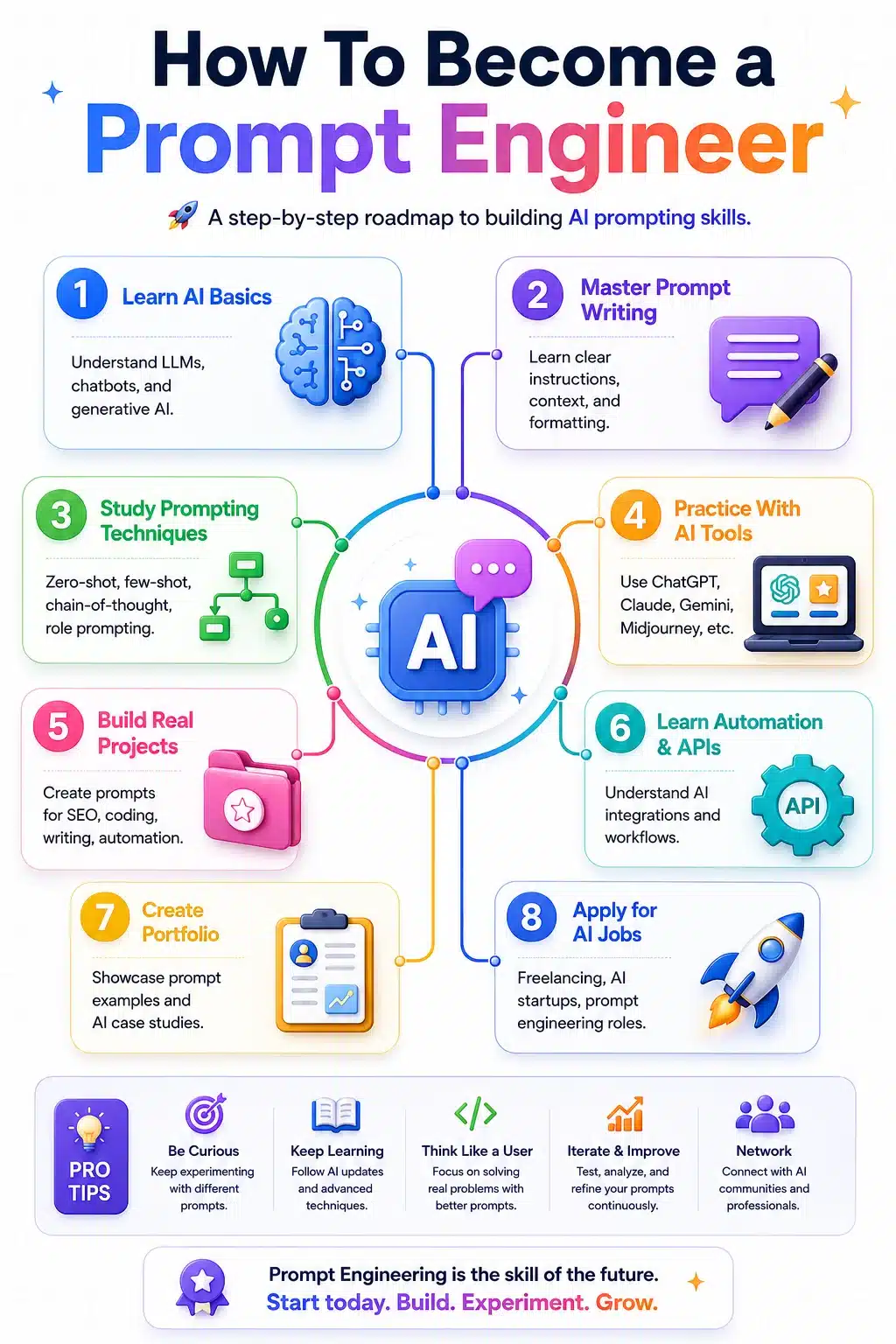
FAQ
1. Is prompt engineering a good career?
Yes, prompt engineering is considered one of the fastest-growing AI careers today. As companies increasingly adopt generative AI tools, the demand for skilled prompt engineers is rising rapidly. It offers opportunities in freelancing, remote jobs, content creation, automation, and AI development.
2. Can beginners become prompt engineers?
Absolutely! Beginners can start learning prompt engineering without advanced technical knowledge. Good communication, creativity, and consistent practice are enough to begin. Over time, you can improve your skills through experimentation and learning AI tools.
3. How long does it take to learn prompt engineering?
Basic prompt engineering can be learned within a few weeks of regular practice. However, becoming highly skilled may take several months of experimentation, project building, and continuous learning.
4. Which AI tools should I learn first?
Beginners should start with popular AI tools like:
Later, you can explore image-generation and automation tools like:
5. Is prompt engineering hard?
Prompt engineering is not very difficult for most people. It mainly requires:
- Practice
- Creativity
- Logical thinking
- Communication skills
Like any skill, improvement comes with consistency and experimentation.
6. Can I become a prompt engineer without a degree?
Yes! Many AI professionals are self-taught. Companies often focus more on:
- Practical skills
- Portfolio projects
- AI experience
- Problem-solving ability
A strong portfolio can sometimes be more valuable than formal education.
7. Are prompt engineering jobs real?
Yes, prompt engineering jobs are real and growing rapidly. Many companies now hire professionals for:
- AI content generation
- Chatbot optimization
- AI workflow building
- Automation systems
- Generative AI consulting
Both freelance and full-time opportunities are increasing worldwide.
8. What is the best way to practice prompting?
The best way to practice prompt engineering is through daily experimentation.
You can:
- Test prompts regularly
- Compare AI outputs
- Improve weak prompts
- Build mini projects
- Study successful prompt examples
Consistent practice is the fastest way to improve.
Summary
Prompt engineering has become one of the most exciting and valuable skills in the modern AI industry. As generative AI tools continue evolving, businesses need professionals who can communicate effectively with AI systems and generate high-quality results.
References
- OpenAI Prompt Engineering Guide
- OpenAI Prompt Engineering Best Practices
- Anthropic Prompt Engineering Documentation
- Google Cloud: What Is Prompt Engineering?
- Microsoft Learn: Prompt Engineering Concepts
- IBM: What Is Prompt Engineering?
- DeepLearning.AI Prompt Engineering Course
- Google AI Prompting Essentials Course
- NVIDIA Prompt Engineering Overview
- Coursera Generative AI Learning Resources


