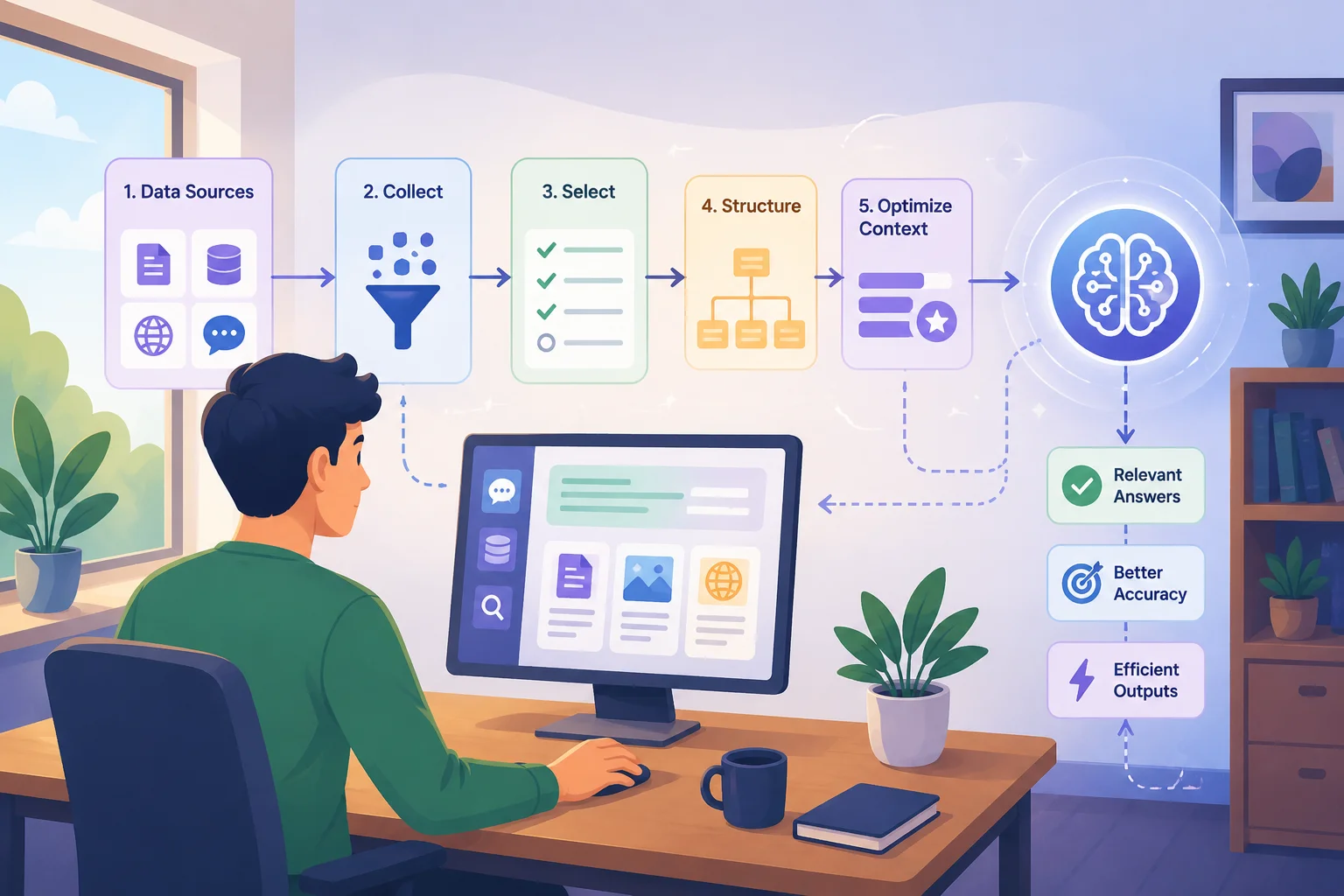
AI agents are moving beyond simple chatbots.
A chatbot normally waits for you to ask something, gives an answer, and stops there. An AI agent can go further — it can understand a goal, decide what needs to happen next, use tools, communicate with other systems, and complete multiple steps with limited human involvement.
Imagine a customer-support agent that doesn’t just answer, “Your refund is being processed.” Instead, it checks the order, verifies eligibility, creates the refund request in your internal system, updates the CRM, and sends the customer a confirmation.
That’s the kind of automation businesses are now exploring.
But building reliable agents isn’t simply a matter of connecting ChatGPT or another large language model to an application. You need good data, secure integrations, permissions, monitoring, testing, human approval rules, and a clear understanding of what the agent should — and shouldn’t — be allowed to do.
If you’re looking for AI Agent Development Companies in India, the companies below are worth evaluating.
A quick note before we start: there isn’t an official ranking of India’s “top” AI-agent companies. This list is an editorial selection based on publicly available information about agentic AI development, enterprise deployment, integrations, orchestration, governance, platforms, and current activity as of October 2026.
1. Tata Consultancy Services (TCS)
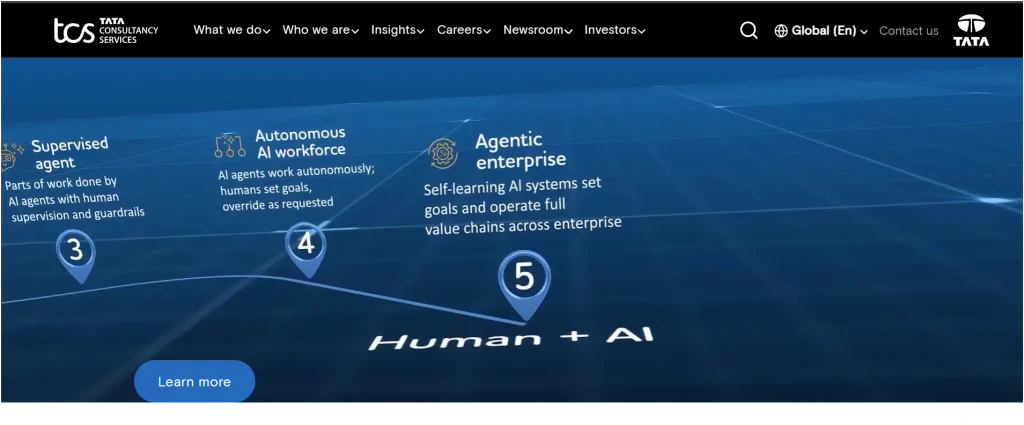
TCS is one of the strongest options when the project involves large enterprise systems, complex integrations, regulated workflows, or AI that needs to operate across multiple departments.
Its recent AI work goes well beyond basic conversational assistants. TCS has been developing agentic systems under its broader Human + AI approach and has expanded its work with platforms such as Google Cloud’s Gemini Enterprise.
One interesting example is TCS ADD AgentHub, developed for pharmaceutical and drug-development workflows. It allows organizations to build role-based AI agents with defined responsibilities, human supervision and audit controls — particularly important when an AI system is working in a regulated environment.
Best suited for: Large enterprises, regulated industries, complex digital transformation and organization-wide AI deployment.
2. Infosys
Infosys has made agentic AI a major part of its broader Infosys Topaz ecosystem.
Its Agentic AI Foundry is designed to help businesses develop and deploy production-grade AI agents rather than stopping at experimental prototypes. Infosys has also introduced more than 200 enterprise AI agents using Infosys Topaz and Google Cloud technologies.
The company has continued expanding this ecosystem in 2026 through work with OpenAI, Anthropic, Intel, Cognition and other AI technology companies. Its Topaz Fabric connects infrastructure, models, enterprise data, applications and workflows into an agent-ready environment.
That’s particularly useful when a business doesn’t want one isolated AI assistant. It wants agents connected to its existing technology stack.
Best suited for: Enterprise AI transformation, software engineering agents, large multi-system implementations and companies that need strong integration capabilities.
3. HCLTech
HCLTech deserves a place near the top because it is already treating AI agents as part of enterprise operations — not simply as experimental applications.
Its AI Force 2.0 platform combines generative AI and agentic intelligence across software engineering, data engineering, IT operations and business processes. The system is designed so agents can analyze information, make context-aware decisions and perform actions while operating within enterprise controls.
HCLTech also reports a substantial library of AI agents and works with major technology ecosystems including Google, Microsoft, AWS, NVIDIA, Salesforce, ServiceNow and SAP.
That ecosystem matters. An AI agent becomes much more useful when it can safely interact with the CRM, ERP, finance software, internal databases and other tools employees already use.
Best suited for: Enterprise automation, IT operations, software engineering and businesses needing strong governance around autonomous workflows.
4. Wipro
Wipro is another major Indian technology company making a serious move into agentic AI.
In April 2026, it announced a dedicated AI-Native Business & Platforms Unit, with enterprise-grade agentic AI specifically identified as an area of investment.
Wipro’s WEGA platform takes an agent-native approach to software delivery. It brings Wipro-developed agents, assistants and partner tools into one environment and supports areas such as development, testing, infrastructure, security and release management.
Wipro has also expanded its partnerships with ServiceNow and Google Cloud to deploy agentic workflows across functions such as IT, HR, procurement, compliance and cybersecurity.
Best suited for: Large organizations looking to introduce AI agents into existing enterprise workflows rather than building disconnected AI tools.
5. Tech Mahindra
Tech Mahindra has developed its own agentic AI ecosystem around TechM Orion.
Orion is designed for autonomous execution of business workflows using reusable AI agents capable of reasoning, planning and acting across enterprise systems. Tech Mahindra also operates an AI-agent marketplace where organizations can access and test pre-built agents.
In August 2026, Tech Mahindra and Uniphore also announced an Agentic AI Factory focused on developing and managing industry-specific agents, small language models and enterprise AI solutions.
For businesses that want to experiment with multiple agents before committing to a much larger rollout, that platform-oriented approach can be useful.
Best suited for: Telecom, enterprise operations, industry-specific automation and organizations interested in reusable agent frameworks.
6. Persistent Systems
Persistent Systems brings a slightly different strength to the list: deep product and digital-engineering experience combined with enterprise AI development.
Its agentic AI services cover AI maturity assessment, ecosystem development, workflow transformation and the operational deployment of autonomous agents.
Persistent specifically focuses on connecting agents with systems such as ERP, CRM and HRMS platforms, allowing agents to participate directly in existing business processes.
The company originated in India and maintains major operations in cities including Pune, Bengaluru and Hyderabad.
Best suited for: Product companies, digital platforms, enterprise modernization and businesses that need AI engineering combined with strong software-development capabilities.
7. Simform
Not every company needs a giant IT consultancy.
Sometimes you need an engineering partner that can take one workflow — customer support, claims processing, internal search, software development, analytics, or another process — and turn it into a working agentic system.
That’s where Simform becomes interesting.
Its Agentic AI services include workflow redesign, multi-agent orchestration, RAG-based enterprise knowledge systems, AgentOps, human-in-the-loop controls and integrations with enterprise tools.
Simform also focuses on an important issue that’s sometimes overlooked: what happens after the agent reaches production? Monitoring, evaluation, permissions and governance become just as important as the initial model.
Best suited for: Startups, mid-market companies, SaaS products and enterprises wanting custom agentic systems with strong engineering support.
8. LeewayHertz
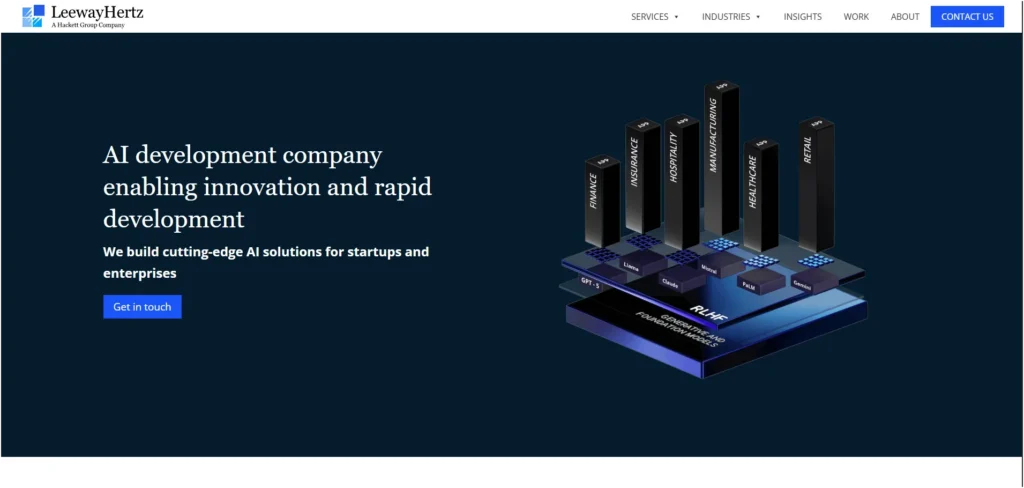
LeewayHertz has been working in enterprise AI for years and now offers dedicated AI-agent development services.
Its services cover the complete agent lifecycle — identifying use cases, architecture design, custom agent development, multi-agent systems, enterprise knowledge integration, tool integration, deployment and AgentOps.
It also works with agent frameworks and concepts such as CrewAI, AutoGen, MCP, multi-agent orchestration and different proprietary or open AI models.
The company maintains an India office in Gurugram, Haryana.
Best suited for: Businesses looking for highly customized AI agents, multi-agent applications and enterprise AI systems.
9. SoluLab
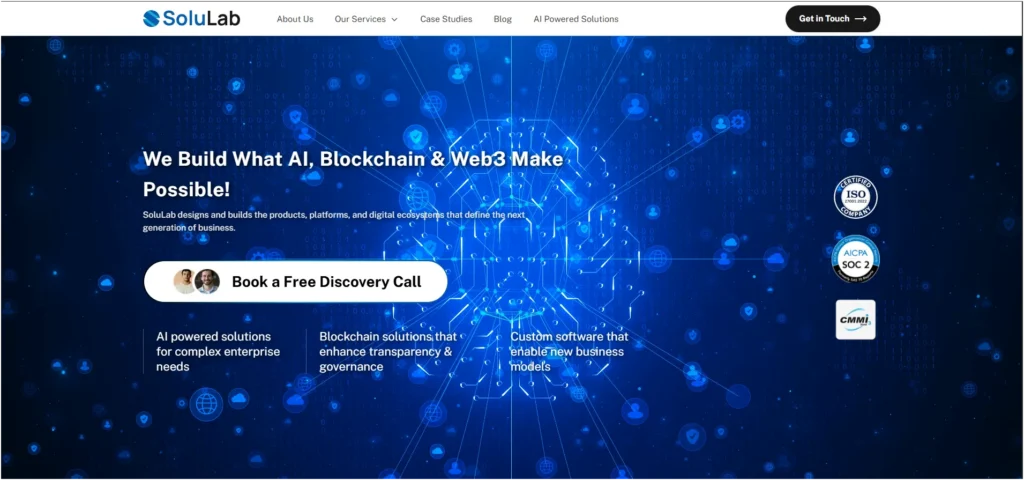
SoluLab is another company to consider if you need custom development rather than a large-scale consulting engagement.
Its AI-agent services include single-agent and multi-agent development, conversational agents, autonomous agents, workflow integrations and AI consulting. The company lists technologies including LangGraph, LangChain, CrewAI, AutoGen and the OpenAI Agents SDK within its agent-development stack.
It also has an office in Ahmedabad, India.
For smaller organizations, this type of development company can sometimes offer more flexibility than hiring a very large enterprise consulting provider.
Best suited for: Startups, growing businesses and companies needing custom AI-agent products or workflow automation.
10. Appinventiv
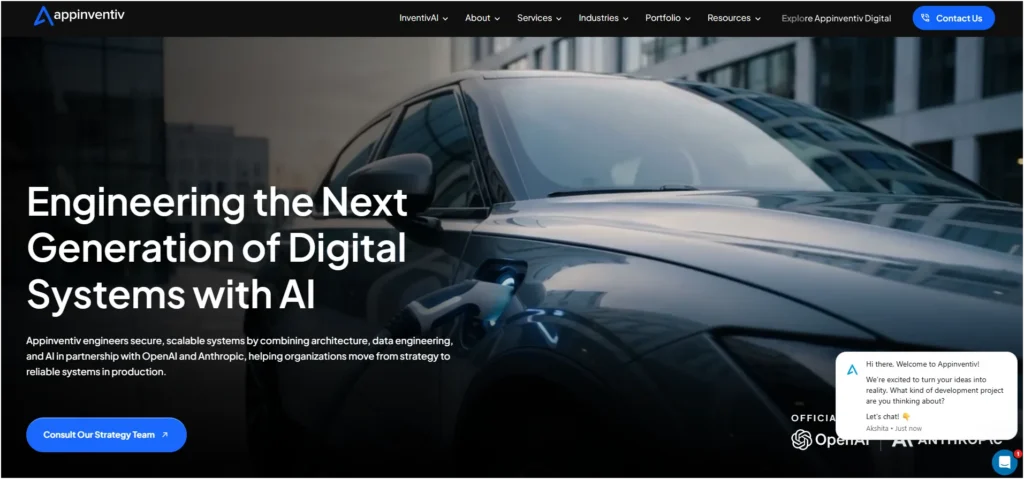
Appinventiv completes this list because its AI practice now includes dedicated AI-agent design, development and integration.
The company describes building agents around business workflows using natural-language interactions, intelligent triggers and technologies such as Model Context Protocol (MCP) to connect AI systems with business data and external tools.
Appinventiv is headquartered operationally in Noida, Uttar Pradesh, giving businesses looking specifically for an India-based development partner another option.
Best suited for: Custom applications, customer-facing AI systems, conversational agents and business-process automation.
How Should You Choose an AI Agent Development Company?
Don’t pick a company simply because its website mentions “Agentic AI.”
Ask what the agent will actually be able to do.
For example, can it access your CRM? Can it call APIs? Can it remember information between steps? What happens when it’s unsure? Who approves sensitive actions? Can you see why the agent made a decision? What prevents it from performing something it isn’t authorized to do?
You should also evaluate:
- experience with your industry and workflow;
- single-agent and multi-agent development capabilities;
- LLM and model flexibility;
- RAG and enterprise-data integration;
- API, CRM, ERP and database integration;
- security and permission management;
- human-in-the-loop controls;
- evaluation and hallucination testing;
- monitoring and AgentOps;
- post-deployment support.
And here’s an important point: you may not actually need an AI agent.
If your requirement is simply answering questions from company documents, a well-designed RAG application may be cheaper, simpler and safer. If every step follows fixed rules, traditional workflow automation could be enough.
A good AI development company should tell you that — instead of trying to turn every problem into an AI-agent project.
Final Thoughts
There are plenty of AI Agent Development Companies in India, but they’re not all solving the same kind of problem.
For massive enterprise transformations, companies such as TCS, Infosys, HCLTech, Wipro and Tech Mahindra bring large delivery teams, platforms, governance frameworks and deep enterprise integration experience.
Persistent Systems and Simform are particularly interesting when engineering and integration are central to the project. Meanwhile, LeewayHertz, SoluLab and Appinventiv can be worth exploring when you need a more focused custom-development partner.
Don’t start by asking, “Who is the biggest company?”
Start with a better question:
What exactly should my AI agent be allowed to understand, decide and do?
Once that’s clear, choosing the right development partner becomes much easier.
