Intelligence is basically the ability to learn from experience, solve problems, and use knowledge to adapt to new situations. In 2026, the debate over AI vs Human Intelligence is everywhere because artificial intelligence is no longer just in movies—it is in our pockets and classrooms. With the massive rise of tools like ChatGPT (now up to version GPT-4.5) and Google Gemini, many people wonder if machines are finally becoming smarter than us.
By the end of this post, you will understand exactly how AI works, what makes your human brain unique, and why the future is about humans and AI working together as a team.
What is Artificial Intelligence?
Artificial Intelligence (AI) is the ability of a machine or software to do things that usually require a human mind, like recognizing faces or solving math problems.
Types of AI:
1. Superintelligence (ASI): This is a future concept where AI becomes way smarter than the smartest human in every possible way
2. Narrow AI (NAI): These are experts at one specific task. Your Netflix recommendations or the face-unlock on your phone are examples of Narrow AI.
3. General AI (AGI): This is a hypothetical AI that could do any intellectual task as well as a human. In late 2025, some tech leaders even claimed we were starting to see the first “sparks” of AGI.
Examples of AI in your life:
- Recommendation Systems: Algorithms that choose which TikTok videos you see next
- Chatbots: Like ChatGPT, which can write essays or explain science.
- Self-Driving Cars: Cars that use cameras and sensors to navigate roads.
What is Human Intelligence?
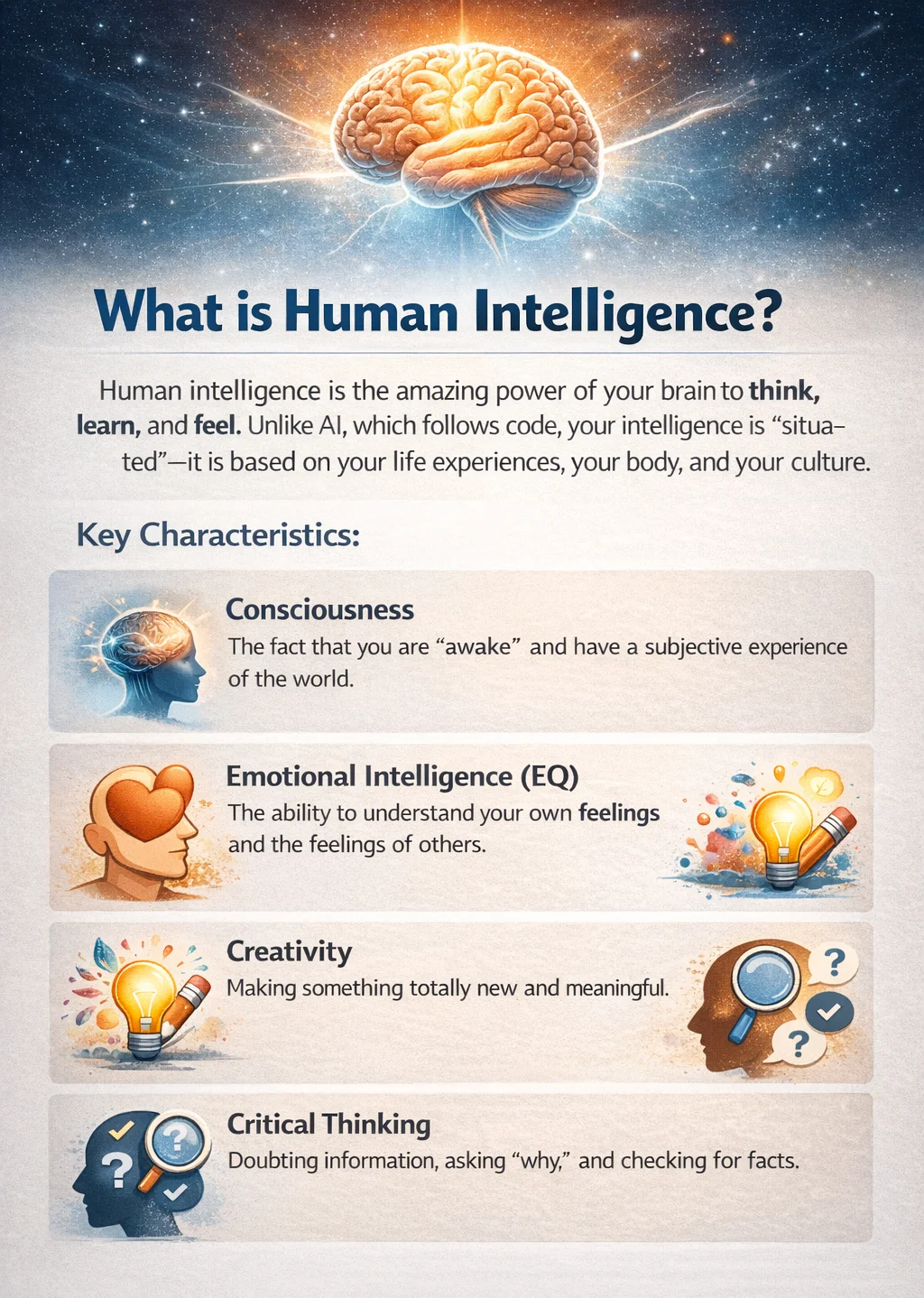
Human intelligence is the amazing power of your brain to think, learn, and feel. Unlike AI, which follows code, your intelligence is “situated”—it is based on your life experiences, your body, and your culture.
Key Characteristics:
- Consciousness: The fact that you are “awake” and have a subjective experience of the world.
- Emotional Intelligence (EQ): The ability to understand your own feelings and the feelings of others.
- Creativity: Making something totally new and meaningful.
- Critical Thinking: Doubting information, asking “why,” and checking for facts.
AI vs Human Intelligence: Key Differences
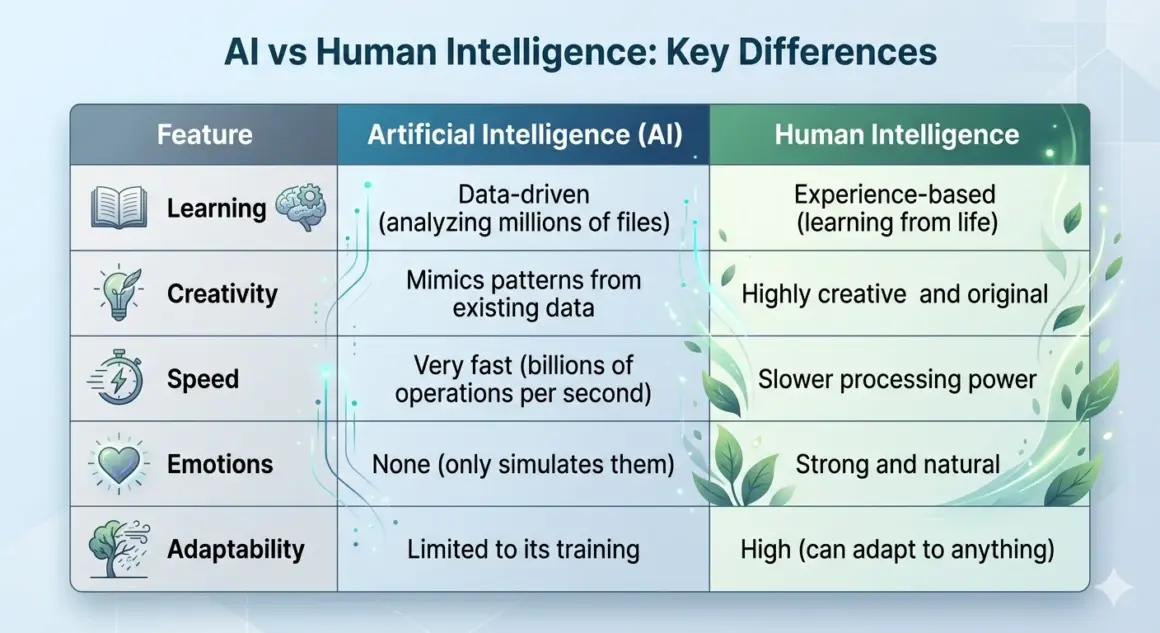
| Feature | Artificial Intelligence (AI) | Human Intelligence |
|---|---|---|
| Learning | Data-driven (analyzing millions of files) | Experience-based (learning from life) |
| Creativity | Mimics patterns from existing data | Highly creative and original |
| Speed | Very fast (billions of operations per second) | Slower processing power |
| Emotions | None (only simulates them) | Strong and natural |
| Adaptability | Limited to its training | High (can adapt to anything) |
Suggested Read:
- History of Ai – Artificial Intelligence
- What is Artificial Intelligence? (Simple Guide)
- Why Open Source Large Language Models Are Popular
- Artificial Intelligence
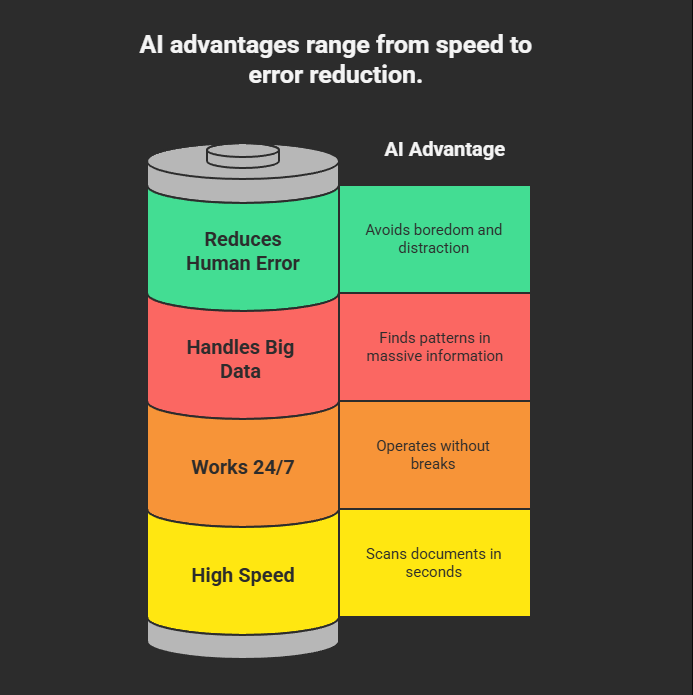
Advantages of Artificial Intelligence
- Reduces Human Error: In repetitive tasks, AI doesn’t get bored or distracted
- High Speed and Accuracy: AI can scan millions of documents for a single fact in seconds.
- Works 24/7: Machines don’t need to sleep or take lunch breaks.
- Handles Big Data: AI can find patterns in massive amounts of information that would confuse a human.
Advantages of Human Intelligence
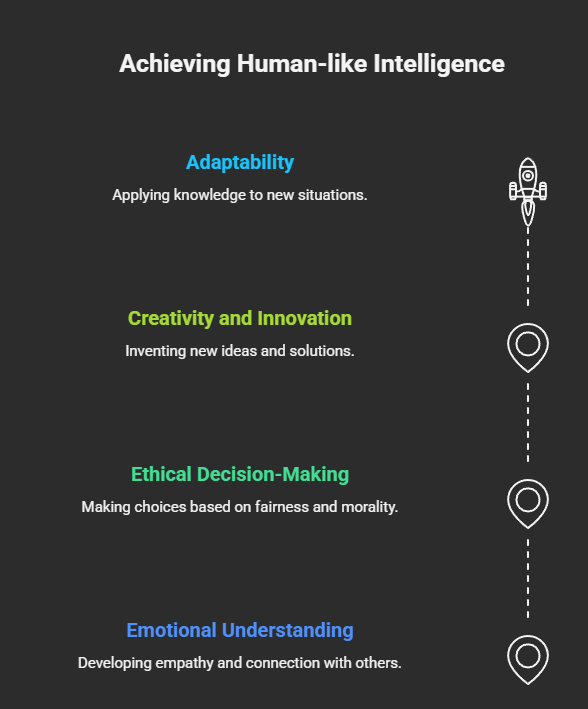
- Adaptability: Humans are great at “transfer learning”—using what we know about one thing (like riding a bike) to learn something else (like riding a motorcycle) very quickly.
- Emotional Understanding: Humans can empathize and connect with others in a way AI can only pretend to do.
- Ethical Decision-Making: Humans can think about what is “right” or “fair,” while AI only follows math.
- Creativity and Innovation: We can invent things that have never existed before, based on our unique imagination.
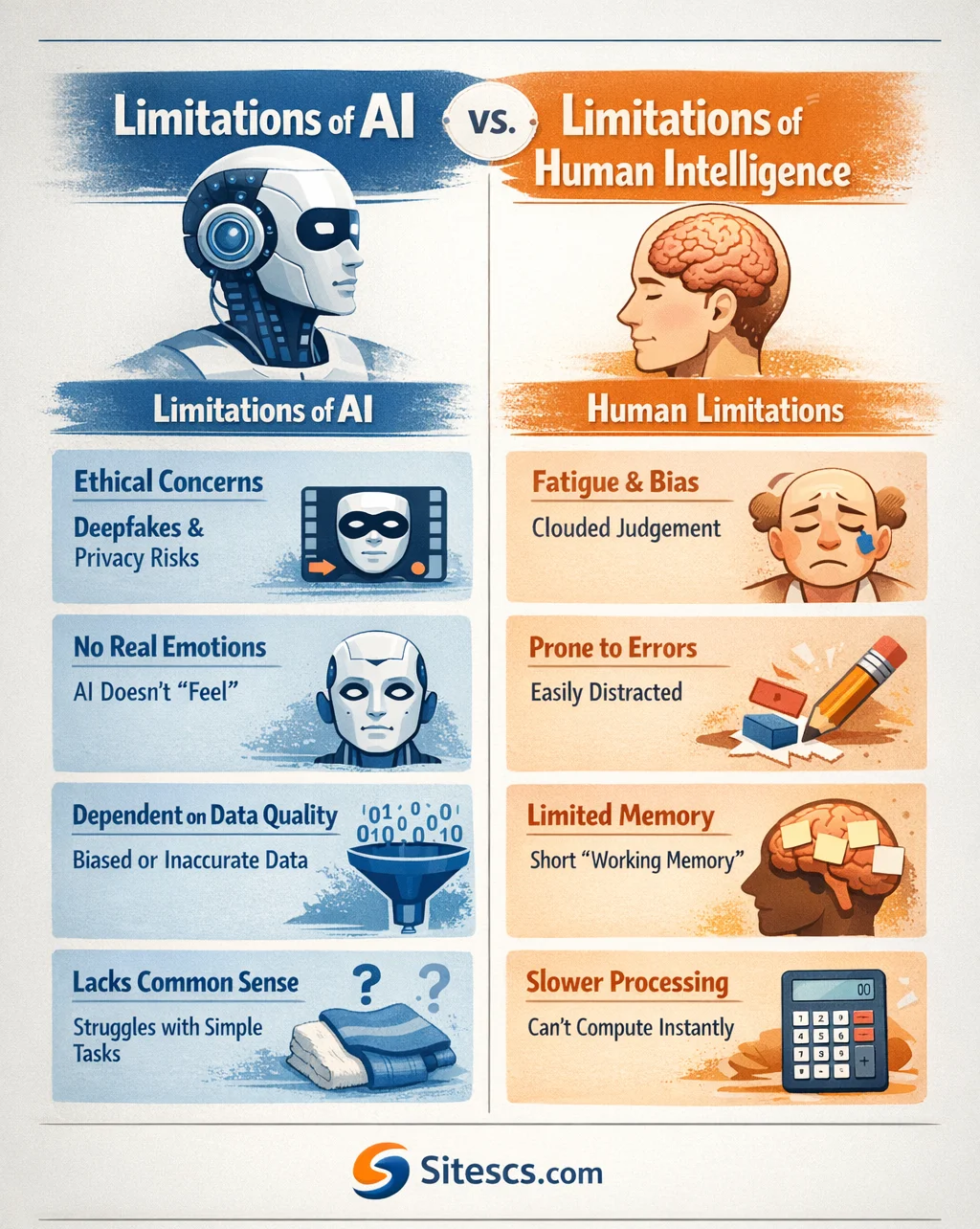
Limitations of AI
- Ethical Concerns: AI can be used to create “deepfakes” (fake videos) or invade privacy
- No Real Emotions: AI doesn’t actually “feel” happy or sad; it just predicts the next best word to say.
- Dependent on Data Quality: If the data used to train AI is biased or wrong, the AI will be biased or wrong too.
- Lacks Common Sense: AI often struggles with simple physical things humans find easy, like folding a towel or understanding sarcasm.
Limitations of Human Intelligence
- Fatigue and Bias: Our moods and personal prejudices can cloud our judgment
- Prone to Errors: We get tired, distracted, and make mistakes.
- Limited Memory: Our “working memory” can only hold a few items at a time before we get overwhelmed.
- Slower Processing: We can’t calculate 1,000 math problems per second.
Real-World Examples: AI vs Humans
- Customer Service: Chatbots handle simple questions like “Where is my package?”, but humans are needed for angry customers who need empathy
- Healthcare: AI can spot diseases in X-rays faster than doctors, but only a human doctor can give a patient comfort and personalized care.
- Writing: AI can write a basic news report, but human writers bring style, cultural nuances, and real-life “soul” to a story.
- Gaming: AI programs like AlphaGo have beaten world champions, showing that machines can master complex strategy games.
Future of AI vs Human Intelligence
Will AI replace humans? Most experts say no. Instead, we are entering an era of collaboration.
By 2030, AI will likely be a daily “copilot” for everyone. While some office tasks are at risk (about 80% of jobs might have at least 10% of their tasks changed), new opportunities will open up for people who know how to work with AI. The goal is to let AI handle the boring, repetitive stuff so humans can focus on big ideas and helping people.
AI vs Human Intelligence: Which is Better?
Neither is “better” because they are good at different things. AI is a powerful tool, not a replacement for you. We should use AI to boost our abilities, but we must keep human oversight to make sure the machines are making fair and safe choices.
FAQs
Can AI surpass human intelligence?
In specific tasks like math or data analysis, it already has. However, in “General Intelligence”—the ability to do everything a human can do—we aren’t there yet, though some think it could happen by 2040.
Is AI more powerful than the human brain?
Computers can calculate much faster, but the human brain is still more efficient. The brain uses about as much power as a lightbulb to do things that supercomputers need massive amounts of electricity to perform.
What can humans do that AI cannot?
AI cannot truly experience the world, feel genuine empathy, or understand deep cultural “common sense” without being fed data about it.
Will AI take over jobs in the future?
AI will change jobs rather than take them all. It will automate repetitive tasks, making human skills like creativity and emotional intelligence more valuable than ever.
How is AI different from human thinking?
AI uses statistical math to guess the “most likely” answer based on past data. Humans use reasoning, memories, and emotions to find a “meaningful” answer.
Case Study: Remember when AI (AlphaGo) beat the world champion at Go? It showed that AI can learn “strategy” that humans didn’t even think of
Conclusion
The main difference in the AI vs Human Intelligence debate is that AI is built on data, while humans are built on experience. We are great at creativity and feelings; AI is great at speed and big data.
As we move forward, don’t be afraid of AI—learn it! Use it as a partner to help you learn faster and be more creative. The future isn’t about AI replacing humans; it’s about what humans can achieve with AI.