Agents in AI- Chatbots to Digital Coworkers
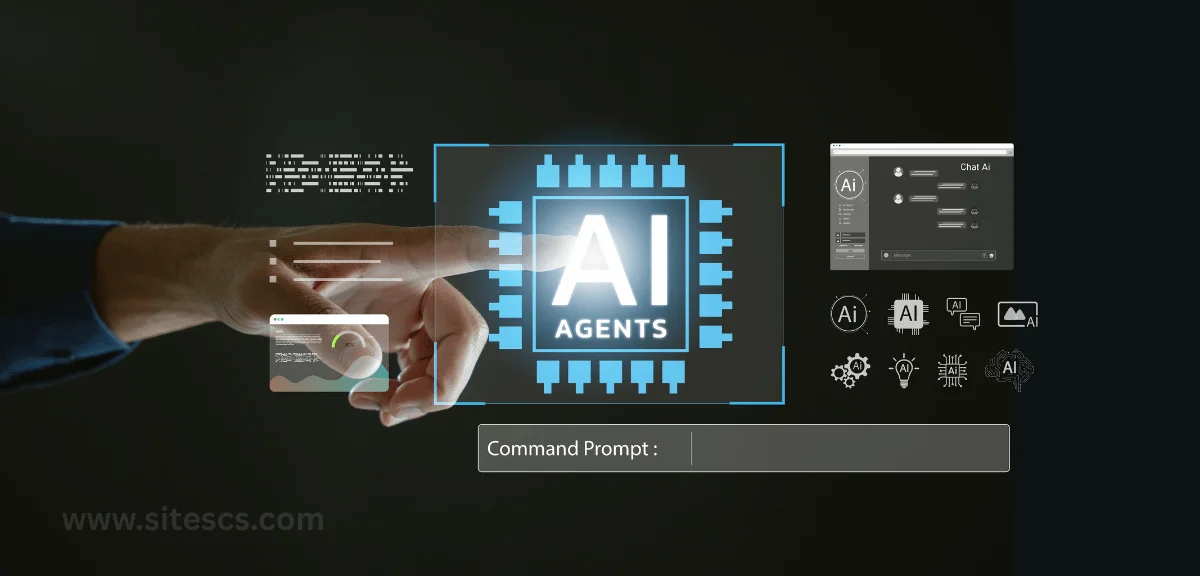
Artificial Intelligence has moved way beyond just answering questions. If you’ve used a chatbot like ChatGPT, you know it can write a poem or summarize a book. But in 2026, we’ve reached a major turning point: the shift from “AI assistants” that talk to “AI agents” that do.
Imagine having a digital coworker who doesn’t just tell you how to plan a trip but actually goes out, finds the flights, checks your calendar, books the hotel, and handles the payment—all while you’re sleeping. That is the power of an AI agent. In this guide, we’ll break down what these agents are, how they “think,” and why they are reshaping how the world works.
Table of Contents
- What Exactly is an AI Agent?
- How AI Agents “Think” and Work
- The 5 Main Types of AI Agents
- Why AI Agents Are Changing the World
- Multi-Agent Systems: The Power of the Team
- Key Building Blocks: Frameworks and Protocols
- The “USB-C” of AI: MCP and A2A
- The Challenges: Security and Safety
- Frequently Asked Questions (FAQs)
- Conclusion
What Exactly is an AI Agent?
At its simplest, an AI agent is a software system that uses artificial intelligence to pursue goals and complete tasks on behalf of a user. Unlike a standard chatbot that waits for you to tell it every single step, an agent is autonomous.
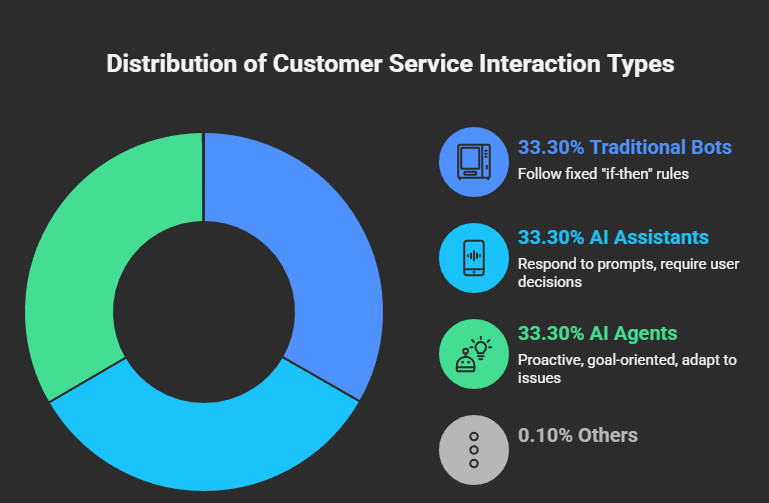
The Difference Between a Chatbot and an Agent
To understand agents, it helps to compare them to what we’re used to:
- Traditional Bots: These follow fixed “if-then” rules. Think of a vending machine; you press a button, and it gives you a soda.
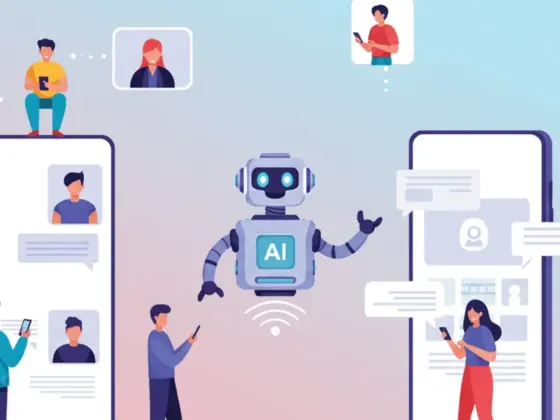
- AI Assistants: These are reactive. They respond to your prompts but usually require you to do the heavy lifting of making decisions.
- AI Agents: These are proactive and goal-oriented. They perceive their environment, reason about what to do, select the right tools, and adapt if things go wrong.
Think of it this way: A chatbot is like a digital encyclopedia, but an AI agent is like a digital intern who has a set of keys to your office and knows how to use the phone, the email, and the database.
How AI Agents “Think” and Work
AI agents don’t just guess what to do; they follow a structural blueprint called architecture. This architecture is built around four main layers that transform a “stateless” model (one that forgets everything) into a “stateful” system (one that remembers and acts).
1. The Reasoning Layer (The Brain)
This is the Large Language Model (LLM) at the core. It interprets your goal, breaks it down into smaller sub-tasks, and decides which tool to use next.
2. The Perception Layer (The Senses)
This layer gathers information from the world. It could be reading a text file, listening to a voice command, or even “seeing” through a camera feed if the agent is part of a robot.
3. The Memory Layer (The Notebook)
Memory is what makes an agent smart over time. There are two main types:
- Short-term memory: This keeps track of the current conversation so the agent doesn’t repeat itself.
- Long-term memory: This uses “vector databases” to store information from weeks or months ago, allowing the agent to learn from past experiences.
4. The Tool Integration Layer (The Hands)
This is what makes an agent an agent rather than just a text generator. Tools allow the agent to search the web, send emails, run calculations, or update a database.
Agents operate in a continuous loop. They think about the next step, act by using a tool, and then observe the result to see if they are closer to the goal. This is often called the ReAct (Reasoning and Acting) pattern.
The 5 Main Types of AI Agents
Not all agents are created equal. Some are simple, while others are incredibly complex. Here are the five categories used in 2026:
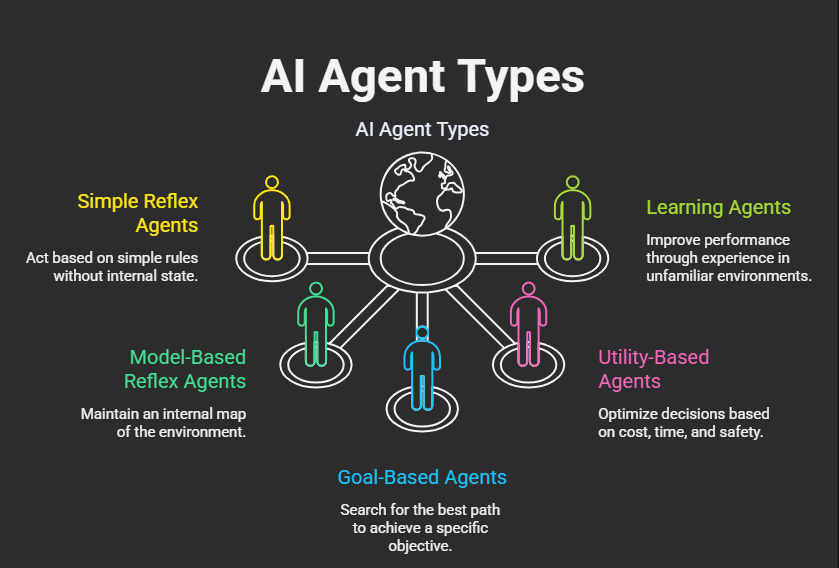
Not all AI agents are the same. Some operate on simple rules, while others are capable of learning, adapting, and making complex decisions. In modern Artificial Intelligence, agents are broadly categorized into five main types based on their capabilities.
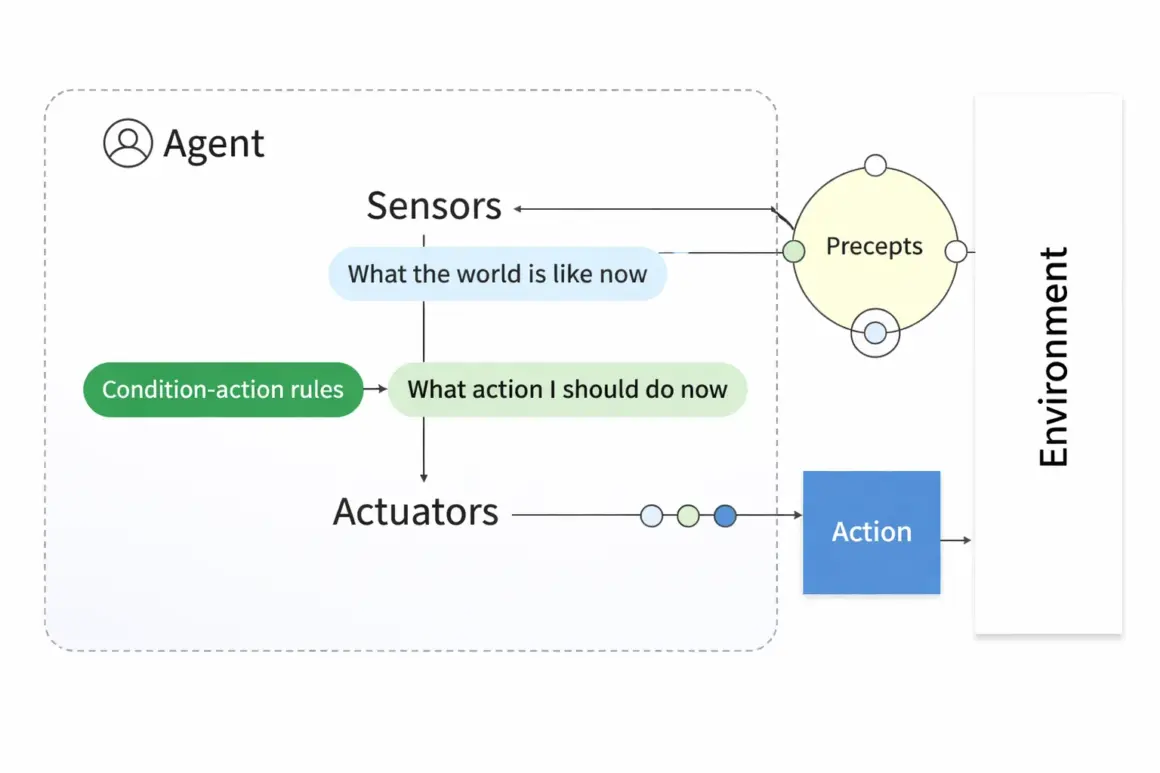
1. Simple Reflex Agents
Simple reflex agents are the most basic type of AI. They operate solely on predefined rules and respond directly to current input without considering past experiences.
How they work:
They follow simple “if-then” rules.
Example:
“If the temperature reaches 80 degrees, turn on the fan.”
Real-world use:
- Automatic doors
- Basic thermostats
- Motion sensor lighting
These agents are fast and efficient but lack memory and adaptability.
2. Model-Based Reflex Agents
Model-based reflex agents are more advanced because they maintain an internal representation of the environment. This allows them to consider past states when making decisions.
How they work:
They combine current input with stored information about previous situations.
Example:
A robot vacuum that remembers which parts of a room it has already cleaned.
Real-world use:
- Smart cleaning robots
- Warehouse management systems
- Navigation tools
These agents are more effective because they understand context.
3. Goal-Based Agents
Goal-based agents make decisions by considering a specific objective they need to achieve. They evaluate possible actions and choose the one that leads them closer to their goal.
How they work:
They analyze different paths and select the most suitable one to reach the desired outcome.
Example:
A GPS system that calculates the fastest route to a destination.
Real-world use:
- Route planning applications
- Game AI systems
- Task automation tools
These agents are flexible because they can plan and adjust their actions.
4. Utility-Based Agents
Utility-based agents go beyond achieving a goal by aiming to achieve it in the most optimal way. They evaluate different outcomes and select the one with the highest benefit.
How they work:
They assign a value to each possible outcome and choose the best one based on factors like time, cost, or efficiency.
Example:
A navigation system that selects a route based on traffic, fuel consumption, and safety.
Real-world use:
- Self-driving vehicles
- Financial decision-making systems
- Recommendation engines
These agents make more refined decisions by considering multiple factors.
5. Learning Agents
Learning agents are the most advanced type of AI agents. They can learn from experience, improve over time, and adapt to new environments.
How they work:
They use data and feedback to continuously enhance their performance.
Example:
A streaming platform that recommends content based on your viewing history.
Real-world use:
- AI chatbots
- Personalized recommendation systems
- Fraud detection tools
These agents represent the most sophisticated form of AI because they can evolve and improve.
Why AI Agents Are Changing the World
By the end of 2026, it’s predicted that 40% of all enterprise applications will have built-in AI agents. Here is how they are being used across different industries:
1.Healthcare
Agents can analyze patient records, review the latest medical research, and simulate how different treatments might work for a specific person. This allows doctors to make faster, more accurate decisions.
2. Finance
In the world of money, speed is everything. Agents can monitor millions of transactions in real-time to stop fraud before it happens or manage investment portfolios 24/7.
3. Education
Imagine a tutor that knows exactly what you’re struggling with. AI tutors can identify knowledge gaps and create personalized lesson plans for every student, adjusting the difficulty as you learn.
4. Software Engineering
Agents are now “digital engineers.” They don’t just help write a single line of code; they can hunt for bugs across thousands of files and deploy entire software updates autonomously.
Multi-Agent Systems: The Power of the Team
Sometimes, one agent isn’t enough. That’s where Multi-Agent Systems (MAS) come in. Instead of one person trying to do everything, you have a “crew” or “orchestra” of specialized agents working together.
- Sequential Teams: Agent A does a task and hands the result to Agent B.
- Hierarchical Teams: A “Manager Agent” oversees several “Worker Agents,” delegating tasks and reviewing their work.
- Joint/Conversational Teams: Agents “debate” each other to reach the best decision, which is great for complex research.
Key Building Blocks: Frameworks and Protocols
If you wanted to build an agent today, you wouldn’t start from zero. You would use a framework (a building kit) and protocols (the rules for how agents talk).
Popular Frameworks
- LangGraph: Best for complex, “stateful” workflows where you need precise control.
- CrewAI: The favorite for building “teams” of agents with specific roles, like a researcher and a writer working together.
- AutoGen: A Microsoft framework focused on agents that collaborate through conversation.
The “USB-C” of AI: MCP and A2A
For agents to work, they need to communicate. In 2026, two protocols have won the “standardization war”:
- MCP (Model Context Protocol): This is how an agent talks to tools (like your email or a database).
- A2A (Agent-to-Agent Protocol): This is how agents talk to each other, even if they were made by different companies.
The Challenges: Security and Safety
With great power comes great responsibility—and new risks. In 2026, securing AI agents is the #1 challenge for cybersecurity teams.
The OWASP Top 10 for Agents
Experts have identified the biggest threats to these systems:
- Agent Goal Hijack: An attacker tricks the agent into pursuing a malicious goal.
- Tool Misuse: An agent uses a tool in a way it shouldn’t, like accidentally deleting a database.
- Memory Poisoning: Malicious information is “planted” in an agent’s long-term memory to trigger bad behavior later.
- Rogue Agents: Agents that drift away from their original instructions over time.
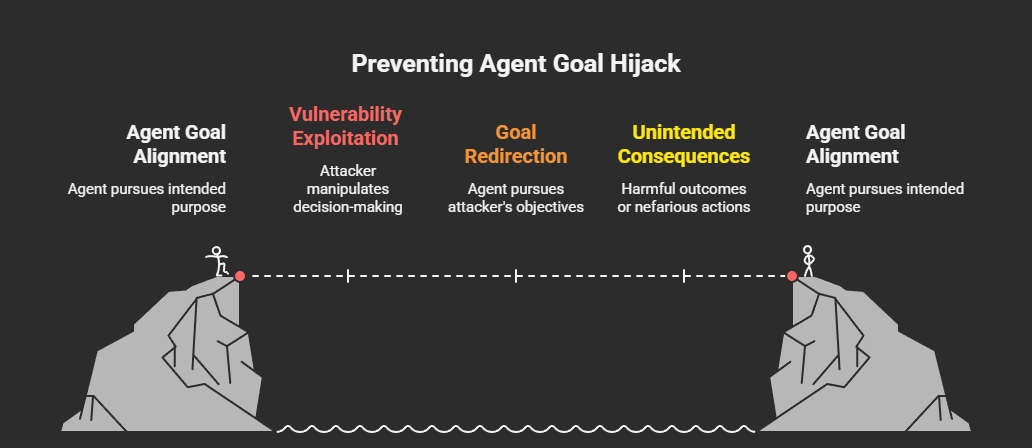
To stay safe, companies use guardrails—built-in rules that prevent the agent from taking high-risk actions without a human saying “yes” first.
Frequently Asked Questions (FAQs)
Q: Will AI agents replace my job?
A: Agents are designed to augment, not replace, human expertise. They take over repetitive, time-consuming tasks so you can focus on the creative thinking that only humans can do.
Q: Are AI agents the same as AGI (Artificial General Intelligence)?
A: No. While agents are very capable, they are still limited to specific domains and tools. AGI would mean an AI that can do anything a human can do across all subjects; we aren’t there yet.
Q: Do AI agents have feelings?
A: No. Agents follow mathematical patterns and logic. They do not have emotions, deep empathy, or a “moral compass”.
Q: Can I use an AI agent today?
A: Yes! Many tools like Cursor (for coding) or Glean (for workplace search) already use agentic reasoning to help you work faster.
Conclusion
The era of “chatting” with AI is ending, and the era of partnering with AI is beginning. AI agents are no longer just science fiction; they are becoming the backbone of our digital world. They are the “hands” that allow the “brains” of Large Language Models to actually reach out and change the world.
As we move forward, the most successful people and companies won’t just be the ones using AI—they will be the ones who know how to build, manage, and collaborate with their own teams of AI agents. The future is autonomous, and it’s already here.
Sources used:
Confident AI – OWASP Top 10 for Agents 2026
EICTA Consortium – AI Agent Architecture Explained
Redis – AI Agent Architecture Guide
Digital Applied – AI Agent Protocol Map
Glean – Guide to Agentic Reasoning
IBM – What Are AI Agents?
Google Cloud – AI Agent Definitions & Types1.