LLM-Powered AI Screening Tool Accelerates Enrollment in Phase III Polycythemia Vera Trial
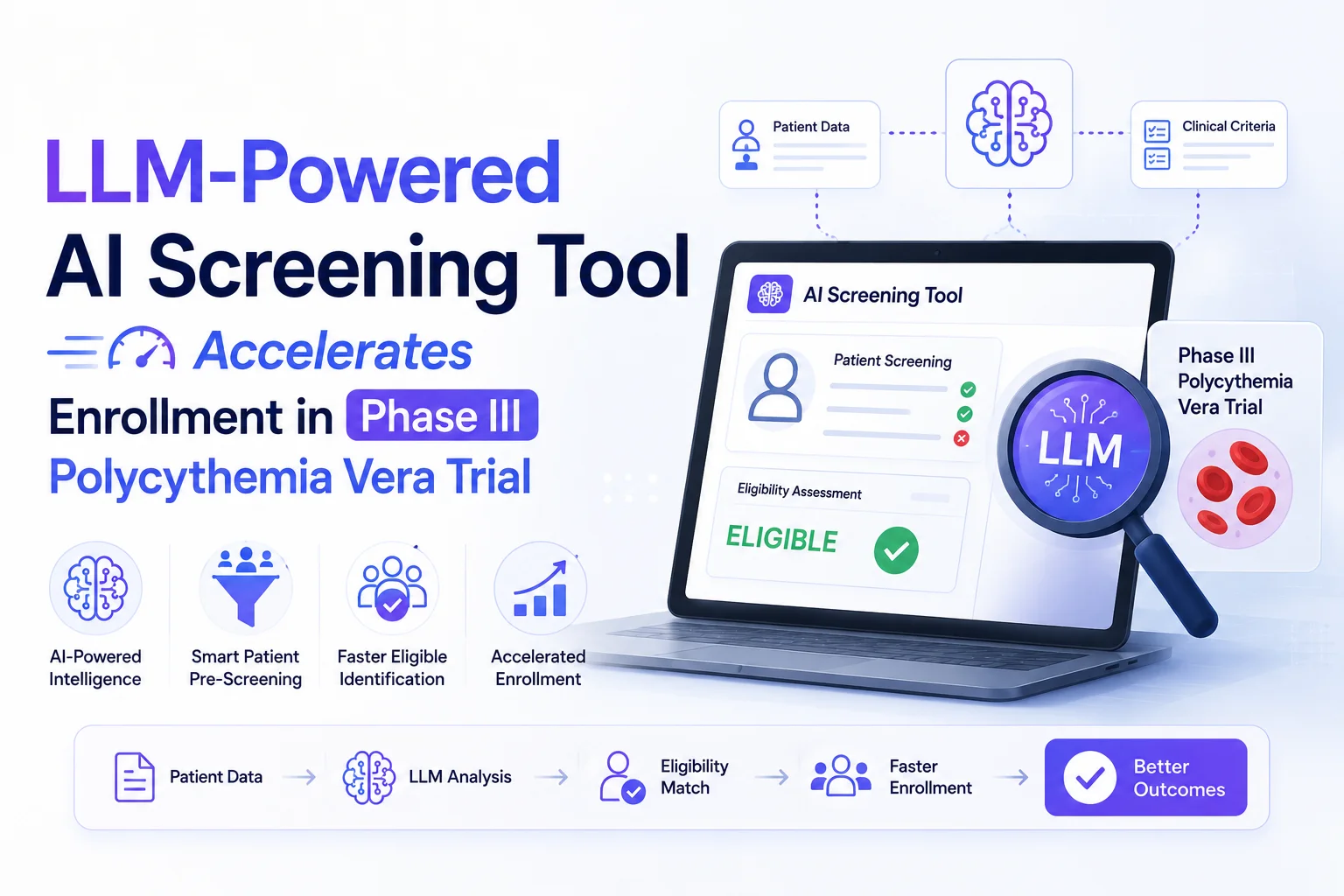
A medically trained large language model (LLM) system called Synapsis AI significantly reduced the time and workload required to identify eligible participants for a randomized phase III clinical trial in patients with polycythemia vera (PV). The technology also increased patient screening and enrollment rates compared with traditional recruitment methods.
According to Aaron T. Gerds, MD, MS, of Cleveland Clinic, the AI-driven platform was able to analyze the clinical trial protocol and quickly identify approximately 30 eligible patients already within the organization’s medical records system. The findings were presented during the 2025 American Society of Hematology (ASH) Annual Meeting and Exposition.
Clinical trial recruitment, especially for rare diseases such as polycythemia vera, is often time-consuming and resource-intensive. Traditional chart reviews can require more than 30 minutes per patient, depending on study criteria and medical history complexity. Investigators explored whether Synapsis AI could automate this process by screening electronic health records against trial eligibility requirements.
The ongoing GIV-IN-PV phase III study (NCT06093672) is evaluating givinostat versus hydroxyurea in patients with JAK2 V617F-positive high-risk polycythemia vera. Synapsis AI reviewed Cleveland Clinic’s database of 4.7 million active electronic health records, narrowing the search to patients diagnosed with cancer within the previous three years and then identifying individuals with polycythemia vera using ICD-10 codes. The platform subsequently evaluated structured and unstructured patient data against inclusion and exclusion criteria.
Within one week, the AI system completed a full assessment and identified 22 eligible patients, later expanding to 50 candidates before trial closure. Research personnel verified the results and confirmed a 100% positive predictive value for eligibility accuracy.
By comparison, conventional recruitment methods enabled staff to prescreen only nine patients, enroll four, and treat three over a 12-month period. Synapsis AI delivered a sevenfold increase in candidate identification while dramatically reducing the workload for clinical research teams.
Researchers believe AI-assisted recruitment tools could significantly accelerate drug development timelines for rare diseases by improving patient identification and enrollment efficiency. Dr. Gerds noted that broader implementation of these systems may help reduce the years required to bring new therapies to market.


